The Short Version
- Voice: Tim Chiou takes the reading duties on this one, carrying a first-person business memoir across a single voice.
- Big ideas: wealth and power inside China's Communist Party elite, a marriage built on ambition, a disappearance never fully explained
- Atmosphere: Tense and matter-of-fact, closer to reportage than confession
- Worth it?: A compact, unsettling insider memoir, best approached knowing the listing's own metadata does not entirely add up.
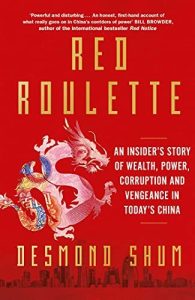
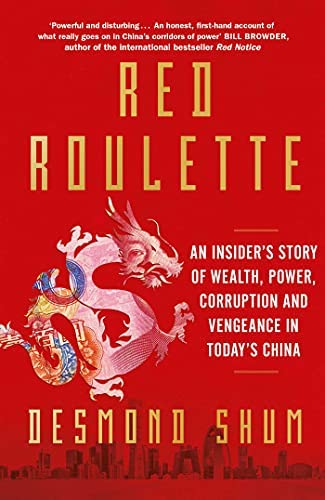
I cued up this audiobook during a plane delay, which felt fitting for a memoir about waiting on a call that never fully explains itself. Red Roulette traces Desmond Shum's path from an impoverished childhood in China to the private-jet tier of Beijing's billionaire class, built alongside his former wife Whitney Duan, and it ends with her sudden disappearance in 2017. Before getting into the book itself, it is worth flagging that the listing's own metadata is a little tangled, with a release date on the page that predates the events the book describes by more than a century, a clear sign of mismatched print-catalog data rather than anything about the recording itself.
How Red Roulette Holds Up
The book opens further back than the billionaire years, with Shum growing up impoverished in China and vowing early on that his life would look different. Earning an American college degree and then returning to his native country to build a business career is the foundation the rest of the memoir stands on, and that origin point matters, since it frames everything that follows as a story about outsider ambition breaking into an insular, relationship-driven business culture rather than a story about inherited advantage.
What Desmond Shum built here is closer to reportage than confession. He and Whitney Duan form an effective partnership early on, cultivating relationships with senior figures in China's Communist Party, and ride that access into a massive air cargo facility at Beijing International Airport and one of the city's premier hotels. The memoir tracks that ascent in specific, almost procedural detail, private jets, multimillion-dollar buildings, expensive art, before pivoting hard when Whitney vanishes along with three coworkers while Desmond is living overseas with their son.
Tim Chiou takes the reading duties across a runtime just over nine hours, carrying a story that moves between personal history and something closer to a political thriller. A first-person memoir narrated by one reader has to sell both Shum's own voice and the recounted presence of Whitney, a formidable, ambitious partner whose absence drives the back half of the book, without ever having her speak for herself on the page.
Whitney's own arc is arguably the more remarkable one on paper: a woman determined to make her mark inside a male-dominated business and political culture, who ends up out-maneuvering entrenched interests well enough to land the couple inside China's billionaire class. Shum frames their partnership as genuinely complementary rather than one-sided, which makes the abruptness of her disappearance land harder once the book finally arrives there, since the memoir has spent hours establishing her as the more relentless half of the pair.
The review column here is thin, a single response, which is itself worth noting rather than glossing over. That one review calls the book easy to follow and genuinely interesting, a short but clear endorsement of the writing's accessibility on a subject, elite Chinese business and politics, that could easily have turned dense or jargon-heavy in less careful hands.
What the synopsis promises, and what that lone review seems to confirm, is a story propelled by specifics rather than generalities: a couple who went from nothing to owning some of Beijing's most visible real estate, told by the person who was there for the deals and the parties and, eventually, the disappearance. For readers drawn to insider accounts of how fortunes get built and unbuilt inside opaque political systems, that specificity is the draw.
It is also worth being direct about the size of that review column. A single response is a thin sample to lean on for a purchase decision, and it means most of what a prospective listener has to go on is the publisher's own synopsis rather than a chorus of independent reactions. That is not a mark against the book itself, but it does mean going in with your expectations set by the description rather than by consensus.
Weak Spots in Red Roulette
The listing's metadata deserves a second look before you buy. The page count field shows 320, typical of a hardcover edition rather than an audio product, and the publisher field displays as a generic placeholder rather than a named imprint, both signs that print-catalog data has bled into this listing somewhere along the way. None of that affects the actual audio content, but it means you should not take every field on the page at face value.
Resolution itself stops short by design here. Whitney's disappearance is the event the whole memoir builds toward, and Shum, writing from overseas, can only report what he knows, which is less than a reader hoping for a tidy answer might want. That is a structural fact of the source material, not a flaw in the telling.
Genre-wise, this sits closer to a business memoir with political-thriller undertones than a straightforward expose, since Shum's access came from years of relationship-building inside China's Communist Party rather than from investigative reporting. If you come in expecting a journalist's outside perspective rather than a participant's inside account, recalibrate before you press play.
Scale matters here too: what Shum and Duan built together is worth sitting with as its own kind of evidence. A cargo facility at a major international airport and one of a capital city's premier hotels are not small ventures, and the memoir's willingness to walk through exactly how that access was cultivated, relationship by relationship, gives the book a level of procedural detail that separates it from a more impressionistic memoir of wealth and loss.
The Right Listener for Red Roulette
This lands if you are drawn to insider accounts of wealth, political access, and the risks that come with both, especially inside a system as opaque as China's red aristocracy. It also suits listeners who enjoyed business-world exposes built around a single credible narrator rather than a panel of sources, and readers generally curious about how a marriage functions as a business partnership under that kind of pressure. Steer clear if you're hoping for a tidy resolution to Whitney's disappearance, since the book cannot offer one its author does not have. Whatever your prior knowledge of the case, the specificity of the detail carries the nine-hour runtime on its own, even with a review column this thin to lean on.
How long is the Red Roulette audiobook?
It runs 9 hours and 21 minutes, narrated by Tim Chiou, covering Desmond Shum's rise inside China's business and political elite through to his former wife's disappearance in 2017, told entirely from Shum's own first-person perspective as a participant in the events described.
Does the audiobook explain what happened to Whitney Duan?
The book covers her disappearance in 2017 alongside three coworkers from Desmond Shum's perspective as her former husband, but it does not resolve the case, since he was living overseas at the time and could only report what he was able to learn from a distance.