At a Glance
- Voice: Brian Nishii brings careful, measured authority to Hara's translated memoir, handling Japanese names and naval terminology with accuracy and appropriate pacing.
- Big ideas: The Pacific War from the Japanese naval perspective, tactical honesty in defeat, firsthand witness as historical record
- Atmosphere: Measured and retrospective, dense with operational detail and understated grief
- Worth it?: A rare and valuable primary source on the Pacific War, made more accessible by Nishii's confident narration, and essential for anyone who wants the full picture of those naval campaigns.
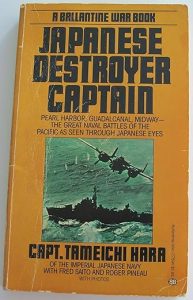
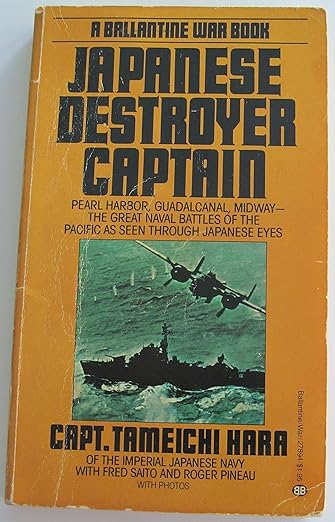
Sometime in the third hour of this audiobook, Captain Hara is describing a night destroyer engagement in the Solomons with the kind of tactical precision that comes only from having been there, and I found myself stopping the playback to sit with what I had just heard. Japanese Destroyer Captain by Captain Tameichi Hara is not the kind of military memoir that announces its importance loudly. It earns it slowly, through the accumulation of firsthand detail and the unmistakable authority of someone who survived battles that killed thousands of his countrymen.
The Pacific War has generated an enormous library of English-language histories and memoirs, almost all of them written from American or British perspectives. Hara's account is genuinely rare: a senior Japanese naval officer who survived the war, reflected carefully on what happened, and wrote with the kind of honesty about tactical errors and command failures that Japanese military culture of the era rarely permitted. Pearl Harbor, Guadalcanal, Midway, the great destroyer campaigns of the Solomons these are not background events here. They are scenes in which Hara was a participant, sometimes in peripheral roles and sometimes in the thick of the action. Reviewer John Gossman called it 'an incredible eyewitness account of the Pacific War by a ship captain who was intimately involved in many of the key small battles of the war,' and the distinction he draws between the small battles and the major engagements is important. Hara's perspective is at its most valuable not in the set pieces that every Pacific War history covers, but in the smaller actions, the night battles, the convoy escorts, the destroyer raids, where his level of tactical involvement gives him observations no historian could reconstruct from documents alone.
The Strengths
Brian Nishii's narration is a significant asset here. Hara's memoir was translated into English, and translated military memoir carries particular risks: technical terminology, Japanese names and place names, the rhythms of a prose sensibility that differs from the English tradition. Nishii handles all of this with care. His pacing suits the retrospective quality of the text, and his delivery of the tactical passages has clarity without becoming dry. The 15-hour-and-20-minute runtime is substantial, but the material justifies it. This is a dense book, not in an inaccessible way but in the sense that almost every chapter contains observations worth sitting with. Reviewer Joe T. noted it is 'a well known addition to the library of any serious WW2 naval student,' which is accurate but slightly undersells it. This is a book that rewards listeners who approach it without prior Pacific War expertise as much as those who come with deep background, because Hara is writing for comprehension as well as record. He explains context, he characterizes the naval officers around him, and he reflects on why certain decisions were made and whether they were correct.
Before You Commit to Japanese Destroyer Captain
Listeners should be aware that this is fundamentally a military and naval memoir. The personal details of Hara's life outside his service are present but not the primary focus. The emotional register is also distinctive: Hara writes with the measured tone of a professional reflecting on a defeat, and the grief and loss that run beneath the text surface obliquely rather than through direct emotional statement. That restraint is culturally specific and worth recognizing as a feature rather than a gap. The tactical passages require some engagement. Ship names, engagement geography, and tactical terminology appear frequently, and while Hara is generally careful about explanation, listeners unfamiliar with naval warfare may want to have a map of the Pacific theater accessible. Several of the nighttime destroyer engagements in the Solomons can be difficult to follow spatially without visual reference. These are minor caveats for what is otherwise a remarkably accessible primary source.
The historical context for this book's publication also matters. Hara wrote in the postwar period, when the Japanese military was not only defeated but deeply discredited within Japan itself. The willingness to publish an honest firsthand account by a senior naval officer, one that neither glorifies the war nor pretends Japanese command decisions were uniformly sound, was itself a meaningful act in that cultural moment. The book has remained in print for decades precisely because it fills a gap that pure retrospective history cannot fill. No amount of archival research can replicate what Hara observed from the bridge of a destroyer in the Solomons at night, or the conversations he had with officers who did not survive the war. Brian Nishii's narration carries this weight appropriately. He does not perform the material theatrically, which would have been the wrong instinct for a retrospective account that has its own sobriety built in. His delivery respects the documentary character of the text while keeping it accessible to listeners who are not historians, and that balance is harder to achieve than it sounds across fifteen hours of operational military memoir.
Recommended For
This audiobook is essential for anyone with serious interest in the Pacific War who has not yet encountered it. The Japanese perspective on these engagements is genuinely underrepresented in English-language military history, and Hara's account fills a specific gap that no secondary source can replicate. General history listeners who enjoy firsthand accounts of major 20th-century conflicts will find it absorbing despite its specialist subject matter. Those looking for narrative-driven popular history rather than military memoir may find the focus too narrowly tactical in places. But for the audience this book was written for, it remains, decades after its original publication, irreplaceable.
Good to Know
Do I need prior knowledge of the Pacific War to appreciate this audiobook?
Not extensively, but basic familiarity with World War II in the Pacific will help. Hara provides context throughout, but the engagements he describes, Guadalcanal, the Solomons campaigns, Midway, are most meaningful when the listener has some sense of their larger strategic significance.
How does this audiobook differ from American-perspective Pacific War accounts?
Fundamentally. Hara was present at engagements from the Japanese side, which means his observations about command decisions, tactical errors, and the experience of fighting a war the Japanese were gradually losing offer perspectives simply unavailable in American memoirs.
Is the audiobook suitable for general history listeners or primarily naval specialists?
Both, though with different rewards. Naval specialists will find the tactical detail invaluable. General history listeners will find Hara's voice and the strangeness of the perspective, a Japanese officer reflecting honestly on a catastrophic defeat, compelling enough to carry them through the technical passages.
How does Brian Nishii's narration handle the Japanese names and naval terminology?
With care and accuracy. Japanese names, ship designations, and geographic locations in the Pacific theater are handled consistently and clearly. Nishii's pacing allows the listener to absorb technical passages without feeling rushed through material that requires attention.