
The Short Version
- Narration: Malcolm Hillgartner narrates; no reviews are attached to this listing to weigh in on the performance.
- Themes: covert intelligence funding, the rise of a specific terrorist network, institutional failure to foresee catastrophe.
- Mood: Sober and dense, built on documented reporting rather than dramatized pacing.
- Verdict: A Pulitzer Prize-winning account with the reporting depth to justify its length, though listeners are working from zero secondhand reviews here.
Ghost Wars carries a credential most audiobooks in this catalog cannot claim: it won the Pulitzer Prize in 2005, and the listing states plainly that the book sent shockwaves through the Bush White House on publication. That is a heavy claim for any book to make about itself, but Steve Coll's reporting credentials, years covering the Middle East, access to previously classified government files, interviews with senior US officials and foreign spymasters, are specific enough to back it up rather than just asserting authority from the jacket copy alone.
The Verdict, Briefly
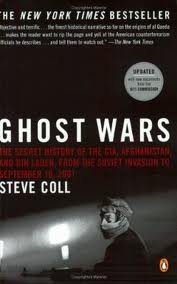
Pausing on the title itself before getting into the plot is worth doing. A ghost war is a hidden one, fought through covert funding and deniable operations rather than open declarations, and that framing matches the book's actual subject: the CIA's secret involvement in a jihad against Soviet forces in Afghanistan, run through channels designed specifically to stay invisible to public scrutiny at the time. The title is not a metaphor stretched to fit marketing copy, it is a fairly literal description of how the events described actually unfolded.
The scope here is genuinely large: the CIA's covert funding of an Islamic jihad against Soviet forces in Afghanistan, how that campaign sowed the seeds of Bin Laden's rise, the internal Washington battles over national security that followed, and ultimately American intelligence's failure to grasp the rising threat of terrorism in the years leading to September 11 and its consequences. The listing tags the book under both Asia and the Middle East, a dual classification that tracks with Afghanistan's own position straddling both regions geographically and, in this history, straddling both regional intelligence pictures as well. At nearly twenty-seven hours, the audiobook has the room to trace that chain of cause and effect in real detail rather than compress decades of intelligence history into a highlight reel, which is precisely the runtime a book with this much documented ground to cover actually needs.
Coll's own access is central to the book's authority. He gives what the listing calls the full inside story, built on classified files and firsthand interviews with the people who were actually in the rooms where these decisions were made, rather than secondhand reconstruction from public record alone. That kind of sourcing is what separates an investigative account like this one from a general-audience primer covering the same events from a distance. The book's own publication year and its Pulitzer win are the same year, 2005, which means the account arrived and was immediately recognized at the top level of journalism in the same twelve-month span, rather than picking up the prize on a later reissue once the material had already been absorbed into the historical record elsewhere.
Why Ghost Wars Works as an Audiobook
The Pulitzer Prize itself is the strongest single credential attached to this listing, awarded specifically for the depth and accuracy of the reporting rather than for prose style alone, which matters for a book covering intelligence history where getting the facts right is the entire point. Few audiobooks in any catalog can point to that exact distinction as evidence of quality rather than marketing language alone.
The runtime itself signals ambition: covering the CIA's role in Afghanistan from Soviet-era covert funding through the rise of a specific, consequential figure and on to the intelligence failures preceding September 11 requires connecting decades of decisions across multiple administrations, and twenty-seven hours gives Coll's reporting room to show its work rather than skip straight to conclusions. Anyone who wants to understand how a covert funding decision in one decade can echo into a national catastrophe in a later one gets a genuinely thorough account here rather than a condensed summary built for a quick overview.
The listing also frames this as an account of dramatic battles within the US government itself over national security, meaning the book is not just a chronicle of events overseas but a look inside Washington's own internal disagreements about how to respond to a threat that was not yet fully understood at the time. That internal-conflict angle gives the book a second axis beyond the Afghanistan material alone, one focused on how institutions fail to act on warnings even when some people inside them see the danger coming.
What Might Not Land
This listing carries zero written reviews, a genuinely unusual gap for a book with this much critical and awards recognition behind it, so no reviewer testimony exists here to weigh against the synopsis, positive or critical. Anyone deciding whether to commit to nearly twenty-seven hours is working entirely from the book's own reputation and the Pulitzer credential rather than from firsthand listener accounts.
The publisher field on this listing reads "Penguin Paperback, January 1," which is print-edition information rather than anything specific to the audiobook itself, a mismatch worth flagging rather than treating as a reliable signal about who actually produced this particular audio edition. Given the subject matter, covert intelligence operations, a specific rise to prominence, and the lead-up to a real, devastating attack, this is also worth going in prepared for a serious, sober account rather than anything resembling a thriller pace, even across its considerable length.
Who Should Pick Up Ghost Wars
Readers of serious geopolitical and intelligence history, especially anyone trying to understand the decades of decisions that preceded September 11 rather than just the day itself, are the clear audience for a book built on this level of documented access and reporting depth. The Pulitzer Prize credential alone should carry real weight for listeners who value journalistic rigor over a faster, lighter treatment of the same subject matter.
Wanting a brisk overview rather than a nearly twenty-seven-hour deep dive points elsewhere, and so does wanting to lean on other listeners' reactions first, since none exist on this listing yet to reference. Anyone serious about understanding the intelligence history behind one of the defining events of the last several decades gets about as credentialed a starting point as the format offers here, zero reviews notwithstanding.
A Few Questions About Ghost Wars
Does this audiobook have any listener reviews to go by?
No, this listing currently has zero written reviews attached, which is unusual for a book with a Pulitzer Prize and this much public attention behind it. Anyone deciding whether to listen is working from the book's own reputation and credentials rather than firsthand listener accounts.
Is this audiobook a dramatized thriller or a straightforward journalistic account?
It reads as serious investigative journalism rather than a thriller. Steve Coll's reporting draws on classified government files and interviews with senior officials and foreign spymasters, building toward a sober account of intelligence failures rather than a dramatized, fast-paced narrative.
Why does this audiobook run nearly twenty-seven hours long?
The book traces decades of intelligence history, from covert Soviet-era funding decisions in Afghanistan through the rise of a major terrorist network and on to the failures preceding September 11, and that scope requires real room to connect cause and effect across multiple administrations.
What makes Steve Coll's reporting in this audiobook different from a general history of the period?
Direct access is the difference. The book draws on previously classified government files and firsthand interviews with senior US officials and foreign spymasters who were actually involved, rather than secondhand reconstruction from already-public sources, which is part of why it won the Pulitzer Prize.






