The Short Version
- Narrator: David Vickery delivers this disaster history with measured authority, and his voice suits the factual, chronological structure of Fitzgerald's account.
- Subjects: Nuclear disaster and human error, Soviet institutional failure, ongoing lessons for energy policy
- Tone: Sober and documentary, with the controlled urgency of a well-researched incident report
- Bottom line: A competent and reasonably thorough overview of the 1986 disaster, including a useful Fukushima comparison, though technically inclined listeners should note some factual imprecision in the reactor mechanics sections.
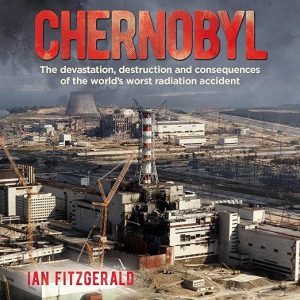
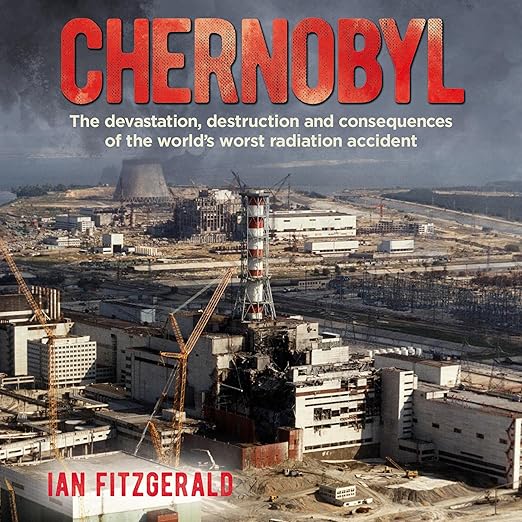
At 6 hours and 59 minutes, Ian Fitzgerald's Chernobyl operates as a focused overview rather than a comprehensive deep-dive. The explosion at Reactor Number Four in the early hours of April 26, 1986 remains one of the defining catastrophes of the twentieth century. This audiobook, narrated by David Vickery, traces the accident from its technical causes through the initial response, the investigation, and the broader questions about whether the lessons have actually been learned. Vickery's deliberate narration suits the methodical structure of the material, keeping the documentary tone consistent even across the human drama sections.
Fitzgerald's organizational approach is the book's clearest strength: he moves in roughly chronological sequence through the night of the disaster, the immediate response period, the political fallout and cover-up dynamics, the Gorbachev era's particular relationship with Chernobyl as a catalyst for glasnost, and the long-term health and environmental consequences. The inclusion of the 2011 Fukushima disaster as a comparative case is a useful structural choice that prevents the book from functioning as pure historical retrospect. Fukushima forces the question of whether the nuclear industry has genuinely incorporated the Chernobyl lessons or simply adapted its risk communication.
The book captures the human dimension of the disaster with reasonable fidelity. The engineers, firefighters, and first responders who worked on the initial containment, many of whom received lethal radiation doses, are treated with the respect their actions deserve. Fitzgerald's account of the deliberations among government officials in the days immediately following the explosion captures the specific toxicity of Soviet institutional culture: the compulsion to minimize, defer upward, and protect the system over the workers and the public. That dynamic is handled clearly and without oversimplification.
Vickery's Measured Clarity Beats Plokhy's Four Hundred Pages
For listeners who want a coherent, accessible account of the disaster without committing to the 400-plus pages of Serhii Plokhy's definitive study, this audiobook provides a serviceable entry point. The seven-hour format allows Fitzgerald to cover the essential arc, cause, response, investigation, consequence, without the granular technical and archival depth that a longer work delivers. For general history listeners, that tradeoff is entirely reasonable.
David Vickery's narration is measured and clear throughout. He handles the technical terminology with sufficient confidence that listeners do not lose the thread during the reactor physics explanations, and his pacing in the human interest sections gives those passages appropriate weight without becoming overwrought. The production is clean and professional, which matters for a topic where atmospheric sound design might feel exploitative. The Fukushima comparison allows Fitzgerald to address the question every contemporary Chernobyl history must answer: what changed? The comparison reveals both genuine regulatory improvement and persistent institutional temptations toward optimism under commercial and political pressure.
When Boron Is Wrongly Called a Reactor Fuel
One reviewer who brought technical nuclear engineering knowledge to the book flagged some meaningful factual errors in the reactor mechanics sections. The most notable: the review notes confusion between the Emergency Core Cooling System, which was disabled before the test, and the emergency backup generators, which were actually the subject of the test. Additionally, boron is described incorrectly as a reactor fuel rather than a neutron absorber used in control rods. These are not minor pedantic quibbles; they concern the specific causal sequence of the explosion, which is the technical heart of the Chernobyl story. General listeners may not notice these errors, but technically inclined listeners will.
For the definitive technical and archival account, Plokhy's Chernobyl remains the more rigorous option. For the most emotionally immersive treatment, Svetlana Alexievich's Voices from Chernobyl, composed entirely of survivor testimony, operates in a register this audiobook does not attempt. Fitzgerald's book occupies the middle ground: comprehensive enough for general audiences, accessible enough for efficient listening, with the caveat about reactor mechanics accuracy noted above.
The legacy of Chernobyl in contemporary energy debates is a thread Fitzgerald handles more briefly than some listeners may want, but it is present. The question of nuclear power's role in decarbonization has re-emerged in recent years as a serious policy discussion after decades in which Chernobyl and Fukushima made nuclear expansion politically impossible in most Western countries. Fitzgerald's account of how both disasters occurred and what was learned from each provides useful grounding for listeners who want to evaluate current nuclear safety claims with historical context. The book does not take a position on nuclear's future, but it equips listeners to think about the question with more historical specificity than they might have started with.
The documentary quality of this audiobook, its commitment to presenting the Chernobyl story as an organized account of what happened and what followed, gives it a durability that more emotionally stylized treatments may lack. Listeners who want to understand the Chernobyl disaster as historical fact rather than as cultural symbol, or who are encountering the topic for the first time after the HBO miniseries brought it renewed attention, will find this audiobook a grounded and useful starting point before moving to more comprehensive sources.
Nuclear Policy Newcomers Get a Grounded Starting Point
General history listeners who want a coherent, well-organized overview of the 1986 disaster and its contemporary nuclear policy implications will find this audiobook a time-efficient and solid choice. Listeners who want Chernobyl as context for thinking about energy transition, nuclear safety culture, or Soviet institutional dynamics will get what they need from the seven-hour format. The Fukushima section is a genuine added-value element that separates this book from strictly retrospective accounts.
Technically trained listeners should approach with the awareness that reactor mechanics are handled with some imprecision. If factual accuracy in those specific passages matters to you, supplement this audiobook with a more specialized source or read the technical review notes alongside your listen.