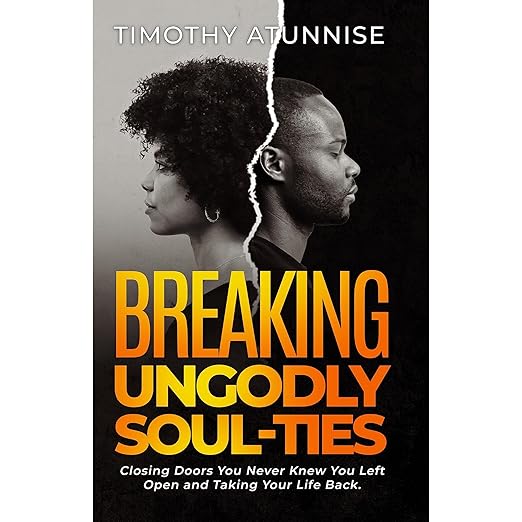
Four hours and eight minutes is the entire runtime Glovim Publishing House gives this audiobook, and the description crowds five separate promises into that window, running from identifying hidden attachments to reclaiming what the copy calls your birthright. Where a human performer would normally be credited, this page prints Virtual Voice. That is a machine label rather than a hire, which means no casting decision exists to evaluate. All of that belongs at the top of any honest write-up, because it changes what you are buying before a single claim inside the book gets weighed.
Naming Attachments, Then Moving Straight to Remedy
Atunnise works squarely inside the deliverance tradition, and the central claim arrives without hedging: invisible attachments formed through past relationships and past agreements keep believers bound, and those attachments can be named and then severed. Whether you accept that premise decides almost everything about how the next four hours land on you. The copy never presents itself as inquiry, never surveys what different churches teach on the subject, and never pauses to locate the idea inside any particular teaching lineage. It moves straight from identification to remedy. That is the shape of a manual rather than the shape of an argument, and the distinction matters early, because a listener hoping for the intellectual history of the concept will sit through all of it and come away with nothing on that front.
Prayers, decrees and declarations are the working parts. The description names spiritual warfare as its second movement and hands over language to speak against what it calls the forces of darkness, along with a promise of reclaimed authority over every area of a listener's life. On a page, material of that kind functions as a resource you flag, mark and return to when you need it. Delivered into your ears at whatever pace the file happens to move, it turns into something closer to liturgy, a thing you either say along with or let wash past you. Those two uses sit miles apart in practice, and nothing anywhere in the listing signals which one the audio format is expecting of you.
Twelve Sessions Compressed Into One Afternoon
Deliverance teaching usually reaches an audience as a long sequence assembled out of sermons, and the compression here counts genuinely in this book's favor. Someone who already holds the framework and wants the vocabulary, the diagnostic categories and the prayer language can have the whole of it inside a single afternoon rather than committing to a twelve-session course. The advertised structure is legible from outside as well: identify what binds, engage it directly, detach from it, apply practical steps, then step into what the book frames as a recovered inheritance. You can hear the joints coming before you reach them. For a category that sprawls as often as this one does, that much architecture is worth real money.
Warfare vocabulary appears constantly and without apology, and for the readership this was written for that is the point rather than a defect. The book assumes an audience that already believes a contest is underway and wants instruments for fighting it. Nothing gets softened for a skeptical ear, no section stops to justify the category to outsiders, and the payoff of that refusal is that the material never stalls in throat-clearing. It operates the way a field guide operates: name the thing, then act on it. Anyone who has worked through comparable titles will recognize the rhythm inside ten minutes and can move at speed. Anyone who has not will find the pace unforgiving, since definitions arrive once and are then assumed.
Filed Under History, With No History Inside
History is the category this listing has been filed under, with a single tag reading Africa attached beneath it. Neither label fits what the description actually offers. No period gets examined, no historical episode is reconstructed, no African church, city, movement or figure appears anywhere in the copy, and none of the five advertised sections amounts to a work of history under any definition of the word. Somebody's classification pass went wrong here. The practical cost lands on two different people: the shopper browsing that category who will never turn up a book sitting on the wrong shelf, and the shopper who arrives from that category expecting the past and gets a prayer manual instead.
Nobody has written a word about this one. The page carries three ratings averaging five stars with no text underneath any of them, which means the only account of the listening experience available anywhere is the publisher's own marketing. For a title promising healing and restoration across every area of a listener's life, that void does more damage than it would on a novel, where taste is the only thing at stake and a wrong guess costs you an evening. Three ratings is also an extremely thin base to build an average on. Read the five stars for what they are, which is three people who liked it well enough and left no explanation behind them.
Four Hours for Believers, Not Historians
Believers already at home in this tradition are the audience, and they will find the book does precisely what its cover advertises. If teaching on generational patterns, covenants and spiritual authority is familiar ground, and what you want is a compact, prayer-forward treatment you can work through between lunch and dinner, four hours is a fair ask of your time. The compression is the whole selling point. Anyone assembling a personal prayer practice around specific spoken declarations will also find the language directly usable, since the copy promises decrees you can say aloud rather than principles you would have to translate into your own words first.
Skip it if you want the idea interrogated rather than applied, if you need sourcing behind claims about what past relationships leave behind inside a person, or if devotional writing delivered by a synthetic credit with no human reader attached is going to bother you for four hours. Shoppers hunting African history, or the historical development of Christian teaching on bondage and freedom, should keep moving as well, because the shelf label promising them either of those things is simply incorrect. Treat the missing narrator name as the first piece of information on this page rather than as a footnote to it.
How long is the Breaking Ungodly Soul Ties audiobook and when was it released?
It runs four hours and eight minutes, which is short for the category, and Glovim Publishing House put it out on March 25, 2024. The recording is in English. At that length it fits comfortably into one afternoon, which is unusual for deliverance teaching that normally arrives as a multi-session series.
Is the Breaking Ungodly Soul Ties audiobook part of a series?
No. Both series fields on the listing are empty, and the description makes no reference to companion volumes, earlier titles or a planned sequence. It is presented and sold as a single freestanding guide, so nothing in the material assumes you have worked through an earlier book first.
What does the description actually promise a listener will come away with?
Five things, stated plainly: recognizing hidden connections, prayer language for spiritual warfare, a section on detaching from what it calls darkness, practical steps toward breakthrough, and a closing movement about reclaiming identity. Each is framed as something you do rather than something you consider, which sets the tone for the whole listen.
Why does this title appear under a history category with an Africa tag?
Nothing in the listing supports either label. The description is devotional and instructional throughout, carrying no historical period, event, region or figure anywhere inside it. Read both the category and the tag as a cataloging slip rather than as any clue to what plays.