The Short Version
- At its heart: Target selection, weapon design, radiation and its survivors, postwar reconstruction, persistent myths.
- Vibe: Brisk, explanatory, uneasy wherever the machine meets the testimony.
- Short version: A competent three-hour survey whose synthetic delivery suits the physics far better than the survivors.
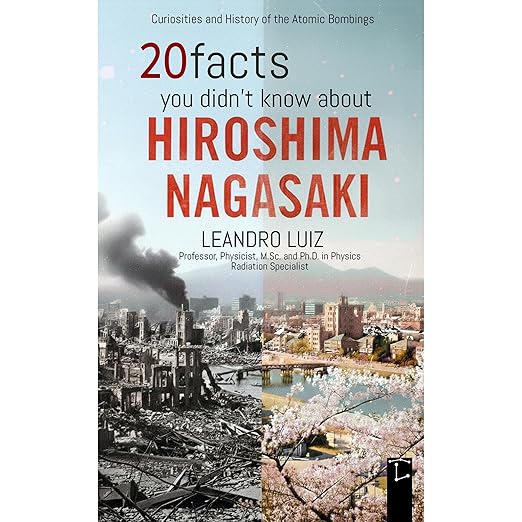
Where a reader's name would normally sit, this listing has two words: Virtual Voice. That is the credit, in full, for an audiobook about the atomic bombings of two cities and the people who lived through them. Three hours is the running time, entered as a round number with no minutes attached. LivroLeandro Editora e Comércio published it in March 2026 as the fourth entry in a series called Real Facts. None of those fields is a criticism on its own, and together they describe a particular kind of product with real strengths and one very specific limitation, which anyone considering this subject in this format should weigh deliberately rather than discover halfway through.
Leandro Luiz is the name on the byline, and the description refers to the author in the third person as a Ph.D. physicist who provides a clear, rigorous and accessible analysis. That credential does the heavy lifting in the sales pitch, and it appears nowhere else on the record: not after the name in the author field, not in a biographical note, not in the publisher's own imprint line. The imprint carries the author's first name inside it, which suggests a self-published operation rather than a house with an editorial staff. Neither observation makes the physics wrong. Both mean the claims arrive unvouched for, and on a subject where accuracy carries moral weight, the absence of any independent line of confirmation is worth naming plainly before you spend three hours here.
Six headed sections are previewed in the description, which is a helpful piece of transparency in a market where most listings preview none. The Target List explains how the two cities were chosen and which others narrowly escaped. The Physics of Destruction covers why the weapons detonated above the ground and what altitude changed. Little Boy and Fat Man are separated by their uranium and plutonium mechanisms. The Survivor Stories, the Myths versus Reality section and the passage on the so-called Hiroshima Shadows fill out the rest. Twenty facts are promised by the title and six themes are actually named, so the counting is looser than it looks.
Virtual Voice Handles Physics, Struggles With Survivors
Synthetic reading is the single fact that should govern this decision, and it cuts in two directions at once. For the technical material, a machine voice is largely fine: uranium and plutonium yields, detonation altitude and thermal pulses do not require interpretation, and a steady delivery may even help. For the survivor material it is a harder proposition. The Hibakusha are the moral center of this subject, and testimony delivered by a system that does not know what it is saying puts a distance between the listener and the person being quoted. Whether that distance troubles you is personal, and the listing gives you the information you need to decide in advance.
Yamaguchi is the strongest thing in the description. Tsutomu Yamaguchi is presented as the only person officially recognized as having survived both blasts, and a book that spends real time on that life has something no physics chapter can supply. The copy also promises the biological effects of radiation and the reconstruction of both cities afterward, described as miraculous. The reach from ordnance design through radiation medicine to postwar rebuilding is genuinely ambitious for three hours, and it is the shape of a good introductory survey rather than a scattering of trivia, whatever the title implies.
Chernobyl Raises a Question Nobody Has Checked
Anybody reading the description carefully will notice it stops being a description and becomes an advertisement. Get your copy today and uncover the hidden history of the Atomic Age, it says, and earlier it promises that in this book you will discover a list of things. Copy written for a product page has been left in place as the summary of a recording, which is common and still worth flagging, because the register tells you something about how much editorial attention the whole entry received. The same paragraph calls the work essential for anyone interested in the war, nuclear science and human resilience, which is three audiences claimed in one clause and a fair sign of how the book positions itself.
Chernobyl appears as the book's most interesting comparison and its most exposed one. Why did Hiroshima return to life while other nuclear sites did not, the copy asks, naming Chernobyl in parentheses. That is a real question with a real answer involving detonation altitude and fallout, and it is exactly the kind of question a three-hour survey can address well. It is also the kind of question that goes badly wrong when handled quickly, and no reviewer has been through this text to say which way it went.
Getting a second opinion is not currently possible. Nothing has been graded and nobody has written in, so the star field and the response column are equally blank. For a March 2026 release from a small imprint that is entirely expected, and it removes the one check that would matter most on a self-published history: whether anyone with knowledge of the period has read it and found the facts sound. You are relying on the author's stated credential and on nothing else at all.
Curious Listeners Get an Afternoon of Answers
Curious listeners who want the events explained in an afternoon, without a four-hundred-page commitment or a specialist vocabulary, are well served by this format and this length. Students meeting the subject for the first time will get the target selection, the two weapon designs and the survivor accounts in one pass. Anyone who has watched a documentary and come away with questions about why the detonations happened in the air, or what the shadows on the stone actually are, will find those questions answered directly rather than gestured at. Listeners who already read widely in the period will find less here, since a survey this short cannot go past the well-established account of either city.
Steer clear when precision and provenance matter more to you than convenience, because this record supplies a credential without a source, an imprint without an editorial history and a narrator field with no human being in it. Steer clear too if a machine reading survivor testimony strikes you as the wrong instrument for the material. Some listeners will find that a serious objection and others will not notice it after ten minutes. Knowing which one you are is the only real decision this listing asks you to make.
Who narrates this audiobook?
No person does. The narrator field reads Virtual Voice, which marks a synthetic reading rather than a recorded performance. That is the complete credit on the page, with no producer, no director and no second voice listed. Anyone sensitive to machine delivery on testimony-heavy material should sample it before buying.
How long is the audiobook and what ground does it cover?
Three hours, entered without minutes, published in March 2026. The description previews six themed sections: how the target cities were chosen, why the weapons detonated above ground, the uranium and plutonium designs, survivor accounts, common myths, and the thermal shadows left on stone. It reaches from ordnance to reconstruction.
Is this part of a series?
The record numbers it fourth in a sequence titled Real Facts, though nothing in the description connects it to the earlier three or suggests any reading order. Each appears to stand alone. The title promises twenty facts while the summary names six themed sections, so the numbering is decorative rather than exact.