Cortisol, Longevity, and Museum Prescriptions for Loneliness
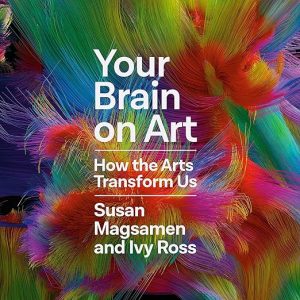
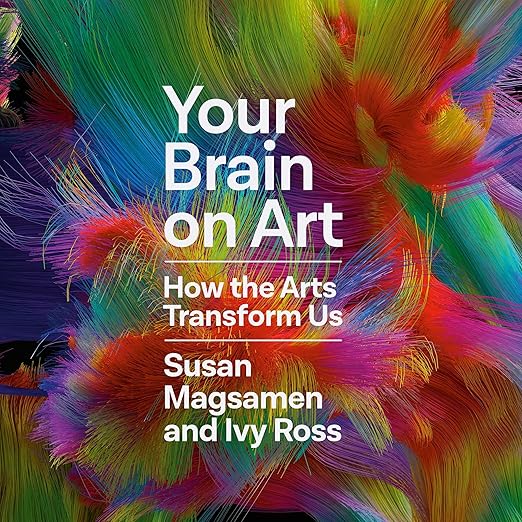
Forty-five minutes of painting can reportedly lower your cortisol levels regardless of skill, according to research this audiobook spends over nine hours unpacking. Is that a genuinely rigorous finding or wellness-adjacent oversimplification dressed up in a science jacket? Susan Magsamen and her co-author Ivy Ross, though only Magsamen is credited as author on this specific listing, make the case for neuroaesthetics, the study of how art and aesthetic experience physically change the brain, and they back it with enough specific claims, cortisol reduction, extended lifespan from monthly art engagement, museum visits prescribed for dementia and loneliness, that the book reads more like an evidence review than a lifestyle manifesto.
What sets this apart from a typical pop-science arts book is the reporting access. The synopsis names interviews with David Byrne, opera singer Renée Fleming, and evolutionary biologist E. O. Wilson, and a book that can put a Talking Heads founder and a Harvard-adjacent biologist in the same conversation about neuroaesthetics is working from genuine institutional access, not just secondhand research summary. A 4.6 average across nearly a thousand ratings, alongside finalist nods for the Inc. Non-Obvious Book Award and the Porchlight Business Book Award and a spot as a Bloomberg Best Book of the Year finalist, suggests the reception matched that ambition.
Jameson Narrates Data, Magsamen Directs a Real Lab
Narrator Ellyn Jameson handles roughly nine hours of research-dense material, moving between clinical mechanism, tuning fork vibrations and cortisol markers, and warmer, more narrative passages about museums prescribing gallery visits for isolated patients. Angela Duckworth's blurb, calling the book one that 'blew my mind,' sits right in the synopsis, and while blurbs are marketing by nature, the underlying claim, that engaging with art is a measurable health intervention rather than a nice-to-have hobby, is the book's actual thesis, argued with citation and interview rather than assertion alone.
Magsamen's own institutional position adds real weight to the claims here too. She directs the International Arts and Mind Lab at Johns Hopkins University, which places this book's central argument inside an actual, ongoing academic research program rather than a single author's independent theorizing. That institutional grounding is part of why the book reads less like inspirational nonfiction and more like a field report from an active area of neuroscience research, one that happens to be genuinely accessible to a general audience rather than locked behind academic paywalls.
A Three-Way Conversation Between Artist, Scientist, and Author
The breadth of mechanisms covered is genuinely impressive for a single book. Music's effect on cognitive skill-building, virtual reality's emerging therapeutic applications, interactive exhibits designed to dissolve the boundary between art and viewer, museum-prescription programs already running for patients with dementia or chronic loneliness: this isn't a book arguing art is nice, it's cataloging a specific, expanding field of applied neuroscience with a wide enough net to interest readers coming from psychology, medicine, education, or design just as easily as readers coming from a pure arts background.
The celebrity interviews function as more than window dressing too. David Byrne and Renée Fleming both bring practitioner-level insight, decades of firsthand experience with how creative practice actually feels from inside it, that a purely academic author interviewing only researchers wouldn't have access to. Pairing that lived experience against E. O. Wilson's evolutionary framing gives the book a rare three-way conversation between working artist, career scientist, and the authors' own synthesis, which keeps the material from ever feeling like a single-perspective lecture stretched to book length.
For listeners who've always treated art appreciation as a purely aesthetic, optional pleasure, this book makes a specific, evidence-backed case for reframing it as a health practice worth scheduling deliberately, the same way you'd schedule exercise. That reframing alone, positioning a museum visit or an amateur painting session as a measurable intervention rather than idle leisure, is likely to change how at least some listeners spend their free time after finishing, which is a meaningfully different outcome than most arts-and-culture nonfiction achieves.
Donna Barton Calls It a Textbook Style Read
Reviewer Donna Barton's caveat is worth taking seriously before you commit nine hours to this: she calls it a 'textbook style read,' still recommends it, but that specific phrasing signals dense, research-forward pacing rather than a breezier narrative nonfiction structure built around scenes and story. If you want your arts nonfiction to read like character-driven journalism, closer to a magazine feature than a literature review, recalibrate expectations here; this leans toward citation-dense argument building, with the celebrity interviews functioning as periodic relief from that density rather than the book's main structural spine.
Ellyn Jameson Has No Prior Narration Credits on Record
I could not track down any prior narration credits for Ellyn Jameson, which makes it hard to predict in advance how she'll handle the shift between hard research passages and the warmer interview sections. Dense science-communication audiobooks live or die on a narrator's ability to keep momentum through citation-heavy stretches without losing the listener's attention, and that's a genuinely different skill than narrating fiction or memoir. Sampling a few minutes before committing to the full runtime is a reasonable precaution here, simply because there isn't yet a body of prior performance to judge her against.
It's also worth naming the specific claims that carry the most weight versus the ones that lean more speculative. The cortisol-reduction research after a set period of art-making is grounded in published studies the book cites directly; the tuning-fork and interactive-exhibit material, while genuinely interesting, reads more like an emerging-field survey of promising early work than settled science. Listeners comfortable holding both categories, established finding and promising early research, in mind at once will get the most out of this without either dismissing the newer material or over-trusting it as equally proven.
Arts Educators and Therapists Wanting Research Backing
This audiobook is a strong pick for listeners curious about the intersection of neuroscience and creativity, wellness-minded readers looking for evidence-based rather than purely intuitive arguments for creative practice, and arts educators or therapists who want research backing for work they're likely already doing intuitively. The celebrity interviews also make this accessible to listeners who wouldn't normally pick up a neuroscience book at all but might follow David Byrne or Renée Fleming into one.
Skip this one if you want a purely entertaining, narrative-driven art history rather than research-forward nonfiction, or if Donna Barton's textbook-style warning sounds like exactly the pacing you tend to avoid in audio specifically, where dense material is harder to skim past than it would be on the page. Readers who already work professionally in neuroaesthetics or arts-medicine fields may also find the introductory framing covers ground they've encountered before.
- Narration: Ellyn Jameson handles the research-heavy material clearly, though no earlier audiobook credits turned up for her, making this an apparent first outing worth sampling before committing.
- Themes: Neuroaesthetics, stress reduction through creativity, arts-based therapy
- Mood: Curious and research-forward
- Verdict: Worth it for the science and the boldface interviews alike, provided you don't mind a textbook-style pace in places.
Before You Listen
Does this audiobook include the interviews with David Byrne and Renée Fleming in full?
The synopsis confirms conversations with both, along with evolutionary biologist E. O. Wilson, woven throughout the book's argument rather than set apart as standalone bonus content, so they're part of the main listening experience.
Is this audiobook more of a research textbook or a narrative listen?
Leans toward research-forward. One reviewer specifically calls it a 'textbook style read,' still worthwhile, but listeners wanting a breezier, story-driven arts book should adjust expectations toward denser, citation-heavy pacing.