The Short Version
- Narrator: Clive Chafer is the credited reader, working with a very long run of private correspondence that offers no scene, no dialogue and no plot to lean on.
- Subjects: The daily life of a working painter, poverty and dependence, color and technique, a correspondence sustained across years
- Tone: Intimate, unhurried, quietly devastating in accumulation
- Bottom line: Extraordinary primary material behind a listing whose format you should confirm before paying for it.
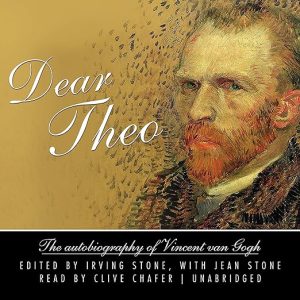
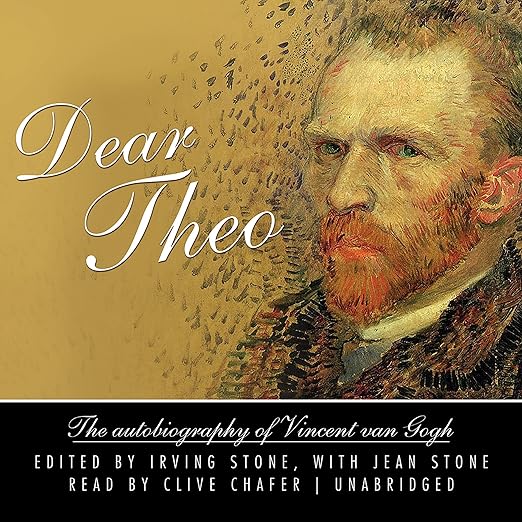
The product code on this audiobook listing is not a product code for an audiobook. It reads 0451095987, ten digits beginning with a zero rather than the letter-and-digit format a spoken edition carries, and it is the ten-digit version of the thirteen-digit ISBN sitting in the slot beside it. The publisher shows as Signet, the release date as April 1969, and the whole description reads: "Classic autobiography by Vinvent Van Gogh. Paperback." Only the reader credit and the duration point anywhere near a recording.
Reading Somebody Think, Not Somebody Explain
Vincent's letters are what the book actually contains, and they are one of the great primary documents in the history of painting. Written privately to Theo across years of poverty, obsession, illness and work, they record a mind arguing with itself about color, light, technique and money, usually inside the same paragraph. Nobody composed them for publication, which is exactly why they survive as evidence. You are reading somebody think, not somebody explain.
Nobody Credited as Editor, Compiler, or Translator
Attribution is the first thing that does not line up. The byline on this listing says Irving Stone. The description says the book is an autobiography by Van Gogh, misspelling his given name while doing it. A letter collection is neither of those things, since somebody selected, ordered and edited the correspondence into a book, and that person's judgment sits between the painter and the reader on every page. The page never says who did it or on what principle, and no editor, compiler or translator is credited anywhere in the record.
Twenty-one hours and seventeen minutes is the runtime, and correspondence at that scale behaves unlike any other long-form nonfiction. No plot pulls you forward. No chapter structure tells you where you are. What accumulates instead is a texture, the slow build of somebody's daily concerns until the recurring worries about money and light and his own health start to feel like your own. Anyone who samples ten minutes and concludes that nothing happens has understood the form correctly and drawn the wrong conclusion from it.
Chafer's Credit Is One of Two Real Facts
Letters were made for the ear, which is the best case anyone can make for this format. They were written to be read by one person in private, in a register pitched at an intimate listener, and reading them aloud restores something a printed collection flattens. No performance is required and none would help. The address is already conversational, already aimed at somebody specific, and a recording puts you in the position the correspondence assumes: one person being spoken to directly, at length, by somebody who trusts them.
Clive Chafer holds the reader credit, and that credit plus the duration are the only two facts on this entire page describing a recording rather than a paperback. Everything else, the imprint, the product code, the thirteen-digit ISBN, the 1969 date, the word Paperback closing the description, belongs to a printed edition. That is not a reason to avoid the title. It is a reason to confirm with the seller exactly which object you are buying before any money changes hands.
Research is what one four-star response came for, describing a general interest in the painter and finding the letters genuinely useful for it. Another response, at five stars, pairs the book with Lust for Life and argues nobody should go through life without reading both. Those two uses, scholarly and devotional, cover most of why people still buy this. Neither is a bad reason, and the second suggests the emotional payload survives the long distance between the writing and any present-day listener.
An ISBN Sticker Torn Off Van Gogh's Face
Two stars on this page do not mean what they appear to mean, and the writer of that grade says so directly. One star is awarded for the contents, which the same note states plainly deserve four, and the second star for the physical condition of the copy that arrived, because a seller's ISBN sticker had been applied over Van Gogh's face and tore it on removal. That response also reports the letters are extensive and record nearly every thought and feeling, before objecting that they have been heavily edited.
The rest of the pool is about the object too. One five-star note praises the smell and the feel of a first edition. Another consists almost entirely of confirming that a parcel arrived in good shape and that the buyer was glad not to have hesitated. Whatever those responses are measuring, none of it is a reading experience, and none of it could apply to a recording. On a page carrying only twelve ratings behind a 4.3 average, a couple of parcel reviews move the number considerably.
Calling this an autobiography sets an expectation the contents cannot meet, which is worth knowing before you start. An autobiography looks backward and shapes events into meaning. Letters written week by week have no idea what is coming, explain nothing for posterity, and repeat themselves whenever life does. That immediacy is the whole value, but a listener who arrived expecting a constructed life story will spend the early hours waiting for a narrative that never assembles itself.
Extraordinary Material, a Messy Listing
Anyone with a serious interest in Van Gogh should own this material in some form, and hearing it may be the better form. Art students, working painters, and readers who want to understand what a life in art actually felt like before the mythology attached itself will find the letters more useful than any biography. Listeners who enjoy long, slow, accumulating nonfiction with no narrative engine will also do well, as will anyone who has tried to make something difficult while broke and wants company in it.
Format matters more here than the listing lets on. Anybody who wants to underline, cross-reference or return to a particular letter is buying the wrong version, since correspondence is the form most punished by a linear recording. Anybody who wants the letters as company, running while they work or paint or walk, is buying exactly the right one. Buyers who need clean metadata before committing should treat this page as disqualifying, because it cannot tell you whether the letters are complete or selected, who edited them, or with confidence which object will arrive.
The material is extraordinary and the listing is a mess, and those two facts deserve to be weighed separately. Confirm the format before paying. Accept that you are getting somebody's selection rather than the whole correspondence, since nothing here says otherwise. Then settle in, because very few documents let you sit this close to an artist while the work is still going badly and the outcome is still unknown.