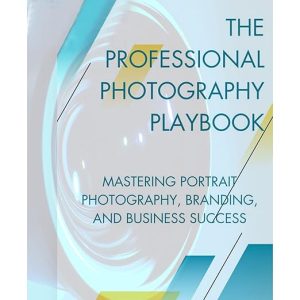
Jeff Lubin brings the credibility of a working Master Photographer who built a seven-figure portrait studio, and The Professional Photography Playbook audiobook delivers the kind of direct, experience-grounded business instruction that the genre often promises and rarely provides. This is not a book about improving your photography technique. It is a book about building the business structure, client relationships, and sales confidence that allow great photography to become sustainable income. Lubin makes that distinction from the first pages, and it clarifies the entire listening experience.
Called the Rich Dad Poor Dad for Photographers
Lubin's framework moves across five interconnected dimensions of a photography business: signature style and brand identity, client acquisition and retention, marketing partnerships, technical mastery of natural and studio light, and the sales process itself. The organization is practical rather than inspirational: each section addresses a specific operational challenge that portrait photographers face, and Lubin draws on his own studio's history to illustrate how the strategies translate to real outcomes. One reviewer describes the book as the equivalent of Rich Dad Poor Dad for photographers, which captures the combination of mindset reorientation and concrete strategy that Lubin attempts across the listening experience.
The Instagram chapter is worth noting specifically because it avoids the advice-by-way-of-vanity-metrics that most social media guidance in the creative professional space falls into. Lubin frames Instagram as a client acquisition tool with specific mechanics rather than a general visibility platform, and that reframing is one of the book's most practically useful interventions. The approach he describes for running sales sessions, including closing over video calls, reflects the realities of a market that has shifted considerably toward remote interaction, and the contracts and policies section, which addresses trust-building with potential clients before money changes hands, is among the more immediately applicable passages in the book.
The mindset content is integrated throughout rather than corralled into a separate chapter, which is the right approach for this kind of material. Overcoming self-doubt, handling rejection, and building confidence for sales conversations are treated as practical skills with trainable components rather than personality traits you either have or lack. One reviewer with an artistic background describes the lessons on mindset as invaluable, noting that the book speaks to the specific psychological challenges photographers face rather than generic entrepreneur encouragement.
The series context matters: this is book one of the Photographer's Mastery Series, which suggests Lubin intends to develop the framework further across subsequent volumes. What is covered here is substantial as a standalone entry point, addressing the foundational questions of business building that photographers most commonly struggle with before moving on to more advanced portfolio and scaling considerations.
Content First, Voice Just a Vehicle for It
The audiobook is narrated by Virtual Voice, the AI narration technology deployed across a portion of the Audible catalog. The delivery is clear and intelligible but does not bring interpretive warmth or tonal nuance to the material. For a business book of this kind, where the content is the priority and the delivery is a vehicle rather than an experience, the Virtual Voice performance is adequate. Listeners who find AI narration distracting may prefer the print version; those who can set that preference aside will find the content fully accessible across the four-and-a-half-hour runtime.
The relatively short runtime means Lubin covers his framework efficiently without over-explaining. The book reads less like a course you sit through passively and more like a concentrated conversation with a mentor who respects your time. For working photographers with limited listening hours, that economy is an asset rather than a limitation.
Brand Clarity Over Price-Cutting for Premium Clients
The book is focused specifically on portrait photography and on building a high-end studio business model. Wedding photographers, commercial photographers, and editorial or fine art photographers will find some of the frameworks transferable but the specifics misaligned with their market. Lubin's experience is portrait-studio-rooted, and the strategies for client acquisition, pricing, and sales process reflect that context directly throughout.
Listeners who already have established businesses and are looking for advanced portfolio management or scaling strategies may find the content pitched at an earlier stage than where they currently are. The playbook is most valuable for photographers who are making the transition from passionate shooter to intentional business owner, which is the majority of the audience for books in this space.
The chapter on attracting high-paying clients addresses one of the most persistent challenges portrait photographers face: the gap between the clients they want and the clients who find them. Lubin's approach centers on brand clarity and positioning rather than price-cutting, arguing that the path to premium clients runs through specificity of style and message rather than through competing on price. For photographers who have struggled with underpricing their work, this section offers a concrete framework for repositioning without losing existing clients in the process.
Portrait Photographers First, Other Genres Second
Portrait photographers who have the technical skills but have struggled to build a commercially viable business will find this audiobook addresses exactly the gap they have identified. Listeners who have found photography business books either too tactical, covering only gear and post-processing, or too abstract, framing success as purely a mindset issue, will appreciate Lubin's integration of both dimensions. Reviewers with photography backgrounds consistently describe the book as motivating them to implement the principles rather than simply acknowledging them, which is the best thing that can be said about a business guide.
Photographers who primarily work in genres outside portrait photography, or those looking for advanced portfolio management rather than foundational business construction, will find the applicability more limited. Within its intended audience, The Professional Photography Playbook delivers the clarity and specificity that most business guides in the creative professional space promise but fail to sustain across their full length.