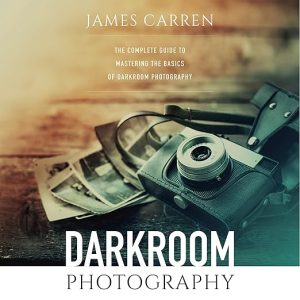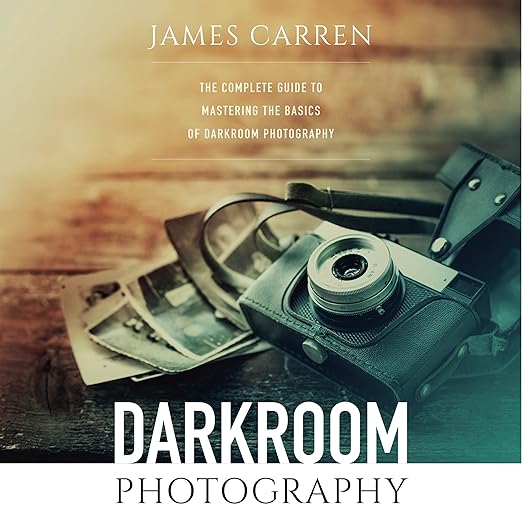
Darkroom photography occupies a particular place in contemporary visual culture: analog in a digital world, slow in an instant-gratification era, chemical and physical in ways that demand a fundamentally different kind of attention from the photographer. James Carren's Photography: Darkroom Photography, narrated by Dan Orders, is an audiobook introduction to that practice, and it arrives with a runtime of thirty-seven minutes. That length determines nearly everything about what this title can and cannot do. Carren's stated goal is to walk the listener through the process from selecting film to pressing and toning a print. The question is whether thirty-seven minutes is sufficient to deliver on that scope.
Orders' narration is clean and procedural, suited to a tutorial format that moves step by step through the darkroom workflow. The audio format imposes an inherent challenge on visual-technical content of this kind, since the procedures involved in loading a film reel, setting up chemical baths, and dodging and burning a print are deeply spatial and tactile. Listening to them described is categorically different from watching them demonstrated.
Comprehensive Scope, Thirty-Seven Minutes to Cover It
Carren structures the guide through the logical sequence of darkroom work: film selection and exposure, loading film into developing tanks, chemical processing for 35mm and 120mm formats, contact sheets, basic printmaking from filter selection through test strips, advanced techniques including dodging and burning, final print preparation including draining and pressing, toning for color effect, and digitizing the finished prints and negatives for archiving and online use. That is a genuinely comprehensive scope for an introduction, and covering it in thirty-seven minutes means each section receives only a few minutes of treatment.
At that pace, the audiobook functions best as a conceptual map of the darkroom process rather than as instruction you could follow without other resources. A listener who has never been in a darkroom will emerge with a coherent mental model of what happens at each stage and in what order. That mental model has real value as preparation for a class, a workshop, or a practical session where an experienced printer can demonstrate what the audio can only describe. One reviewer correctly identified that the procedural explanations are light on the reasoning behind each step, which is where audio tutorials often fall short: you need to know not just what to do but why, and the why is where the craft knowledge lives.
A Contemporary Addition to a Centuries-Old Practice
The case for choosing the audiobook format for this content is specific. As a primer that you listen to before visiting a darkroom or before watching online video tutorials, the audio version works reasonably well. Orders' narration is calm and ordered, which matches the methodical nature of darkroom practice. The thirty-seven minutes are genuinely informative as a conceptual overview, and the topics Carren covers, from ISO selection through chemical disposal through the distinction between basic printmaking and advanced dodging and burning, are the right topics for a beginner introduction.
The book's treatment of toning is worth noting specifically. Toning is an advanced technique that adds color and distinctive quality to prints, and the audiobook positions it as one of the finishing skills that distinguish a darkroom printer who has developed real craft from a beginner working through basic mechanics. Including it in an introduction, even briefly, signals that the book understands the arc of darkroom education, even if the full runtime prevents it from delivering that education completely.
The book also addresses the digitizing step at the end of the darkroom workflow, which is a genuinely contemporary addition to a centuries-old practice. The advice to digitize your prints and negatives for further reference and for your website reflects how most working photographers today operate across both analog and digital domains simultaneously. That integration point is useful for a beginner to understand early: darkroom work does not exist in opposition to digital photography but alongside it, and the prints you make on photographic paper can be documented and shared through digital channels just like any other image file.
You Never See the Chemicals or the Enlarger
Mixed reviews indicate a genuine mismatch between what some listeners expected and what the audiobook provides. One reviewer with darkroom experience found the information insufficient and noted that free online resources provide more depth. That is a fair assessment. The audiobook is not competing with comprehensive video tutorial series or hands-on workshops; at best it competes with other short written introductions, and in that category it provides a serviceable if brief orientation.
The audio format also has a specific limitation for this content that no narrator can overcome: you cannot see the equipment, the chemicals, the film tank, or the enlarger. For a practice as visually and physically specific as darkroom printing, the gap between verbal description and the actual kinesthetic experience is substantial. Listeners should approach this as audio that primes them for visual learning, not as audio that substitutes for it.
Vocabulary to Bring to Your First Workshop
This audiobook serves the curious beginner who wants a quick conceptual overview of the darkroom process before committing to more substantial learning resources. Listeners who have signed up for a darkroom workshop and want to arrive with some foundational vocabulary will find the thirty-seven minutes useful as preparation. Film photographers who have been shooting but have never processed their own film will get an accurate picture of what the darkroom process involves at each stage. Experienced darkroom printers will find nothing here that they do not already know, and reviewers with existing knowledge have confirmed that. The realistic expectation is a starting orientation, not a complete guide, and the audiobook delivers on the former without pretending to the latter.
Quick Take
- Voice: Dan Orders reads James Carren's brief tutorial in a workmanlike style that suits the procedural format, though at thirty-seven minutes the performance has little room to develop any distinctive voice.
- Big ideas: Analog photography workflow, chemical processing, print finishing techniques
- Atmosphere: Tutorial-focused and procedural
- Worth it?: A very short introduction to darkroom basics that functions as a starting orientation rather than a complete guide, best treated as a first listen before pursuing more comprehensive resources.
Frequently Asked Questions
At thirty-seven minutes, can this audiobook realistically introduce darkroom photography?
At this length, the audiobook functions as a conceptual orientation rather than a complete instructional guide. It maps the process from film selection through toning and digitizing in enough detail to orient a complete beginner, but practical darkroom skills require hands-on learning and more comprehensive visual resources.
Does this audiobook explain the reasons behind each darkroom step, or just the procedures?
Reviewers noted that explanations are relatively light on the reasoning behind each step. You will learn what to do at each stage of the process, but the depth of explanation around why particular techniques produce particular results is limited by the short runtime.
How does the audiobook format work for a visual and tactile subject like darkroom printing?
The format is inherently limited for content that involves physical equipment, chemical processes, and spatial orientation. Dan Orders' narration is clear, but no audio description fully substitutes for seeing a film tank loaded or an enlarger adjusted. Use this audiobook as a primer before engaging with visual demonstrations.