In Brief
- Voice: Virtual Voice handles the material adequately, though the conversational warmth Hammett brings to her writing on the page loses something without a human narrator to carry the humor and vulnerability.
- Big ideas: Late-life reinvention, solo adventure, confronting fear and ageism
- Atmosphere: Spirited and warm, occasionally uneven
- Worth it?: A genuine and often funny retirement memoir for anyone who has ever wondered whether it is too late to start something completely new.
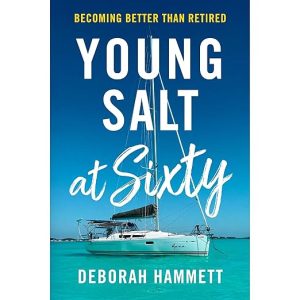
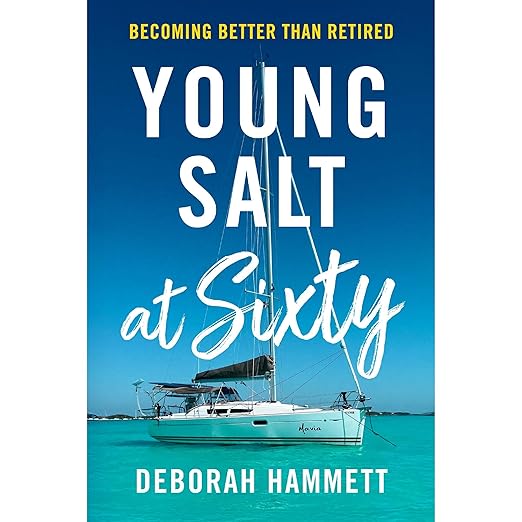
I came to Young Salt at Sixty on a rainy Tuesday afternoon when I was deep in a stack of literary fiction that had been making me feel vaguely inadequate. Deborah Hammett's memoir arrived as a kind of antidote. A retired teacher from Martha's Vineyard who discovers sailing in her sixties and then solo-navigates a 34-foot boat from Vermont to the Southern Bahamas and back is not the kind of premise you encounter every day, and I found myself genuinely curious whether the book could deliver on its audacious setup.
It mostly does. The sailing itself is vivid and specific. Hammett writes about docking, squalls, the steep learning curve of single-handed ocean passage, and the particular psychology of being alone at sea in a way that feels earned rather than performed. Her background as a teacher surfaces throughout in how she explains nautical concepts, which is either charming or a little schoolroom-ish depending on your patience. I found it charming, mostly.
A Closer Look at Young Salt at Sixty
This is a memoir about reinvention, but Hammett is smart enough to know that reinvention is hard work and not always graceful. She does not pretend the learning was easy or that she was a natural. One reviewer noted she captures the "I got to figure this out/YouTube" spirit of modern self-teaching with accuracy, and that rings true. There is something refreshing about a memoir protagonist who is visibly struggling and laughing at herself in equal measure.
The book's weaker passages come toward the end, where a couple of readers noted a shift in tone toward something more judgmental and entitled. I would not go quite that far, but I understand what they mean. The introspective honesty of the middle sections gives way to a more instructional register that sits less naturally on the material. Hammett is better as a storyteller than as a life-coach, and the book is most alive when she is describing conditions off Cape Hatteras or negotiating a marina she has never entered before.
What Makes Young Salt at Sixty Worth Hearing
The Virtual Voice narration is a functional but imperfect vessel for this story. Hammett's voice on the page has real personality, a dry wit, a self-deprecating humor, a teacher's instinct for precision, and a human narrator would have delivered that texture in full. The AI voice is clear and paced well enough, but it flattens the comedy. Given that the book's appeal rests substantially on personality, this matters more here than it might in a drier nonfiction work.
That said, the content itself carries. Listeners who have spent time on sailboats will find the technical passages satisfying and accurate. Those who have never touched a tiller may find the glossary-style sailing education a bit slow in the opening chapters, though it pays off once Hammett is actually at sea. The bonus for non-sailors is that you do not need to care about sailing to care about this book. What Hammett is really writing about is the refusal to accept a smaller life.
Things to Know Before Starting Young Salt at Sixty
The book is honest about failure and fear, which is its greatest strength. Hammett does not spare herself the embarrassing moments, the miscalculations, the stretches where she is genuinely frightened. This is far more useful and interesting than the average retirement-adventure memoir, where the protagonist seems to succeed effortlessly at everything they attempt. The specific detail of her solo New England-to-Bahamas route gives the narrative a real geography you can follow.
What you should not expect is a tightly structured narrative arc. The book meanders at points, and some passages read more like logbook entries than memoir prose. Readers who require their nonfiction to have the propulsive momentum of literary memoir may find themselves skimming. Readers who are happy to spend time aboard with a witty and stubborn sixty-year-old sailor will find plenty to enjoy.
Who Deborah Hammett Is Writing For
This audiobook is well suited to anyone in or approaching retirement who is wrestling with the question of what comes next. It works well for sailing enthusiasts at any level, and for readers who enjoy women's adventure memoirs in the tradition of Tania Aebi or Jessica Watson. Those looking for polished literary prose or a neutral AI narration experience should be aware that Virtual Voice has real limitations here. If you can find a print or Kindle version and want the full comedic effect, that may serve you better.
Before You Listen
Does Deborah Hammett have any sailing experience before the events of this book?
No. Hammett takes up sailing after retiring from her teaching career on Martha's Vineyard, with no prior experience. The book traces her learning process from complete novice to solo ocean passage.
How technical is the sailing content? Do I need to know about boats to follow along?
Hammett explains terminology as she goes, drawing on her teaching background. Non-sailors can follow the narrative without difficulty, though the opening chapters are more instructional than the later sea passages.
Is the Virtual Voice narration a significant drawback for this particular book?
More than for some titles, yes. Hammett's writing has a strong personality and comedic timing that a human narrator would amplify. The AI voice delivers the text clearly but misses the humor.