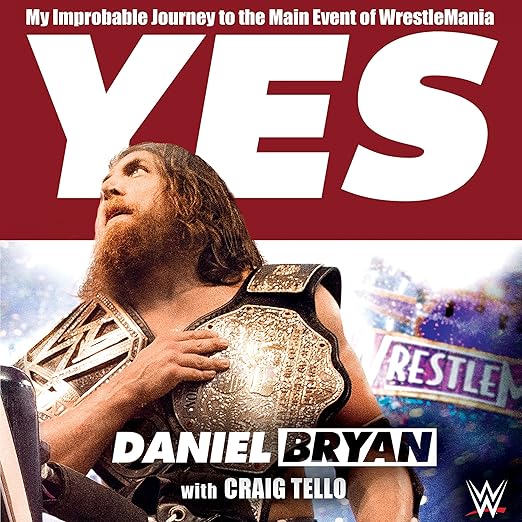
I am not a wrestling fan in any sustained sense, but I have listened to enough sports memoir to know when a person is telling you the truth about what their professional life actually cost them. Daniel Bryan is telling the truth throughout Yes!, which is why the book works for listeners well outside his core audience. The wrestling world is the setting; the subject is what happens when a person who is genuinely excellent at something is told, repeatedly and institutionally, that their excellence is the wrong kind.
Bryan Danielson grew up in Aberdeen, Washington, which is not an origin story the WWE's image machinery could easily package. He spent ten years working independent wrestling circuits around the world before WWE signed him, during which time he developed a technical skill set that the industry's power structures did not particularly value. The book covers that decade in enough detail to give listeners a genuine sense of what independent wrestling is and what it asks of the people who do it. The romance with Brie Bella, the strained relationship with WWE management, and the famous YES! chant that somehow became a movement are all given appropriate space.
What makes this memoir distinctive within its genre is what Bryan does not do. He does not use his autobiography as an opportunity to litigate grievances in the theatrical way that wrestling memoirs often do. He is candid about his frustrations with WWE management and about the ways he felt dismissed, but the candor is dry and specific rather than performative. One reviewer notes that the book does not feel like it has been through WWE's sanitizing machinery, which is high praise in a genre where the company's relationship with talent creates strong incentives toward self-censorship.
The WrestleMania 30 passage is the emotional climax the book has been building toward: Bryan competing against Triple H for the right to enter the main event, then facing Randy Orton and Batista in the same night. For listeners who know the history, the account of that week and that night carries genuine weight. For those who do not, Bryan builds enough context that the stakes are comprehensible without prior knowledge of the storyline.
Highlights
Bryan narrating his own work is the right choice for material this personal. His delivery is conversational and low-key, which suits a man whose defining quality as a performer was the ability to make a massive arena feel like he was speaking directly to each person in it. He does not over-sell the emotional moments. When he describes what the YES! chant meant to him and what it meant to the fans who adopted it, the restraint in his voice is part of the message.
Co-writer Craig Tello clearly worked to let Bryan's voice come through rather than imposing a more conventional sports-autobiography structure. The result reads like Bryan actually wrote it, which is the highest compliment this kind of collaboration can receive. Reviewers consistently note that the book feels genuine, unfiltered by marketing priorities.
What to Watch For in Yes!
The book was published in 2015, before Bryan's subsequent retirement due to injury, his controversial return to the ring, and the later chapters of his career. Listeners familiar with what came after WrestleMania 30 will be reading with some awareness that the story continued in ways the book could not have anticipated. The ending, which is triumphant and forward-looking, takes on a different quality knowing what followed.
Listeners with no prior knowledge of professional wrestling will encounter terminology and character names that require some patience. Bryan is relatively good about contextualizing the world for non-fans, but the independent circuit sections in particular assume some baseline familiarity with how wrestling's ecosystem works.
Who It's For
Required listening for Daniel Bryan fans and strongly recommended for anyone who follows WWE. Also an engaging listen for sports-memoir readers interested in stories about institutional resistance to outsider excellence, regardless of the specific sport. Less suited to listeners who need extensive sports-world familiarity before finding memoir engaging, though the human story is accessible enough that casual interest suffices.
- Read by: Daniel Bryan narrating his own life is exactly right; his quiet, wry delivery is the sound of a man who has always been underestimated and is quietly fine with it.
- At its heart: The outsider proving worth in a system built against him, the gap between fan devotion and corporate recognition, the physical and personal costs of a life on the road
- Vibe: Candid and self-deprecating with flashes of genuine pride, never chest-thumping
- Short version: One of the most honest wrestling memoirs in the genre, written by a man whose modesty is itself a kind of radical act in an industry built on self-promotion.