Before You Press Play
- Voice: Richard Trinder keeps momentum across a fact-dense, decades-spanning script without losing the human throughline.
- Big ideas: Pop music history, chart culture, five decades of genre evolution
- Atmosphere: Sweeping and immersive, breezy despite the scale
- Worth it?: A genuinely comprehensive pop history worth the nearly thirty-two-hour commitment for serious music fans willing to take it in pieces.
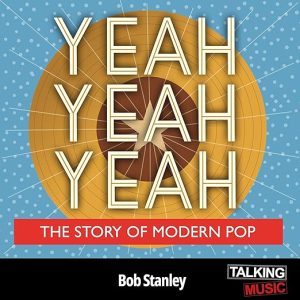
Thirty-one hours and fifty-seven minutes is a serious commitment for any audiobook, and Bob Stanley asks for every minute of it to tell the entire story of modern pop music, from the birth of the singles charts in the 1950s through the digital turn of the year 2000. Yeah Yeah Yeah: The Story of Modern Pop moves across an enormous range of names, Billy Fury and Roxy Music sitting alongside TLC and Britney Spears, Led Zeppelin next to Donna Summer, and Stanley, a working musician himself as a member of Saint Etienne, writes with the ear of someone who has spent decades both critiquing pop and making it.
He Talks It and He Walks It
Reviewer speedtripledave puts the book's central credibility argument best: Stanley 'talks it AND walks it,' bringing both critical distance and firsthand musical experience to a genre history that could easily have tipped into either dry academic distance or breathless fandom. Twenty-five years into Saint Etienne's own recording career by the time of writing, Stanley clearly understands pop from inside a working band's perspective as much as from a critic's chair, and that dual vantage shapes how the book handles both chart-topping giants and genuinely obscure names with equal seriousness.
The scope alone is the achievement here. Comprehensively tracing fifty years of pop across genre, geography, and format shifts, from vinyl singles through the digital transition, without collapsing into either a dry chronological list or an incoherent grab bag of favorites is genuinely difficult, and reviewer Quiet Wyatt's description of the book as 'long but breezy' captures the balance Stanley strikes between exhaustive coverage and readable momentum.
The Title Winks at 'She Loves You'
The title itself is a small piece of pop-music wordplay worth noting: 'Yeah Yeah Yeah' echoes the Beatles' 'She Loves You' refrain, arguably the single most recognizable moment of pop's commercial explosion into a truly mass, generation-defining medium, making the title itself a compact thesis statement before the book even begins. Stanley is signaling that this history starts from pop's most joyful, disposable-sounding surface and insists on taking that surface seriously as real cultural history rather than treating it as beneath serious critical attention.
Structuring fifty years of pop into a single coherent narrative rather than a chronological encyclopedia is the harder editorial challenge most single-genre histories never fully solve, and Stanley's choice to follow through-lines, one girl group begetting the next, one production technique begetting another, rather than a strict year-by-year march, is what keeps momentum from collapsing under the sheer volume of names covered.
Rummaging Through Old Records While Listening
For a project this dense with names, dates, chart positions, and genre transitions, sustained narrational clarity across thirty-two hours matters enormously, and Richard Trinder's other nonfiction narration work suggests real comfort with exactly this kind of fact-heavy material, keeping momentum through dense information without losing the human throughlines connecting one era's sound to the next. That's the specific skill a project this size actually needs: not dramatic flair, but reliable pacing across an enormous amount of ground.
Reviewer C. R. Martin describes getting pulled into 'rummaging' through an old record collection while listening, tracking down songs mentioned just to hear them again, which speaks to how actively Stanley's writing engages listeners rather than washing over them passively. For anyone who grew up with even a fraction of the artists covered here, that active, rediscovery-driven listening experience is arguably the book's biggest reward, more than any single fact or chart statistic.
Saint Etienne itself is a useful reference point for listeners unfamiliar with Stanley's music beyond his writing: a British group active since the early 1990s blending sample-based production with a deep, referential love of pop history, essentially the same sensibility driving this book. Listeners who enjoy the band's music will likely recognize the same magpie curiosity and genre-agnostic enthusiasm in the prose itself.
Closer to an Epic Fantasy Than a Music Book
The runtime is the obvious, unavoidable consideration. At just under thirty-two hours, this asks for a real time investment, closer to committing to a lengthy epic fantasy series than to a typical music-history audiobook, and listeners should plan accordingly rather than expecting to finish this in a weekend. Breaking it into chapter-length sessions organized around specific decades or genres is likely the more sustainable approach than attempting long continuous sittings.
Coverage this broad also means depth on any single artist or scene stays proportionally limited; Led Zeppelin or Donna Summer each get their place in the larger narrative rather than a dedicated deep-dive chapter. Listeners wanting an exhaustive biography of one specific act or movement should treat this as a map of the whole territory rather than a close study of any one region within it.
A 4.3 Average Reflects Runtime Attrition
A 4.3 rating from 550 ratings, slightly more mixed than some of the other titles in this genre, likely reflects the runtime itself as much as the content; a thirty-two-hour commitment inevitably draws some listeners who start strong and lose momentum partway through a project this size, regardless of how well the material itself holds up chapter to chapter.
Genre and geography balance is also worth a direct note: the synopsis emphasizes a heavily British and American axis, Billy Fury through Roxy Music on one side, TLC and Britney on the other, a fair reflection of where mainstream chart pop was actually concentrated across this period, but listeners hoping for deep coverage of pop scenes outside the Anglo-American mainstream should adjust expectations accordingly.
A Book You Live Inside for Weeks
Serious pop music fans who want the full historical throughline connecting the birth of the singles chart to the streaming era's arrival are the clear core audience, and listeners who enjoy start-to-finish chronological cultural history generally, not just music writing specifically, will find the same satisfaction here that a well-built decades-spanning documentary series offers.
Listeners who enjoyed similarly ambitious single-genre histories, the kind of book that tries to be the definitive account of an entire cultural form rather than one narrower slice of it, will recognize the same appeal and the same scale challenge here. This sits closer to an encyclopedic reference work you live inside for weeks than to a tight, single-sitting cultural history, and going in with that expectation calibrated correctly matters more for this title than for almost anything else in the genre.
Skip this one if you're looking for a focused study of a single genre, decade, or artist rather than the sweeping whole; the scale that makes this impressive as a complete history also means anyone wanting to go deep on just the 1980s or just American pop specifically may find the broader lens gives less room to any single chapter than a dedicated book on that narrower subject would.
How long is the Yeah Yeah Yeah audiobook, realistically?
Thirty-one hours and fifty-seven minutes, closer to a lengthy series commitment than a typical music-history listen, best tackled in chapter-length sessions by decade or genre.
Does this audiobook favor certain genres or eras of pop music over others?
No, it's genuinely comprehensive, covering everyone from Billy Fury and Roxy Music through TLC and Britney Spears, spanning the 1950s charts to the 2000 digital transition.
Is Bob Stanley qualified to write pop music history, or is this armchair criticism?
He's a working musician, a member of Saint Etienne for over two decades, giving the book a practitioner's perspective alongside the critical one, though narration itself is credited to Richard Trinder.
Should I listen to this audiobook straight through or in sections?
In sections. Reviewer Quiet Wyatt calls it 'long but breezy,' but nearly thirty-two hours rewards breaking into decade or genre-focused sessions rather than long continuous sittings.