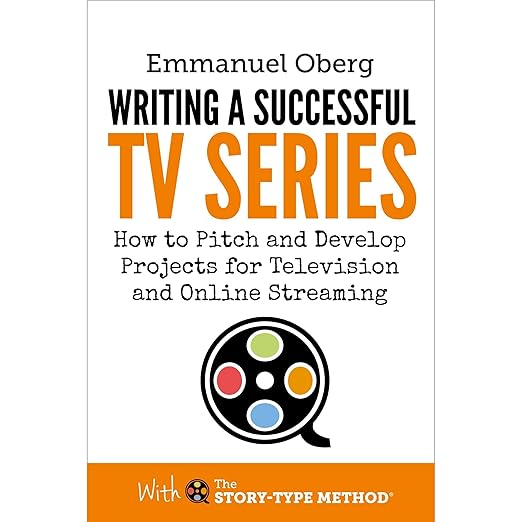
Emmanuel Oberg's audiobook Writing a Successful TV Series arrives as the third volume in his Story-Type Method collection, following Screenwriting Unchained and The Screenwriter's Troubleshooter. That positioning matters: this is not a standalone introduction to television writing but a development of a method that Oberg has been refining across two previous books and twenty-five years of professional screenwriting and workshop facilitation. The audiobook, at eight hours and forty-nine minutes, has the scope to work through structural principles with a depth that shorter television writing guides and their prescriptive rule sets obscure.
Not Just Teasers and Cliffhangers
Oberg's central argument is a useful corrective for working writers who have absorbed the dominant formatting guides: "modern series narratives are not just about teasers and cliffhangers." The Story-Type Method distinguishes between the surface conventions of television series formats - what networks and streamers historically expected on the page - and the underlying dramatic architecture that makes audiences return episode after episode. The case studies he selects to demonstrate this distinction are deliberate and well-chosen: Stranger Things, Killing Eve, Breaking Bad, Fleabag, Big Little Lies, Happy Valley. These are not random examples but a curated set of series that broke conventional procedural rules while achieving extraordinary audience engagement. Oberg uses them to show what those rules are actually doing beneath the surface, and how to replicate that function without following the template.
Reviewer John Calhoun, who described his journey from Syd Field through Save the Cat and through many screenwriting books before finding Oberg's framework, is a testimony worth taking seriously in a field saturated with competing methods. The emphasis on reaching "the widest possible audience, both at home and abroad, without following prescriptive and outdated rules" positions this as a practical guide for the streaming era specifically - a period where the procedural hour and the network pilot structure no longer define what success looks like.
Neutral Narration, an Acceptable Trade-Off Here
The audio format serves Oberg's teaching style reasonably well. His prose is described consistently as "clear, conversational" - an authorial voice that was presumably calibrated for the workshops and online courses where this material was originally developed. Listening to the concepts unfold preserves something of the workshop dynamic that a read page can lose. The Virtual Voice narration is neutral rather than expressive, which is an acceptable trade-off for instructional material where the content carries the experience. One reviewer described Oberg as "holding your hand every step of the way to developing a solid draft of your TV series," which captures the methodical scaffolding quality that distinguishes this from more abstract screenwriting theory.
He covers series bibles, pilot structure, character design, storyline architecture across seasons, and the season-level design questions that most television writing guides either ignore or reduce to formula. The companion online course - referenced in the synopsis - extends the case study work further into hands-on project work, but the audiobook is designed to be complete without it. Writers who want to understand why Fleabag works structurally, and how to apply that understanding to their own project rather than simply imitating the form, will find the analysis in the later chapters specifically valuable.
Built for the Development Stage, Not the Room
Being the third volume in a series should not discourage new readers, but it does establish context. Oberg references his earlier books and the Story-Type Method framework throughout, and some of the specific terminology - distinctions between story types, the vocabulary of his structural analysis - will be clearer with prior exposure to Screenwriting Unchained. That said, Oberg is a thorough teacher who does not assume his readers have read everything he has written. He re-establishes key concepts before applying them, which may feel slightly redundant for readers who have followed the earlier volumes.
The focus here is explicitly on getting a series bible and pilot commissioned - the development stage rather than the production or writers' room stage. Writers who are already working within a writers' room or who are looking for on-set production guidance will need other resources for those dimensions of the process. This is a development guide, addressing the creative and structural decisions that happen before a series enters production, and that specificity is a feature rather than a limitation as long as listeners understand where in the writing career this book applies most directly.
Fleabag Breaks Every Conventional Television Rule
The book's treatment of Fleabag deserves particular mention because it illustrates Oberg's method at its most useful. Fleabag breaks virtually every conventional television rule - it is a six-episode series with minimal plot in the traditional sense, an unreliable narrator who addresses the camera directly, and a tonal range that moves between sitcom comedy and genuine tragedy within single scenes. By analyzing why Fleabag works dramatically despite flouting conventional structure, Oberg demonstrates that the underlying architecture he identifies is operating even when the surface rules are abandoned. That analysis gives writers practical permission to deviate from templates while understanding what structural functions they still need to serve - which is considerably more useful than either following the rules rigidly or abandoning them without understanding what they were doing.
Writers Who Feel Constrained by Standard Methods
Television and streaming series writers at any experience level who feel that the existing formatting guides are not explaining the structure of the shows they actually want to write will find Oberg's framework the most useful corrective currently available in audio form. Writers with strong feature film backgrounds adapting their skills to series will find the book's explicit attention to what is different about series structure invaluable. Showrunners, development executives, and story editors working with writers in development will find the framework useful for giving feedback that goes beyond surface formatting. Complete beginners to screenwriting who have not yet absorbed the basics will want a more foundational guide alongside this one, but for writers who know the standard methods and feel constrained by them, this audiobook addresses exactly the gap they have been looking for.
At a Glance
- Narrator: Virtual Voice handles Oberg's instructional prose adequately - the material is concept-heavy and reference-driven rather than narrative, which suits neutral delivery; enthusiasts of the subject will not find the narration an obstacle.
- Subjects: story type distinction between surface format and underlying dramatic architecture, bible and pilot design for streaming, building for global audiences without prescriptive rules
- Tone: Methodical and generous, with a teacher's patience for building concepts before applying them to case studies from Fleabag, Breaking Bad, and Killing Eve
- Bottom line: The most practically rigorous screenwriting guide specifically aimed at the streaming era - Oberg's Story-Type Method finally addresses the shows writers actually want to make rather than the procedural formats that defined an earlier television landscape.
Common Questions
Is this audiobook useful for someone writing a limited series or mini-series, not just network procedurals?
Yes - this is precisely where the book is most distinctive. Oberg explicitly covers the structural distinctions between procedurals, serials, and mini-series, and his case studies include limited series and streaming formats. The argument throughout is that contemporary series formats have diverged significantly from network procedural conventions, and he addresses all of those formats rather than defaulting to the standard network hour.
How does the Virtual Voice narration affect the learning experience for this audiobook?
The narration is functional for instructional material. Oberg's prose is conversational and clear, which reduces the demand on the narrator's expressiveness. The concepts carry the listening experience rather than the performance. Writers who find text-to-speech narration grating may prefer the print or ebook format; those comfortable with neutral narration will find it a non-issue for this type of content.