Quick Take
- Narration: Jim Stewart reads the 365 lessons with a steady, unhurried reverence that suits daily-practice material, this is meditative listening, not lecture listening, and the pacing reflects that.
- Themes: Forgiveness as spiritual practice, non-dualistic perception, daily devotional rhythm
- Mood: Contemplative and quiet, built for slow integration rather than fast consumption
- Verdict: A genuine listening companion for ACIM practitioners who want to embed the workbook’s daily lessons into their lives through audio, though it presupposes familiarity with the Text and commitment to the practice.
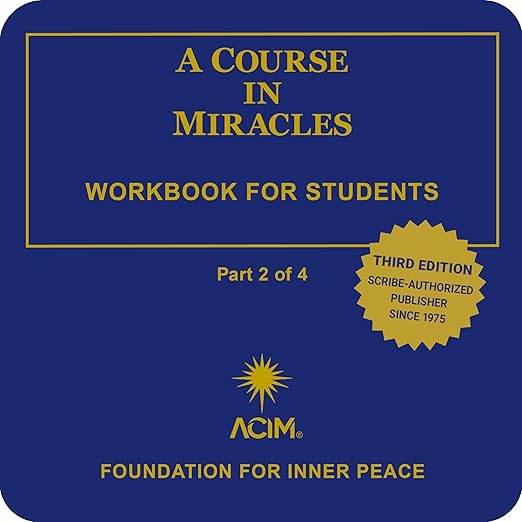
I came to this one on a Sunday morning, which felt right. The Workbook for Students from A Course in Miracles is not an audiobook you approach for entertainment or efficiency. It is a year-long practice in daily perception shifts, and this audio production of Volume 2, narrated by Jim Stewart, is designed for exactly that use case. There are 365 lessons, one for each day of the year, and the act of listening to each one as a daily ritual is precisely what this format is built for.
A Course in Miracles occupies a distinctive place in spiritual literature. Scribed by Dr. Helen Schucman in the 1960s and 1970s, ACIM draws on Christian vocabulary while proposing a non-dualistic framework that is philosophically distant from mainstream Christian theology. The Course makes no claim to be the only path. It describes itself explicitly as one version of a universal curriculum, and that self-positioning as one road among many is part of what has drawn such a diverse following over the decades.
The Workbook’s Function Within the Four-Part Series
The four parts of ACIM, the Text, the Workbook for Students, the Manual for Teachers, and the two supplements on psychotherapy and prayer, are designed to work together but can be approached in any order depending on the student’s needs. The Workbook is described as the practical application layer, the experiential counterpart to the Text’s theoretical framework. Without the Workbook’s 365 applied lessons, the Text’s conceptual system remains abstract. Without the Text, the Workbook’s lessons can seem arbitrary or divorced from their philosophical context.
This is Volume 2 of the Workbook for Students, which means it covers the second half of the 365-lesson sequence. Listeners approaching ACIM for the first time should begin with Volume 1 of the Workbook, or preferably with the Text, before arriving here. The reviewer who described the Workbook as the crux of the course and found audio format ideal for daily practice is describing the use case precisely. The Workbook is meant to be done, not just read, and doing it over a daily audio ritual integrates it differently than reading it as a printed text.
Jim Stewart’s Narration as Meditative Frame
Jim Stewart reads the lessons with an unhurried, contemplative pace that is crucial for this material. Rushed narration on ACIM content would create exactly the kind of cognitive busyness the lessons are designed to quiet. Stewart understands the register the material requires. The lessons ask the listener to pause, to apply the idea being presented to specific situations in their daily experience, and the narration leaves space for that application without artificial gaps or forced stillness.
One listener review describes ACIM as the tool for personal transformation through spirituality while being clear that it is not the answer for everyone. That honesty about the Course’s appropriate audience is useful guidance. ACIM is demanding material. The philosophical framework, particularly the non-dualistic perception of forgiveness as the release of false perception rather than absolution of real wrongdoing, requires either prior familiarity or genuine openness to encounter it on its own terms.
The Misclassification Worth Noting
This audiobook appears under the study guides and test preparation tag, which is technically not wrong, since the workbook is a structured curriculum, but which may mislead listeners browsing for conventional exam prep. This is not a certification study guide. It is a spiritual practice tool that happens to have a structured, lesson-based format. The 4.4 rating across 19 reviews reflects a dedicated practitioner audience rather than a casual listener base, and that context should inform any purchase decision.
Frequently Asked Questions
Do I need to have completed Volume 1 of the Workbook for Students before listening to Volume 2, or can they be used independently?
The 365 lessons in the Workbook are designed as a year-long sequential practice, and Volume 2 covers the second half of that sequence. Starting with Volume 2 without completing Volume 1 would mean beginning mid-lesson in the curriculum. ACIM practitioners universally recommend starting with Lesson 1 in Volume 1.
Is it necessary to be familiar with the ACIM Text before using the Workbook, or can someone start with the Workbook’s daily lessons?
The Course’s own introduction notes that the order of study depends on the student’s particular needs and preferences. However, the Text provides the philosophical framework that gives the Workbook lessons their meaning. Many practitioners find that working with both simultaneously, or completing a portion of the Text before beginning the Workbook, deepens the application of each lesson.
How should listeners use this audiobook in practice: is it meant to be listened to straight through, or one lesson per day?
One lesson per day is the intended structure, though the Course explicitly notes it is not necessary to maintain that tempo and that a student might spend more than one day on a particularly resonant lesson. The nearly 20-hour runtime divided across 365 lessons means each lesson averages around three minutes, which reflects their meditative brevity. This is daily practice audio, not sequential listening.
Does Jim Stewart’s narration include the original introductory and closing commentary for each lesson, or just the lesson text itself?
Based on the product description, the narration follows the Workbook text as scribed, which includes each lesson’s introductory statement, the practice instructions, and any closing commentary included in the original. The complete lesson structure is part of what makes the audio useful as a daily practice companion.