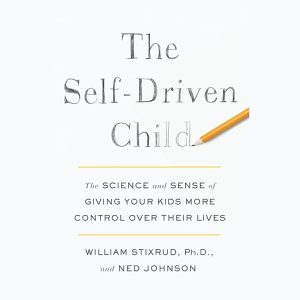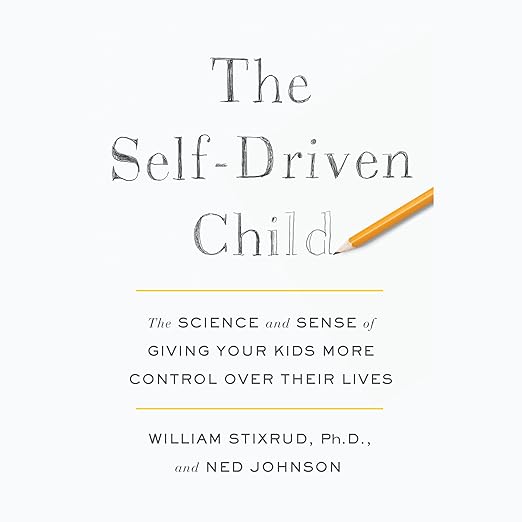
I came to The Self-Driven Child during a conversation with a friend whose teenage daughter had just started therapy for anxiety. The daughter, by any external measure, was thriving, honor roll, clubs, a full calendar. And yet she told her therapist she felt like she had no say in any of it. That conversation stuck with me for weeks, and when I finally started this audiobook on a long drive, the opening chapters felt uncomfortably precise.
Bill Stixrud and Ned Johnson are not theorists writing from a distance. Stixrud is a clinical neuropsychologist who works with kids paralyzed by anxiety. Johnson runs an elite tutoring service and has watched high-performing students unravel. They came to the same conclusion from opposite ends: the epidemic of stressed-out, unmotivated kids is not about the kids. It is about control, or the absence of it.
Where This One Lands
The book's central argument is built on two pillars: neuroscience and behavioral research. The authors explain how the stress system works in the adolescent brain, why chronic stress from feeling out of control impairs the prefrontal cortex, and why parental micromanagement, even well-intentioned micromanagement, can create exactly the kind of brain that struggles to self-regulate later. It is not a comfortable read for anyone who has arranged a child's schedule down to the hour.
What keeps this from feeling like an indictment is the tone. Stixrud and Johnson are genuinely compassionate toward parents. They understand why we hover. The world feels competitive and high-stakes, and stepping back feels like stepping back from your child's future. Their reframe, think of yourself as a consultant, not a boss, is practical and psychologically sound. A consultant offers expertise when asked, maintains an ongoing relationship of trust, and does not take over the project.
Kaleo Griffith's narration serves the material well. He reads with the unhurried confidence of someone who has absorbed the content, and his pacing gives the neuroscience sections room to land without rushing past the more technical explanations. Eleven and a half hours feels like the right length, enough time to go deep without overstaying.
One reviewer, a psychologist and parent of teens, called it sensitive and science-based. Another, a homeschooling parent, described it as a powerhouse that is so relevant to the homeschool journey. These responses track with the book's range, it genuinely applies across educational contexts, from traditional schools to home learning environments, from anxious overachievers to kids who have quietly checked out.
Before You Commit to The Self-Driven Child
There is a fair criticism buried in the reviews: the book's case studies and examples skew toward older teens. Parents of younger children will still find the neuroscience and the philosophical framework useful, but the practical application chapters will resonate more when read with a middle schooler or high schooler in mind. One reviewer who had younger kids said she was storing specific chapters for later, which is probably the right approach.
The section on sleep is unexpectedly powerful. The authors make a strong neurological case for why adolescents need more sleep than they are typically getting, and why fighting a teenager's late-night schedule is fighting their biology. This may be the chapter most likely to change actual household behavior the fastest.
Recommended For
If you are a parent of a child between eight and eighteen who is either visibly anxious or quietly disengaged, this audiobook gives you a framework and the science to back it up. It is also worth recommending to school counselors, pediatric therapists, and educators who work with stressed adolescents regularly.
If your children are toddlers or preschoolers, you can still benefit from the neurological groundwork, but the specific advice will feel abstract for a few years. Hold onto it. And if you are a high-achieving adult who suspects your own childhood might have had something to do with your current difficulty making decisions under pressure, the self-recognition chapters are worth sitting with quietly.
Frequently Asked Questions
Is this book relevant for parents of young children, or mainly teenagers?
The neuroscience and overall philosophy apply at any age, but the case studies and most practical examples center on tweens and teenagers. Parents of younger children will find the framework useful, but the specific tactics will be most actionable when their kids reach middle school age.
How does Kaleo Griffith's narration handle the technical neuroscience sections?
Griffith maintains a measured, steady pace throughout, which works well for the more scientific explanations. He does not dramatize or rush, giving listeners time to absorb the brain-development material without feeling lectured at.
Does the book take a specific political or cultural stance on parenting philosophies?
Not overtly. The authors draw on clinical research rather than ideology, and the non-anxious consultant model is presented as practically useful rather than philosophically prescribed. The book is unlikely to feel partisan to readers across a range of parenting philosophies.
How does The Self-Driven Child compare to similar titles like Hunt, Gather, Parent?
Where Hunt, Gather, Parent draws on anthropological observations of non-Western parenting cultures, The Self-Driven Child is grounded in neuropsychology and clinical practice. They are complementary rather than competing, this one provides the brain science, the other provides the cultural context.