The Short Version
- Narration: Virtual Voice handles the analytical prose competently, though the close-reading approach to individual songs benefits less from AI narration than it might from a narrator who carries musical enthusiasm.
- Themes: Beatles political consciousness, cultural influence and coded messaging, 1960s social upheaval through pop music
- Mood: Intellectually brisk, enthusiast-friendly rather than academic
- Verdict: A satisfying song-by-song political analysis for Beatles listeners who suspected there was more to Taxman and Blackbird than they had fully grasped.
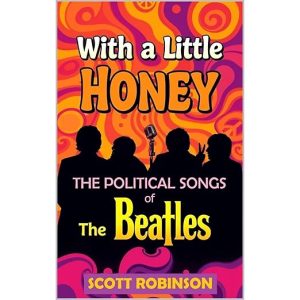
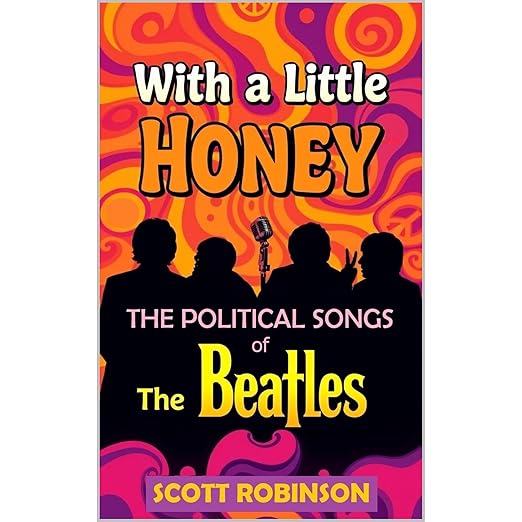
With a Little Honey opens on a premise that should be obvious but somehow keeps being rediscovered: the Beatles were political. Scott Robinson's audiobook addresses the gap between how we casually think of the band, as cultural phenomena, as romantic song writers, as psychedelic experimenters, and what those fourteen songs recorded during their eight active years, and the many more from their immediate post-breakup period, were actually doing with the cultural space the band inhabited. Robinson organizes his analysis around three categories: the openly political, where Taxman and Revolution sit; the veiled political, where Blackbird and Girl operate through inference and implication; and the possibly political, where interpretation determines everything. That taxonomy alone is a more precise tool than most writing on the Beatles and politics manages to produce.
At three hours and forty-nine minutes, this is a concise, analytically focused audiobook rather than a comprehensive biography. Robinson moves through over thirty individual songs, and the pace is brisk enough that listeners who want deep musicological analysis of any single track will find the coverage somewhat compressed. But the compression is not a flaw so much as a choice: Robinson is writing a lens through which to re-hear the catalog, and that lens rewards listeners who bring their own knowledge of the songs and then layer Robinson's political context on top of it.
Openly, Veiled, or Just Possibly Political
The most insightful part of Robinson's analysis is the treatment of John Lennon as the political pacesetter and the gradation he traces between John's outspokenness, George Harrison's overtly economic critique in Taxman, and Paul McCartney's largely apolitical positioning within the group. That differentiation resists the tendency to treat the Beatles as a monolith and instead shows how political consciousness was unevenly distributed and how that distribution shaped which songs carried which kinds of weight. When Robinson moves to Blackbird as veiled political commentary, grounding the song in its civil rights context, he is doing the kind of contextual work that changes how a listener hears a familiar song.
One reviewer noted that reading the book adds a layer of complexity and meaning to the songs that they had missed, and that effect is precisely what Robinson is aiming at. Another called the lens of politics a really good way to view the songs through, which captures the book's methodology accurately. Robinson is not arguing that the Beatles were primarily political artists, but he is demonstrating that their political engagement was more deliberate and more sustained than casual listeners typically recognize. The title, drawn from Lennon's own description of how the band delivered political content, indicates Robinson's awareness of how packaging shapes reception.
Less Convenient for Cross-Referencing the Lyrics
The audiobook format works reasonably well for music criticism of this kind. Robinson's prose is accessible and well-organized, and the analytical sections of each song move efficiently through the political context, the songwriter's biography, and the cultural moment that produced each track. Listeners who encounter Beatles criticism primarily in print will find the audio version slightly less convenient for cross-referencing specific lyrics, but the synthetic argument is easy to follow as a through-listen.
The book's value is greatest for listeners who know the catalog well and want to hear familiar songs with new ears. Robinson is not explaining what Taxman is; he assumes you know it. He is explaining what Taxman was doing politically in 1966 and how George Harrison's economic critique of the British tax system sits in relation to the more explicitly anti-establishment positions Lennon was developing at the same time. For listeners who have loved the catalog for years without thinking much about its political dimensions, the book offers a genuine reframe.
The Virtual Voice Sounds Like a Classroom
The Virtual Voice narration is functional but does not add warmth to the material. Music criticism benefits from a reader who brings audible enthusiasm to the subject, and the absence of that quality means the analytical sections read somewhat flatly. Listeners who are deeply invested in the Beatles may find themselves wishing for a narrator whose voice carries some of the cultural pleasure the songs themselves generate. The prose compensates with clarity and organization, but the listening atmosphere is more classroom than living room.
The scope is also worth noting: Robinson covers fourteen songs from the band's recording period and additional material from the immediate post-breakup years, which means individual songs receive relatively brief analysis. Listeners hoping for the extended close-reading treatment that a song like A Day in the Life might receive in a dedicated essay will find the coverage somewhat telescoped. The book works best as an overview that opens questions rather than as a definitive statement on any individual song's political meaning.
Assumes You Already Know the Catalog
Beatles fans who have a solid knowledge of the catalog and want to hear it politically framed will find this a rewarding few hours. Listeners with an interest in how pop music encodes and transmits political meaning, or in the intersection of 1960s counterculture with the specific concerns of British taxation, the class system, the Vietnam War, and feminism, will find Robinson's lens well-applied. The book is accessible enough for general fans and specific enough for enthusiasts.
Listeners who want musicological analysis, biographical depth, or a comprehensive history of the band will find this too narrow in scope. The book focuses on political content specifically and does not pretend to be anything else. Readers who know nothing about the Beatles will also find it difficult to follow, since Robinson assumes familiarity with the catalog as a baseline.
Does this audiobook cover both the Beatles catalog and their solo political work after the breakup?
Yes. Robinson covers fourteen songs from the eight-year recording period as a band and then extends to the post-breakup years, where Lennon in particular became more explicitly political. One reviewer noted the book covers over thirty individual songs total, including significant post-Beatles material.
Is this audiobook suitable for casual Beatles fans or does it assume deep knowledge of the catalog?
Solid familiarity with the catalog is helpful. Robinson does not explain what Taxman or Revolution are; he assumes you know them and analyzes their political context. Listeners who know the major albums well will get the most from the book. Newcomers to the band's music will find the analysis harder to anchor.
How does the Virtual Voice narration affect the experience of listening to Beatles music criticism?
It handles the analytical prose competently but does not bring the audible enthusiasm that music criticism benefits from. The book's argument is clear and well-organized, so the narration does not obstruct comprehension, but listeners who prefer human narration for cultural criticism will notice the difference.
Does Robinson take a position on whether the Beatles were primarily political artists?
No. Robinson argues that their political engagement was more deliberate and sustained than is typically recognized, but he does not claim politics was their primary mode. His taxonomy of openly political, veiled political, and possibly political songs acknowledges the range of intention across different songs and different band members.