At a Glance
- Read by: Mike Rowe reads his own collection, a credit the description leaves out entirely despite the material starting as spoken audio.
- At its heart: short-form mystery storytelling, working life and odd jobs, American biography, a career built on a voice.
- Vibe: Wry and companionable, easy to pick up and put down.
- Short version: The right format for this material, best rationed a few stories at a time rather than played straight through.
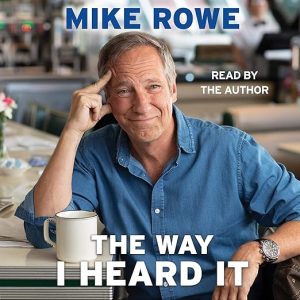
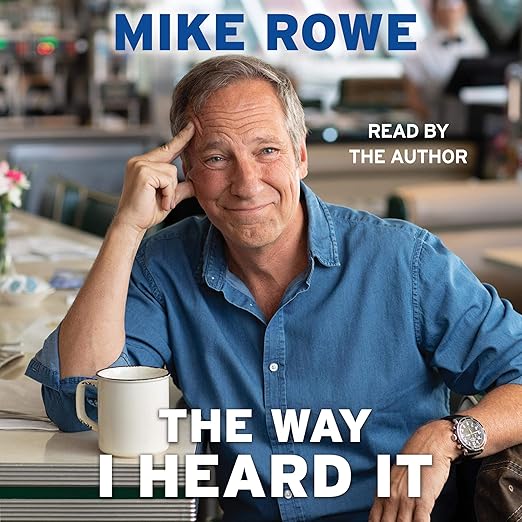
Thirty-five stories that began life as a podcast come back to a microphone here, which makes this audiobook the closest thing to the form the material was born in. Mike Rowe wrote them to be spoken, performed them for an audience that could not see a page, then collected them into a book, and now reads that book himself. The description never mentions the last part. It sells a New York Times bestseller and leaves you to notice on your own that the author and the narrator credit belong to the same person.
A Withheld Name Saved for the Last Line
The format is a magic trick with a fixed shape. Each piece is a short mystery about somebody you know, told with the name withheld until the last possible second and stuffed with facts you almost certainly do not know. Rowe times each withheld name to land in the final sentence, and the whole architecture exists to protect that sentence. He calls them trueish tales, which is an honest flag: these are stories shaped for effect rather than footnoted history. Between them sit passages of memoir, and those are the real reason the collection exists as a book instead of a transcript.
The Memoir Underneath the Party Trick
Anyone who has heard the podcast knows the rhythm. What surprised me is how much the memoir material changes the experience of the whole. The short mysteries are entertainment; the behind-the-scenes passages drawn from Rowe's own life and career supply the through line that holds them together. Taken one after another, the trick pieces begin to look like a self-portrait assembled out of other people's biographies, which is a more interesting book than a podcast could ever be.
An August 2023 five-star describes the register better than I can: a gift for writing conversationally, the sense of talking with a close friend, uplifting and educational at the same time, and complains only that the book should have run three hundred pages longer. That response also mentions having to look up unfamiliar words in a dictionary, which speaks well of a collection marketed at short attention spans.
Performed Aloud for Years Before It Was Printed
Take the obvious argument first: the author reads it, and he had performed this exact material aloud for years before any of it was printed. The writing carries the marks of that. Sentences land on a beat, asides get dropped in on the move, the reveals are timed for a listener rather than an eye scanning ahead down a page. Handing prose built that way to a hired reader would mean re-engineering it. Here nothing needs translating.
A May 2025 five-star arrived by the usual route, from the podcast to the book, and reports that the collection expands on the show rather than repeating it: bite-sized stories with twists that land unexpectedly, plus reflections from Rowe that come across as honest rather than packaged. That is the right expectation to carry in. This is not a transcript of episodes you have already heard, and the additions are the part actually worth paying for.
The practical case is timing. Seven hours and fifty-five minutes divides into thirty-five discrete pieces, none of them long, which makes this one of the very few recordings you can genuinely take in five-minute fragments without losing the thread. Put it down for a week and nothing at all is lost. Very little else on a shelf of memoirs behaves that way, and the structure suits a listener whose attention arrives in short, unpredictable bursts rather than long clear evenings.
Guessed Early, and Sometimes Bent for Effect
The gimmick has a shelf life. All thirty-five follow the same architecture, a withheld identity and a reveal, and by the second hour you will be playing detective from the third sentence onward. Guess right and the piece deflates on the spot. On the podcast, a week between episodes hid that repetition completely; consumed as a continuous listen, the pattern becomes obvious. Ration it and the collection holds up much better than it does in one long sitting.
The trueish label deserves attention too. These stories are polished for the turn at the end, which sometimes means a fact gets bent toward a better rhythm, and the book does not stop to tell you where that happened. Anyone who enjoys these pieces as history should treat them as anecdotes with a professional storyteller's fingerprints all over them. Rowe is upfront about the method in the framing, and it remains worth holding in mind while you listen.
Self-Narration the Listing Never Mentions
The listing itself is oddly thin for a bestseller. Nine ratings support the 4.8 average, and the description is unmodified print jacket copy: it markets a hardcover, credits the podcast as a source, and says nothing whatever about who reads the recording. For a title whose central selling point is the author's own delivery, leaving the self-narration unmentioned is a strange omission, and a browsing listener has to go looking at the credit line to find out.
Persona Purchase, Company Included
This is a persona purchase, and it works best for people who already like the persona. A March 2024 five-star, a viewer since the early Dirty Jobs episodes and a regular listener to the podcast, lists the appeal precisely: the honesty, the humor, the willingness to get dirty to finish a job, the habit of finding value in other people. If that sounds like somebody whose company you would enjoy across eight hours, you are the buyer here.
Approach with caution if you want a conventional memoir with a shape, since the life story arrives in fragments wedged between other people's stories and never assembles into a single arc. Readers who want history with sourcing will be frustrated by the trueish approach. And anyone who finds television personalities wearing at length should note that the affable, wry register almost never varies across the entire runtime. Anyone hoping for a detailed account of how the television work got made will find glimpses rather than a record.
Everybody else is getting a genuinely well-built entertainment, delivered by the one person the writing was tuned for, in bites short enough to survive an interrupted week. The stories are slighter than the memoir passages, the memoir passages are better than the format quite lets them be, and the whole thing goes down easily. Do not expect the page to tell you any of that before you press play. Eight hours of company from somebody who is extremely good at being company.
Frequently Asked Questions
Does Mike Rowe read the audiobook himself?
Yes, though the description never says so and only the narrator credit gives it away. One four-star from September 2020 explains the appeal directly: having first heard that voice on Dirty Jobs, that listener bought the audio edition specifically for it, then adds that the printed text worked perfectly well too.
Is it just the podcast episodes read aloud?
No. The collection keeps the short mysteries and adds reflections out of his own working life, so listeners who know every episode still get material they have not heard. Those memoir passages between the stories are the reason this exists as a book rather than as an archive of the feed.
Is this an audiobook you can listen to in short bursts?
Better than almost anything else in the category. Thirty-five separate pieces fill just under eight hours, so each one runs a few minutes, and the copy pitches them at a curious mind with a short attention span. Stop anywhere, come back a week later, and you have lost nothing.
Will it suit older listeners or a family audience?
It travels well across ages. One five-star from June 2020 describes going through the whole thing across two nights and connecting the stories to a father who had been a coal miner and a wartime veteran who would have turned 107 that year. The subject matter stays clean throughout.