
At a Glance
- Performance: Lucy Paterson brings a calm, Scandinavian-inflected warmth to the material that fits the subject beautifully, her reading never clinical despite the scientific content.
- What it covers: Cold-water physiology and brown fat activation, Scandinavian tradition and wellness culture, physical challenge as mental practice
- Feel: Brisk and meditative, like the water itself
- Our call: The most scientifically grounded audiobook available on cold-water immersion, written by the researcher whose work popularized the practice in mainstream wellness culture.
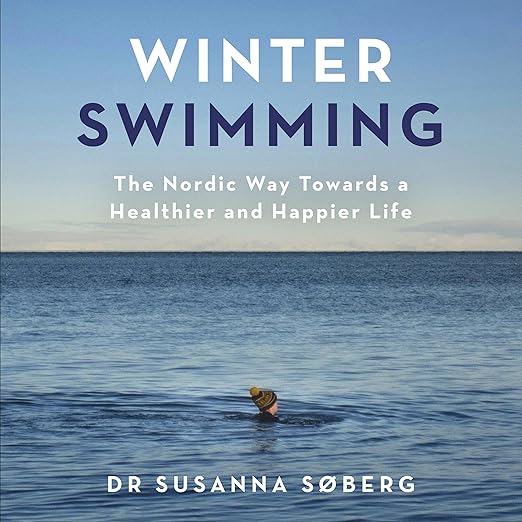
I first heard of Dr. Susanna Soberg in one of those peripheral ways that ideas enter your life before you actually pursue them: a friend mentioned cold water swimming, someone cited the Soberg principle on a podcast, and then suddenly the subject was everywhere. When I finally sat down with Winter Swimming I had expected a wellness book dressed up with a few studies. What I found was the opposite: a rigorous scientific account of cold-water immersion dressed up as something warm and accessible. It is a more impressive achievement than it sounds.
Soberg is a Danish scientist who has spent her career studying the physiological effects of cold exposure, and this book is built on that research foundation. The cold-shock response, the endorphin rush that follows initial immersion, the activation of brown fat and its implications for metabolism and multiple health conditions, the effects on circulation, heart, lungs, skin, and immune system: these are not mentioned in passing but explained with the care of a researcher who wants you to understand the mechanism, not just accept the conclusion. That said, the book opens with a beautiful survey of cold-water traditions across Scandinavia and around the world, and Soberg is clearly writing from a cultural as well as a scientific position.
What makes Winter Swimming distinctive in a crowded wellness audiobook space is the specificity of the brown fat argument. Soberg's research on how brown adipose tissue is activated by cold exposure, and how this activation has measurable effects on metabolism and insulin sensitivity, is the scientific core of the book, and she presents it without oversimplifying. The casual listener will come away with a real understanding of why cold water immersion does what it does physiologically, rather than just a list of claimed benefits. That epistemic rigor is rare in wellness books and worth seeking out.
Why It Works in Audio
Lucy Paterson's narration is an excellent match for this material. Her delivery has the kind of unhurried clarity that science writing requires: she does not rush through technical passages or smooth over complexity, but she also brings genuine warmth to the cultural and atmospheric sections of the book. Several reviewers noted that they found themselves returning to the audiobook for a second listen, getting more from it on repetition. That is a reliable indicator of content density worth the runtime, and at just over five hours, Winter Swimming is compact enough that a second pass is practical. One reviewer, a longtime swimmer transitioning from an indoor 80-degree pool to outdoor 62-degree water, described the book giving them the practical and psychological preparation to make that transition successfully, which is the most specific endorsement a sports and health audiobook can receive.
Weak Spots in Winter Swimming
The book is primarily about the science and culture of cold-water swimming in natural bodies of water, and Soberg's frame of reference is Scandinavian. Listeners interested in cold plunge tanks, ice baths, or the specific wellness protocol that has become popular in gym settings will find relevant physiological information, but the cultural and atmospheric dimension of the book is centered on outdoor, natural cold-water immersion. The scientific content, while accessible, does assume a reader willing to engage with concepts like brown fat metabolism, thermoregulation, and the autonomic nervous system without prior familiarity. Soberg explains these clearly, but listeners looking for a purely experiential or inspirational read may find the scientific density more than they bargained for.
Who Will Get the Most From It
Anyone who practices cold-water swimming, cold plunging, or cold-shower protocols and wants to understand the physiological basis for what they are doing will find this essential. The book is equally valuable for people considering starting and wanting to understand the evidence before committing. Listeners who found their way to this subject through Andrew Huberman's podcast, where Soberg appeared and several reviewers mentioned discovering the book, will find the audiobook a useful expansion of that conversation. Those with no interest in the scientific content and who want primarily a memoir of Scandinavian swimming culture may find the balance tilted more toward laboratory than lake.
Frequently Asked Questions
Is Winter Swimming by Dr. Soberg the same as the Soberg Protocol that circulates online?
Yes. The Soberg Protocol, which specifies minimum weekly cold immersion time and recommends ending sessions with cold rather than warm, derives from Soberg's research. The book provides the full scientific context for that protocol, including the brown fat activation mechanism that underlies it.
Does Winter Swimming cover cold plunge tanks and ice baths, or only natural water swimming?
The physiological science in the book applies to any form of cold-water immersion. However, Soberg's cultural and atmospheric framing is centered on natural cold-water swimming in lakes, rivers, and the sea, drawing particularly on Scandinavian traditions. Cold plunge and ice bath practitioners will find the scientific content relevant but the cultural context rooted in outdoor swimming.
Lucy Paterson narrates the English edition. Does her performance suit the material's Scandinavian origins?
Reviewers have found Paterson's narration a strong fit. She brings a calm, measured quality to the reading that suits both the scientific sections and the cultural passages describing Scandinavian cold-water traditions. The narration never becomes clinical, which is the main risk with health and science audiobooks.







