Ozzie and Harriet Nelson's television family made America comfortable in the 1950s, their son Ricky became one of the era's defining teen idols, and by 1990 his twin sons Gunnar and Matthew had a number one hit of their own with a band simply called Nelson. This audiobook memoir, narrated by Matthew Nelson himself, traces three generations of the same entertainment dynasty from the inside, refusing the polished, sanitized version of that legacy in favor of what the twins themselves describe, directly in the book's own framing, as written in their own words with no ghostwriter needed.
A Question About Hair That's Really About Image
The book covers real, hard territory alongside its lighter rock and roll war stories: the sudden death of Ricky Nelson, and how his sons had to process that grief while still navigating the music industry's own particular brand of chaos as young performers. Matthew and Gunnar are candid throughout about unscrupulous managers, record executives the synopsis describes bluntly as soul-scarring, and enough Polaroid-sending groupie stories to make even an experienced reader wince, but the emotional core keeps returning to family, faith, and the specific bond between twin brothers who built a career together rather than separately.
That the book is written and narrated in the twins' own words matters more than it might for a more conventional celebrity memoir, since the synopsis and cover material name both Matthew and Gunnar as co-authors even though the audio credit here lists Matthew alone. Hearing at least one half of that voice directly, without a hired narrator smoothing over the specific cadence and humor of how the Nelsons actually tell their own stories, gives the memoir a real authenticity that a more polished professional reading might have sanded away.
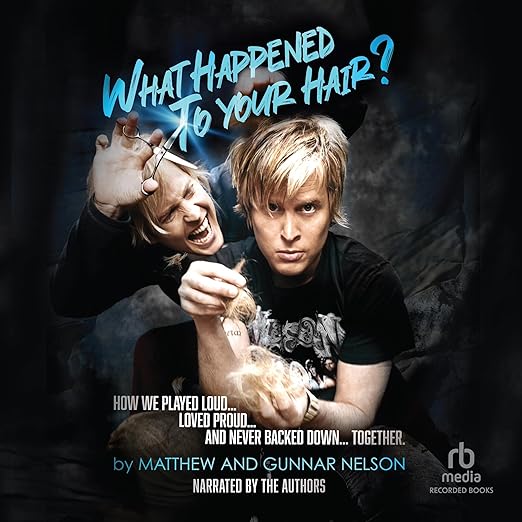
The book's title itself plays on the question the twins say they fielded constantly during their MTV-era heyday, when their long, waist-length blonde hair was as much a visual signature as their music, a look that fit the era's hair metal and glam aesthetic even as their actual sound leaned more toward polished pop rock. That title works as a small joke on the surface and a real thesis underneath: image and substance were never quite the same thing for Nelson, and the memoir spends real time on the gap between how the band was perceived and what the twins actually wanted to be making.
Number One Right Before the Ground Shifted
One reviewer calls this memoir an absolute joy to read, specifically citing their own long-standing fandom of both Ricky Nelson and the original Ozzie and Harriet television show, and noting they went in without knowing quite what to expect despite having already heard some of the twins' stories through podcast appearances. Another reviewer, Sarah Bellar, calls it one of the most brutally honest yet funniest memoirs she has ever read, praising how the brothers paint a vivid, unpulled-punches picture of growing up in a multi-generational entertainment family in 1970s and 1980s Southern California and everything that came with that upbringing.
The band Nelson's own chart-topping run in 1990, built on the strength of songs the twins wrote themselves, gets treated as both a genuine triumph and a complicated inheritance, arriving just as grunge and hip hop were about to reshape the entire pop culture landscape the twins had worked so hard to break into. That timing, hitting number one right before the ground shifted under the entire genre they represented, gives the memoir's central rise-and-reckoning arc real dramatic shape beyond a simple celebrity-childhood retrospective.
Faith and Brotherhood Carried Them Through
Ricky Nelson's own music career, built through hits in the late 1950s and early 1960s that made him one of the first true teen idols of the rock and roll era, gives the memoir's opening chapters a real sense of inherited pressure. Growing up as the sons of a musician whose face and voice were already inseparable from American popular culture before they were even born shapes how the twins frame their own decision to pursue music themselves rather than a different career entirely, a choice the book treats as inevitable and complicated in roughly equal measure.
Faith and brotherhood get treated as the two forces that actually carried the twins through the hardest chapters, both the loss of their father and the industry's own particular cruelties, a thread the book returns to often enough that it reads as the memoir's real emotional core rather than a single passing theme raised once and set aside.
One Twin's Voice for a Two-Twin Story
This is a memoir built on candor rather than polish, and listeners expecting a tidy, chronological greatest-hits retrospective of the Nelson musical legacy should adjust expectations toward something rawer and more emotionally complicated. The book does not shy away from ugly industry details or genuine grief, and that honesty is clearly the point rather than an incidental byproduct of the storytelling.
Because the audio credits list only Matthew Nelson despite the book itself being framed throughout as both twins' shared story in their own words, listeners specifically hoping to hear Gunnar's voice directly alongside his brother's should know upfront that this particular audio edition centers Matthew as the sole narrator. The content still represents both perspectives, but the audio performance itself does not alternate between two distinct voices.
The Adventures of Ozzie and Harriet, the family's original television show, ran for well over a decade and remains one of the longest-running sitcoms in American broadcast history, which means the family's fame did not begin with Ricky's music career or the twins' own band; it stretches back a full generation earlier. Listeners unfamiliar with that television history may want a little outside context to fully appreciate just how many decades of public visibility this family had already accumulated before Matthew and Gunnar ever picked up instruments themselves.
A 4.7 Rating Across an Entertainment Dynasty
Fans of the extended Nelson entertainment dynasty, from the original Ozzie and Harriet show through Ricky Nelson's music career and into the twins' own nineties chart success, are the most obvious audience, and the strong 4.7 rating across 138 ratings suggests the memoir is landing well even with listeners who came in as casual fans rather than devoted followers of the family specifically.
Readers of music-industry memoirs generally, not just Nelson-specific fans, will recognize a lot of familiar territory here: predatory management and industry gatekeepers more interested in image than artistry, the kind of behind-the-curtain detail that tends to hold up regardless of which specific era or genre a given memoir happens to cover.
Casual music fans expecting a strict, chronological hits retrospective should recalibrate toward something closer to a genuine family memoir with music as one major thread among several, including grief, faith, and brotherhood, rather than the primary subject throughout. Anyone drawn more to the emotional family story than to music industry specifics will likely find just as much here as a dedicated Nelson fan would, since the sibling relationship carries as much weight as the career details do.
Before You Listen
Does Gunnar Nelson also narrate this audiobook alongside his brother?
No, the audio credit lists Matthew Nelson alone as narrator, even though the book itself is framed throughout as both twins' shared story in their own words.
Does this audiobook use a ghostwriter?
No, the book explicitly states it was written in the twins' own words without a ghostwriter, which the self-narration reinforces.