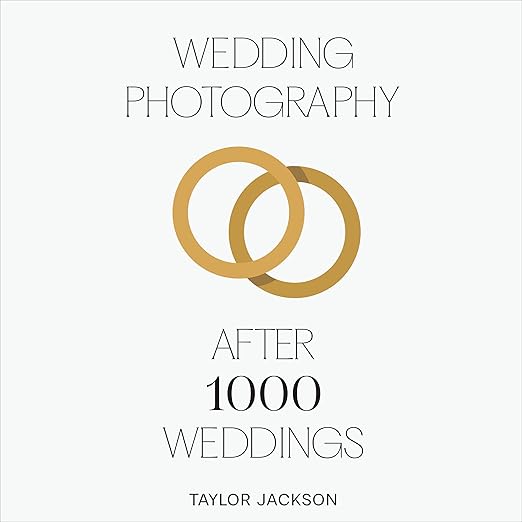
Taylor Jackson has photographed more than a thousand weddings, booked seventy of them in a single season, and traveled to every continent including Antarctica, all while describing himself as incredibly introverted and shy. That contrast, a self-described introvert building a business around one of the most socially demanding jobs in photography, sits at the center of the Wedding Photography audiobook. Jackson's own arc from a struggling server at an Outback Steakhouse in Canada to a full-time wedding photographer earning real money is the framing device for a book that is less a technical manual and more a business and lifestyle playbook for an industry most people only see from the guest side of the aisle.
Three to Four Thousand a Wedding, Real Math Shown
The book's real subject is what Jackson calls time freedom, controlling when and where you work rather than just how much you earn, and the reviews confirm that emphasis is intentional rather than incidental. J. Singh's review is the most precise about what this book actually delivers, noting upfront that it expects you to already know how to compose a photo, set up your camera, and edit your photos, and pointing listeners without that foundation toward a different resource first. For listeners who already have the technical basics, Singh says, this book supplies most of the rest.
James Goldstein's review backs up that framing from a different angle, describing five years of his own experience in the wedding photography business and still finding the material good to hear again alongside genuinely new actionable information. He specifically calls out the value proposition, noting it compares favorably to paid courses and workshops, which matters for a genre of business book that often exists mainly to upsell a much more expensive program.
The financial specifics Jackson shares, three to four thousand dollars per wedding, sixty weddings a year working out to roughly two hundred ten thousand dollars annually, ground the time-freedom pitch in real numbers rather than vague lifestyle promises. That willingness to show actual math, rather than just asserting that the business model works, is a meaningful point of difference from the vaguer inspirational tone a lot of solopreneur business content settles for.
Jackson's emphasis on Saturdays being reserved for weddings while the rest of the week stays flexible is a specific scheduling detail worth noting, since it addresses a common misconception that wedding photography as a career means total unpredictability. The structure he describes is actually fairly disciplined, one dedicated workday most weeks, with genuine flexibility built around it rather than chaos disguised as freedom.
From Outback Steakhouse Server to His Own Narrator
Jackson narrates his own material, and given how much of the book is built from specific personal history, the Outback Steakhouse job, the first fully booked season, the trip to Antarctica, that choice pays off directly. A hired narrator could deliver the numbers and the advice accurately, but the particular candor of an admittedly shy person describing how he built a business anyway would be harder to fake secondhand. The self-narration gives the entrepreneurial parts of the book the same authenticity a founder's own pitch has over a marketing team's polished version of the same story.
At just three hours and twenty-six minutes, this is a genuinely compact listen, closer to a long-form podcast conversation than a sprawling business tome, and that runtime is a deliberate strength rather than a limitation. Jackson moves through mindset, marketing, and pricing without padding, which suits listeners who want a single focused session rather than a multi-week audiobook commitment, and the brevity keeps the advice feeling current rather than stretched to justify a longer runtime.
Jackson's willingness to describe exactly how far he started from where he ended up gives the book real narrative stakes underneath the tactical advice, even in a runtime this short. It is not just a list of marketing tips, it is one specific person's account of a specific, verifiable transformation, part of why James Goldstein's review describes still finding value in it five years into his own career.
The book's short runtime also means Jackson moves quickly through topics that a longer, more traditional business guide might spend a full chapter on, pricing strategy gets covered efficiently rather than exhaustively, so listeners wanting deep, granular detail on any single topic should treat this as an overview to build on rather than the final word. Jackson's own admitted introversion, mentioned upfront in the synopsis, gives an unusual credibility to his advice about managing client relationships and wedding-day stress, since he is not a naturally extroverted salesperson describing how easy this all is, he is someone who had to build systems specifically because charm alone was never going to carry him.
A Four-Star Review Flags Jackson's Own Paid Courses
This is explicitly not a technical photography course, and J. Singh's review is doing future listeners a real favor by saying so clearly. No instruction appears here on camera settings, composition fundamentals, or photo editing workflow, all of which the book assumes you already have. Anyone hoping to learn photography itself from this audiobook, rather than how to run a photography business, should look for a dedicated technical guide first and treat this as the second step, not the first.
The Amazon Customer review raises a specific, recurring frustration worth flagging directly: Jackson references his own paid online courses repeatedly throughout the book, prompting that reviewer's complaint that a purchased book shouldn't come with built-in advertisements for additional paid content elsewhere. That criticism lands even inside an otherwise four-star, largely positive review, and listeners sensitive to upsell moments inside educational content should go in with that expectation already set rather than being caught off guard partway through.
The 4.6 rating across 49 reviews for a self-published, niche business title is a solid signal, especially given how specifically targeted the subject matter is. Wedding photography as a business topic has a much smaller potential audience than general photography or general small-business advice, so a rating this consistent suggests the book is genuinely serving the narrow audience it set out to serve rather than trying to appeal broadly and satisfying no one fully.
A Business Case for Photographers Past the Basics
Working photographers who have moved past the fundamentals of composition and camera settings and want the business side, pricing, marketing, workload management, are exactly who this serves, and James Goldstein's five-years-in perspective confirms it holds value even for photographers well past the beginner stage. It is also a genuinely useful listen for anyone weighing wedding photography as a full-time career change, given how directly Jackson addresses the financial realities alongside the appeal of a flexible schedule.
Absolute beginners with zero camera literacy will be lost fast, since Jackson assumes you already know your way around composition and editing before the book even starts. At just over three hours, this also cannot function as a complete operational playbook, contracts, insurance, and the harder logistics of running a photography business get far less airtime than mindset and marketing do, so treat it as a strong starting philosophy rather than a full business-in-a-box system.