- Voice: Arthur Morey's restrained authority suits a biography that doesn't flinch from its subject's harder edges.
- Big ideas: Hollywood empire-building, creative ambition, personal complexity
- Atmosphere: Sweeping and thorough
- Worth it?: An exhaustive, well-researched audiobook biography best suited to committed Disney history readers.
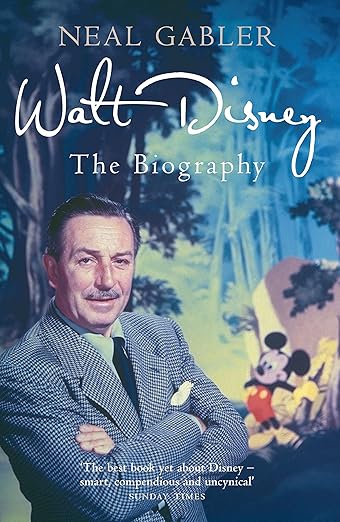
Thirty-three hours and twenty minutes is roughly the length of four cross-country flights, and Neal Gabler's Walt Disney needs most of that runtime to get past the mouse-ears mythology and into the archives most earlier biographers never reached. The synopsis keeps things broad, classic films, theme parks on every tourist itinerary, a Hollywood empire, a man who 'unquestionably changed our culture,' but the reviews attached to this audiobook tell a more specific story about what actually distinguishes Gabler's account from the many other Disney biographies already on shelves. Arthur Morey narrates, and the book is billed plainly as 'the definitive biography of this remarkable man,' a claim that a runtime this long at least gives itself a real chance to earn over the course of a genuinely sprawling life story.
One of Only Two That Did the Research
C. Ritter's review makes the strongest case for why this specific biography matters: it's 'one of only two' Disney biographies the reviewer found that actually 'went to the archives and did research,' rather than simply assembling and repackaging the existing public mythology. That distinction, primary-source research versus recycled hagiography, is exactly what a subject as thoroughly mythologized as Walt Disney needs, and it's consistent with this book's broader reputation as one of the more exhaustively researched treatments of Disney's life and career available in any format, drawing on the kind of company and family archive access that shorter, more casual biographies simply never obtain.
Jesse Lynne's review adds the crucial second half of the picture: this is a 'thick book' that 'gets into many aspects of the subject's life' and specifically 'doesn't gloss over the tough times,' offering a real look at 'what Walt was like as an employer, a person, a friend.' That willingness to sit with the harder, less flattering material, labor disputes, personal complexity, the gap between public image and private behavior, is what separates a genuinely definitive biography from a corporate-sanctioned highlight reel, and at thirty-three-plus hours, the book clearly has room for both the triumphant chapters and the difficult ones to get real attention.
A Cultural Historian, Not a Fan-Service Biographer
Gabler is a cultural historian by training, not a Disney-company insider or a fan-service biographer, and that outside vantage point shows in how the book treats its subject as a genuinely complicated cultural figure rather than a brand mascot. The scale of the project, widely understood to have taken Gabler years of dedicated archival research to complete, reflects an ambition closer to a serious historical biography of a major American industrialist than a typical entertainment-world life story, which helps explain both the reviewers' enthusiasm and the sheer length of the finished audiobook.
The scope also means this functions as something close to a broader history of twentieth-century American entertainment and technology, since Disney's career tracks so closely against the rise of animation, sound film, television, and eventually theme-park engineering as commercial industries in their own right. Listeners interested in that wider industrial history, not just Disney the individual, will find the book rewards attention to the surrounding context Gabler builds around his central subject, treating Disney's personal ambitions as inseparable from the technological and economic forces reshaping American entertainment around him.
Morey Stays Steady, Never Performs for Drama
Arthur Morey's steady, restrained authority is well suited to a biography of this scale and emotional range. He doesn't perform the material for maximum drama, and he doesn't flatten the harder chapters into the same neutral register as the triumphant ones either; that kind of sober, consistent delivery is exactly what long-form narrative nonfiction covering both genuine achievement and genuine personal difficulty needs, letting the material's own weight carry the emotional impact rather than a narrator's vocal choices doing that work for the listener across every single chapter.
Sustaining a listener's attention across a biography this comprehensive is its own narrative challenge, independent of the research quality underneath it, and Morey's measured pacing helps prevent a book of this scale from feeling like a slog. Nitz's brief review simply confirms the book delivers 'as describe[d],' which, however minimal as a review, at least signals that listeners coming in with expectations set by the synopsis and cover copy aren't left feeling misled by the finished product once they actually settle in for the long haul.
A biography of this length also functions as a genuine long-term listening companion rather than a single sitting's entertainment, something to return to across a commute or a series of walks over several weeks, and Morey's consistency chapter to chapter makes that kind of extended relationship with the material easier to sustain. Listeners don't have to reorient themselves to a shifting tone each time they pick the book back up, which matters enormously for material this long and this chronologically dense.
A Thin Synopsis, a Much Deeper Book
The most obvious thing to flag is scale: at over thirty-three hours, this is a genuine multi-week commitment for most listeners, closer to a full biography-course experience than a casual weekend listen. The book's comprehensiveness, which reviewers clearly value, comes with the tradeoff of density; listeners wanting a brisk overview of Disney's career highlights specifically should know this isn't built for that kind of quick consumption, and the chronological structure rewards patience more than it rewards skimming ahead to a favorite era.
The available synopsis for this title is notably thin compared to the depth reviewers describe actually finding inside the book, more marketing copy than substantive content description, so listeners relying purely on the synopsis to gauge what's covered should weight the reviews more heavily. Given the reviewers' emphasis on archival research and unflinching treatment of harder material, expect a book that engages seriously with Disney's complexities as an employer and a person, not just his filmography and theme parks, and budget your listening time accordingly rather than treating this as background noise.
Purposeful Length, Not Padding
This audiobook is an excellent fit for Disney history enthusiasts, entertainment-industry biography readers, and anyone who wants the archival-grade version of Disney's life rather than a surface-level highlight reel. Listeners who appreciate rigorous, primary-source-driven biography generally, in the mold of the great single-subject cultural histories, will find that same standard applied here, and Morey's steady narration makes the considerable length feel purposeful rather than padded across its many chapters and decades of material.
Skip this one if you want a shorter, breezier overview focused mainly on the animated films and theme parks themselves, or if a biography willing to sit with its subject's genuinely difficult chapters isn't the experience you're looking for. This also isn't a great fit for listeners without a real, sustained runway for a single audiobook, since the chronological structure asks to be followed in something closer to its intended order rather than sampled in scattered pieces.
How long is the Walt Disney audiobook, and is that runtime justified by the content?
It runs about thirty-three hours and twenty minutes, and reviewers consistently describe the depth as earning that length, since the book covers Disney's full life rather than just his best-known creative achievements.
Does this audiobook cover the difficult chapters of Disney's life, like labor disputes and personnel conflicts, or just the highlights?
It covers the difficult material directly. One reviewer specifically praises the book for not glossing over 'the tough times,' including what Disney was like as an employer as well as a public figure.
Is Arthur Morey's narration engaging enough to sustain a biography of this length?
Yes, his restrained, consistent delivery is well matched to long-form narrative nonfiction, helping the thirty-three-plus hours feel purposeful rather than exhausting across such a wide chronological range.
Do I need any prior knowledge of Disney company history to follow this audiobook?
No prior knowledge is required. The book builds its account chronologically from the ground up, though existing Disney enthusiasts will likely appreciate the archival depth more than casual listeners will.