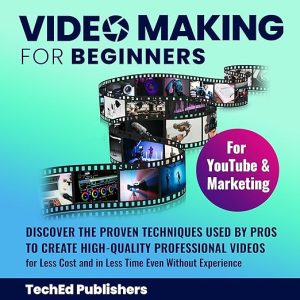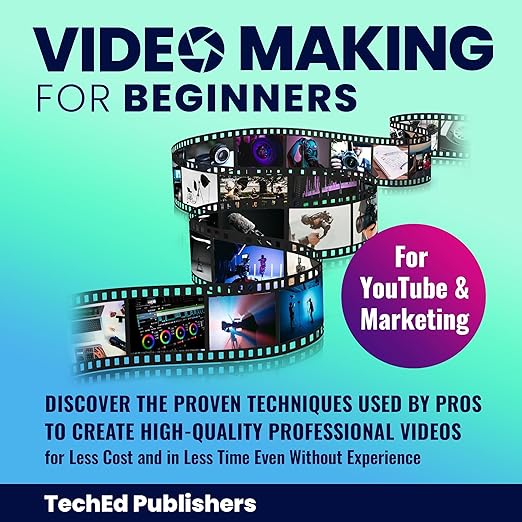
Video Making for Beginners arrives as the audiobook equivalent of a dependable first week of class, it covers what you need to know, in the order you need to know it, without assuming you have touched a camera before. For the specific audience this title is designed for, that is precisely the right approach, and TechEd Publishers have structured the content with a clarity that the format rewards.
The context for a book like this matters. Video production has become one of those skills where the barrier to entry looks deceptively low, everyone has a phone, every platform promotes video above other formats, but the gap between recorded footage and watchable content is substantial. The average online user now consumes more video than text, and over 70 percent of online traffic is video content according to the book's own data. But that ubiquity has not made quality easier to achieve; it has raised expectations. A beginner's guide that skips the foundational work in favor of quick tips produces content that looks like a beginner made it.
Scripting Gets the Attention Equipment Usually Steals
The structure is one of this audiobook's real strengths. The progression from equipment selection on a budget through scripting, filming environment setup, production techniques, and finally marketing and platform optimization is logical and unhurried. Each section builds on the previous one in ways that accumulate into a functional mental model of the full production pipeline. A reviewer described the content as covering all the basics, camera types, lighting, location, scripts, and audio quality, and noted the author's writing style as concise and direct with helpful tips. That summary holds.
What distinguishes this from the many video production guides competing for the same beginner audience is the treatment of scripting. Compelling storylines are addressed specifically, which reflects an understanding that the technical side of video production is learnable but structurally weak content is the more common failure mode for beginners. Equipment decisions are reversible; a video with nothing to say cannot be fixed in post-production. The inclusion of marketing and optimization alongside the craft elements also reflects a realistic picture of what contemporary video production requires, making something is only half the task.
Brian Pederson's Pace for a Commute or a Walk
Brian Pederson's narration suits instructional material well. He reads at a pace that allows listeners to absorb bullet-pointed guidance without rushing, and his consistent tone prevents the slight lecture-fatigue that instructional audiobooks sometimes induce. For a beginner working through this material, being able to drive or walk while absorbing the content makes the nearly four-hour runtime genuinely practical, the listening conditions for how-to content are often better in audio than print.
A PDF companion is included with the audiobook, which is worth noting for technical material of this kind. Equipment specifications, filming checklists, and optimization hacks translate well to reference documents. Listeners who download the companion will have a reference layer alongside the audio content that addresses the one limitation of absorbing visual production guidance through sound alone.
Platform Tips May Date Faster Than the Fundamentals
The running time of 3 hours and 58 minutes sets expectations correctly. This is a foundational survey, not an advanced masterclass. Listeners who already have working knowledge of camera settings, lighting ratios, or video editing software will find most of the material review. The target audience is genuinely someone starting from close to zero, the person who has decided to start a YouTube channel or produce workplace video content but has no prior training and does not know what they do not know.
The audio-first nature of the format also means the book's guidance on visual framing and shot composition relies entirely on verbal description. Concepts like rule of thirds, headroom, and lead room are explained clearly enough to follow, but listeners who learn these concepts better from visual demonstration should supplement with a few tutorial videos after finishing the audiobook. The PDF companion addresses some of this gap, but the foundational visual vocabulary of filmmaking is a category where audio and print have natural limits that complementary resources can fill.
The marketing and optimization section reflects platform realities at the time of writing, and social media algorithms change quickly enough that some specific advice about timing, tagging, or distribution may have shifted. The underlying principles, audience awareness, consistent format, platform-specific behavior, remain valid, but listeners should treat the tactical specifics as a starting framework rather than a current playbook. The foundational production content on lighting, audio quality, and scripting is less time-sensitive and will hold value longer.
One reviewer appreciated the accessibility for beginners who are not yet ready for technical deep dives. That framing is honest, this title is designed for people who need the vocabulary and the framework before they can productively engage with more specialized resources.
Small Business Owners Get the Full Pipeline First
Small business owners who need to produce video content without hiring a production team, educators building an online presence, and aspiring content creators who want to understand the full pipeline before investing in equipment will all find this a practical starting point. The marketing sections are particularly relevant for anyone creating video with a commercial or audience-building purpose in mind.
Experienced videographers or those with formal media production training should look elsewhere, the foundational level of this content will not advance their practice. Listeners who want deep technical instruction on specific camera systems or editing software will also find this too general. The PDF companion is worth downloading before listening, as having it open alongside the audio session improves the experience for anyone planning to take notes.
Is the Video Making for Beginners audiobook suitable for someone who has never operated a camera before?
Yes, this is genuinely foundational content aimed at people who are starting from scratch. The book covers equipment selection on a budget, filming environment setup, scripting, and platform optimization without assuming prior knowledge. More experienced creators will find the level too introductory.
Does the audiobook cover video production for specific platforms like YouTube, or is it more general?
The marketing and optimization section addresses platform-specific considerations, including YouTube and other video channels. The production fundamentals on scripting, lighting, and audio quality are platform-agnostic, but the distribution guidance engages with platform realities directly.