Before You Press Play
- Voice: Lee Goettl handles Caveat Magister's layered prose with measured enthusiasm, keeping the philosophical sections accessible without over-performing the moments of genuine wonder.
- Big ideas: Participatory art and peak experience design, the psychology of transformation, community as creative medium
- Atmosphere: Intellectually alive and practically energizing, with genuine strangeness throughout
- Worth it?: Turn Your Life into Art is one of those rare audiobooks that functions simultaneously as cultural history, practical guide, and philosophical argument, and it works convincingly on all three levels.
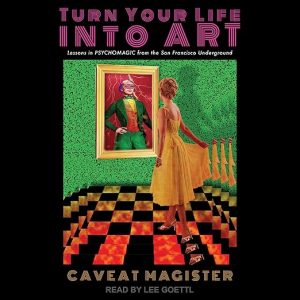
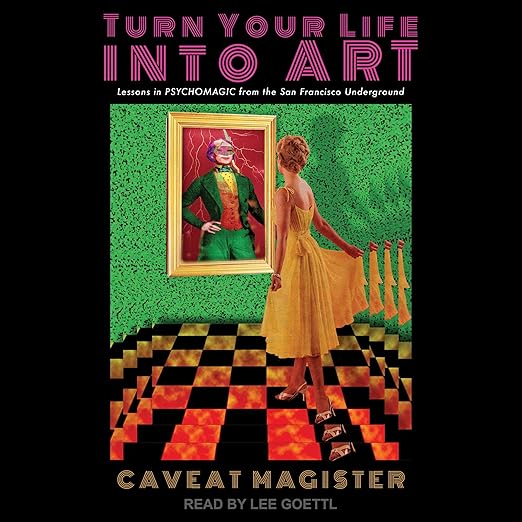
Caveat Magister spent three decades embedded in San Francisco's underground art scene and eventually became one of the most cited voices in Burning Man philosophy. Turn Your Life into Art is the audiobook that codifies what that community learned about creating what he calls psychomagical experiences: encounters that bypass conscious resistance and produce genuine transformation through a combination of environmental design, participation, and carefully constructed uncertainty. The premise is counterintuitive. A loose coalition of artists working with essentially no budget figured out how to create life-changing experiences that corporations spending millions of dollars cannot replicate. Understanding why is the actual subject of this book, and the inquiry is more rigorous than the Burning Man origin story might suggest to skeptical listeners.
Rather Preposterous, and Essential Anyway
One reviewer opens a direct quote from page 98 of the book: the techniques of psychomagic do not seem like they ought to work, and the author himself acknowledges this is rather preposterous, yet that self-aware absurdity is actually essential to the whole enterprise. Caveat Magister does not present his subject with the confidence of someone who has cracked a creative code. He presents it with the honest bewilderment of someone who kept witnessing things that should not work according to standard theories of experience design, and then spent years trying to understand why they did. This quality of genuine intellectual inquiry rather than promotional writing gives the audiobook an unusual texture that distinguishes it from the self-help and creativity categories it sits beside in most catalogs.
Another reviewer describes Turn Your Life into Art as simultaneously an instruction manual, a history lesson, a cultural expose, a sort-of memoir, and a deep dive into the physical and psychological parameters that lead to impactful experiences. That characterization is accurate. The connections Magister draws to Jung and the Humanistic psychologists are not ornamental; they are load-bearing arguments about why experiences that engage the unconscious operate differently from those that address only conscious attention. The book earns its theoretical framework by anchoring it consistently to specific examples from three decades of actual practice rather than treating the framework as self-evidently correct.
Goettl Shifts Registers Without Losing Energy
Lee Goettl's narration suits the material with particular effectiveness. The writing moves between philosophical argument, personal anecdote, practical instruction, and cultural history, often within the same chapter, and Goettl manages these shifts in register without losing the thread or dropping in energy. He brings appropriate attention to the technical sections about experience design without letting them feel like a business presentation, and he handles the more mystical claims with enough openness to let them land rather than shutting them down with ironic distance. The format rewards the close listening audio encourages more than casual page-turning would.
For listeners involved in event design, experiential marketing, therapeutic practice, community building, or participatory art, the practical framework here is unusually specific and usefully grounded. Magister explains what makes physical space work psychologically, why groups of strangers can be induced into genuine collective emotion, and what the difference is between an experience that actually moves people and one that merely impresses them. One reviewer describes him as knowledgeable without being condescending or preachy, which is the correct register for this kind of subject matter and a relatively rare achievement in writing about creative practice.
More Conceptual Than a Worksheet Guide
The Burning Man cultural context is present throughout, and some passages will resonate less strongly with listeners who have no connection to or interest in that world. Magister does not require the listener to be a devotee, but his richest examples come from that specific community, and some of the vocabulary reflects it. The book is also better at explaining what works and why than at providing step-by-step instruction. Listeners hoping for a worksheet-style guide to designing transformative experiences will find the book more conceptual than prescriptive. At eight hours and thirty-seven minutes, it rewards close listening rather than background play, and the philosophical sections benefit from the kind of attention the audio format encourages when you are fully present with the material.
Rag-Tag Groups Outperforming Wealthy Institutions
This audiobook is worth the full runtime for anyone who works in experiential fields: event producers, therapists, educators, community organizers, and artists working in participatory forms. It will also appeal strongly to listeners with an interest in the psychology of collective experience or the intersection of Jungian ideas with practical creativity in physical spaces. Those expecting a straightforward Burning Man memoir will find something more theoretically ambitious. Listeners who want concrete, sequential instruction above philosophical framework should adjust their expectations. Those willing to engage with the conceptual architecture as seriously as Magister built it will find the practical implications accumulate across the full runtime in ways that simple instruction would not produce.
The question of why rag-tag groups of artists with nothing consistently outperform wealthy institutions with everything is the kind of question that sounds rhetorical until Magister actually answers it with specificity. The answer has to do with necessity, failure tolerance, and the particular social dynamics of communities that operate outside institutional accountability. Corporations can spend millions creating environments that feel synthetic because they are optimized for legibility and risk management rather than genuine encounter. The artists working with nothing had no choice but to create actual encounters, and the accidental discoveries they made along the way are what this book preserves and systematizes.
Is Turn Your Life into Art more of a memoir or a practical audiobook guide to creating experiences?
It is genuinely both, and also cultural history and philosophical argument. Reviewers describe it as an instruction manual that is simultaneously a history lesson and deep psychological inquiry. The practical guidance is embedded in a richer conceptual framework rather than presented as a standalone how-to list.
How does Lee Goettl's narration handle the more abstract philosophical sections of this audiobook?
Goettl manages the shifts between personal anecdote, cultural history, and theoretical argument with consistent clarity and appropriate energy. He keeps the philosophical sections accessible without flattening them, and he does not let the more mystical elements of the subject matter become either flat or overwrought in performance.
Is the psychomagic framework in this audiobook connected to Alejandro Jodorowsky's use of the same term?
Magister uses the term in relation to his San Francisco underground art community experiences and draws connections to Jung and the Humanistic psychologists rather than to Jodorowsky specifically. Listeners familiar with either tradition will find points of resonance, but the book establishes its framework on its own conceptual terms.