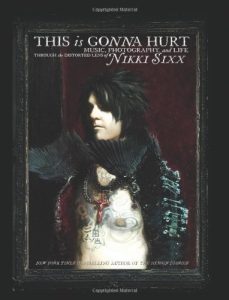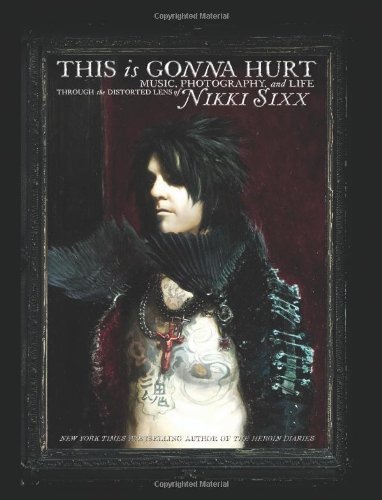
Nikki Sixx has already established, through The Heroin Diaries, that he approaches self-examination with a directness most rock memoirs avoid. This Is Gonna Hurt is a different kind of project: part photography collection, part journal, part social commentary, and an audiobook that adds exclusive interviews and additional video content to what is already a hybrid form. The listening experience leans into that hybridity rather than flattening it, and the result is one of the stranger, more interesting projects in the genre. Sixx self-narrating is the only real option for material this intimate. His voice carries the history of what he describes: the toxic childhood, the ascent with Motley Crue, the near-fatal overdose, and the long process of rebuilding that eventually expressed itself through photography.
A Reviewer Calls Him 'a Genius With an Angel'
The context matters for how you receive the audiobook. Sixx is the primary songwriter for Motley Crue and has been a public figure for decades, but This Is Gonna Hurt is less concerned with the band's legend than with documenting the outcasts, the misfits, and the people who exist at the edges of mainstream visibility. His photography work, which forms the backbone of the print edition, focuses on subjects who have been written off or ignored. The audiobook translates this impulse through his narration and through the interviews that accompany it.
A reviewer who had read The Heroin Diaries described the increasing clarity of Sixx's self-understanding across his body of work, characterizing him as a genius with an angel on his shoulder. That reading is consistent with what This Is Gonna Hurt offers: a man who has survived things that should have killed him and who has found in photography a way to externalize the compulsion to witness. Another reviewer noted that music is only a small piece of Sixx's talent, which the audiobook reinforces: the performance here is not that of a rock star capitalizing on celebrity memoir conventions, but of an artist who has thought seriously about what photography can reveal that other forms cannot.
Sixx Reads His Own Journals Aloud, Unpolished
The audiobook format gives the memoir something the print edition cannot: immediacy. The journal entries that punctuate the photography collection translate into spoken passages that are punchy and unpolished in the right way. Sixx does not write like a literary memoirist. He writes like a musician who has been journaling since adolescence, with the directness and occasional roughness that implies. In audio, that register comes across as authentic rather than unfinished.
The exclusive interviews included in this enhanced edition are the specific reason to choose this format over the print collection. They add depth to the photographs and the text in ways that liner notes cannot. Listeners who know Sixx primarily through Motley Crue's public image will find a more complex figure in these conversations: someone who thinks seriously about the ethics of documenting marginalized lives, about what photography can and cannot capture, and about the relationship between his own survival and the subjects he photographs. The social commentary passages are where the project becomes most interesting and most debatable. Sixx is not a sociologist, and some of his observations about poverty and addiction are more emotionally forceful than analytically precise. Listeners who come for an artist's honest reckoning with what he has seen will find those passages rewarding.
Interviews Become an Audio Commentary on the Photos
The love story element, which involves the relationship that helped anchor Sixx after his recovery, is handled with notable tenderness. The book is not sentimentalized overall, but this thread is allowed to be warm in a way that provides necessary counterweight to the darkness. By the time it arrives in the listening order, it earns its place fully. The search for a happy ending that Sixx describes in the synopsis is real, not rhetorical, and the audiobook communicates that sincerity clearly without overselling the resolution.
Listeners should also pay attention to how the enhanced edition bridges the inherent challenge of audio presenting a visual medium. The photography that anchors the print book is absent in the conventional audiobook sense, but the interviews compensate by having Sixx speak directly about specific images and what motivated him to take them. The result is a kind of audio commentary track on his own photographic work, which functions as its own distinct form rather than a compromise.
One aspect of the audiobook that deserves attention is what Sixx chooses not to do. He does not attempt to redeem the darker parts of his history by framing them as necessary preparation for the light that followed. The photography, the recovery, the love story are not presented as prizes won through suffering. They are simply what came next, and the audiobook's refusal to manufacture that redemptive arc gives everything that does accumulate, the tenderness, the purpose, the evidence of a genuinely changed life, more weight than it would carry in a tidier narrative structure. That refusal is itself a form of artistic honesty, and it is present throughout the listening experience.
Stranger and More Interesting Than the Crue's Image
Motley Crue fans who want more depth than tour memoirs typically offer will find this satisfying. Readers of The Heroin Diaries who want to track how Sixx's perspective has evolved across his books will find a clear development here. Listeners interested in the intersection of photography, memoir, and rock biography occupy the obvious center of this audience.
This is also worth the attention of listeners drawn to creative survival stories: figures who have rebuilt a life and found a new artistic practice on the other side of destruction. Skip this if you want conventional rock biography with backstage anecdotes and chart histories. Pick it up if you are willing to meet Sixx on his own terms, which are stranger and more interesting than the Crue's public image suggests.