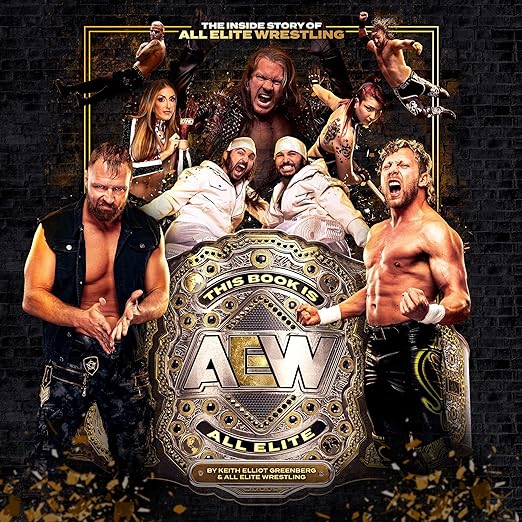
Before You Press Play
- Read by: Robert Petkoff's track record runs mostly through Civil War and presidential history rather than wrestling specifically, a reasonable extrapolation rather than a confirmed match.
- At its heart: All Elite Wrestling origin story, insider industry access, pro wrestling as business history
- Vibe: Nostalgic and insider-facing, more retrospective than expose
- Short version: A well-researched trip through AEW's first five years for fans who want the story told properly, less essential for the most plugged-in dirt-sheet readers.
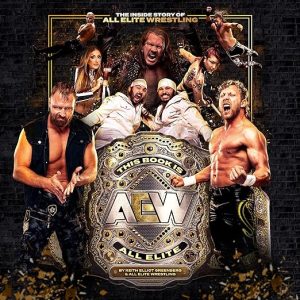
Tony Khan and a roster of wrestlers frustrated with the industry's status quo launched All Elite Wrestling in 2019 with something to prove, and Keith Elliot Greenberg's This Book Is All Elite traces that origin story through Sting's final run alongside protege Darby Allin, the chaos of the first Stadium Stampede match, and AEW's record-breaking sellout at Wembley Stadium. This audiobook edition includes a downloadable PDF of the book's photography, which matters for a title built around exclusive access and behind-the-scenes images, even if the audio itself has to carry the storytelling without the visuals playing alongside it in real time. At just over three hours, it moves briskly through five years of company history without lingering too long on any one storyline.
Toni Storm's 'Timeless' Gimmick Gets Its Backstory
Greenberg had real access here, exclusive interviews with cast and crew across AEW's first five years, and that access shows in the details reviewers keep pointing to. Anthony Evadia singled out material on 'Tony Khan's past' and the backstory behind 'what Toni Storm's "Timeless" gimmick was based on' as things he wasn't aware of despite following the promotion closely. That's a meaningful compliment for a book covering a promotion this heavily documented in real time across podcasts and dirt-sheet reporting, finding genuinely new material for invested fans isn't easy.
Reviewer Eric was more measured, calling it 'a nice nostalgic piece' while noting 'not a ton of new information if you're plugged in to the product.' Both things can be true at once: this is a well-researched retrospective with real insider quotes, but it's aimed more at capturing the AEW story for posterity than breaking news for the most obsessive corner of the fanbase.
An Inclusive Ethos, Told Without the Photography
What the book frames as AEW's defining pitch, an inclusive ethos and a genuinely passionate, online-native fanbase, gets real texture through the interviews Greenberg conducted rather than staying an abstract marketing line. The company's rise from outsider project to a promotion capable of competing with the industry's biggest, most established players is the throughline connecting every chapter, and the book earns that arc by grounding it in specific decisions rather than vague momentum.
The photography-driven format of the original book also shapes what kind of story gets told here, this is history built from images and captions as much as prose, backstage shots, arena crowds, championship belts, and translating that visual-first approach into audio format is a genuine adaptation challenge. Greenberg and the audiobook production seem aware of this, leaning on interview material and behind-the-scenes anecdotes that work independently of any photograph, rather than trying to narrate captions that only made sense next to an image.
I Searched for Petkoff Feedback and Found None
Robert Petkoff narrates, and while his catalog leans heavily toward Civil War and presidential history rather than pro wrestling specifically, the docudrama-style pacing he brings to that narrative nonfiction work translates reasonably well to a company history built around distinct chapters and eyewitness-style quotes from people who were actually there. I searched for a listener comment that speaks directly to his performance on this specific title and came up empty-handed after a fairly thorough search, so treat the narration as a reasonable extrapolation from his track record rather than a confirmed match.
What the book itself offers is a structured tour through AEW's defining moments, the Stadium Stampede's chaos, the Wembley Stadium debut, Sting's farewell run, that gives even a three-hour runtime real shape. Reviewer Dolli Destructo praised its 'great insights into the first 5 years of AEW,' and even a listener who isn't deeply invested in wrestling could follow the throughline given how clearly the book seems to structure its history.
Structuring the book around discrete milestones (the launch, Stadium Stampede, Sting's farewell, Wembley) gives Petkoff's narration natural chapter breaks to work with, which matters for a three-hour listen a fan might return to in pieces rather than one sitting. Each section functions almost like its own mini-documentary, which plays to the strengths of docudrama-style narration even on a subject far removed from his usual Civil War material.
A Touchable Championship Belt on the Print Cover
This is explicitly a photography-forward book adapted to audio, the source material was, per its own description, packed with dazzling photography, and while the included PDF download helps bridge that gap, anyone drawn primarily to the visual side of the original book should know the audio experience is necessarily a text-first version of a project built around images. Anthony Evadia's praise for the physical book's cover, a raised, touchable version of the AEW championship belt, is a print-specific detail that obviously doesn't carry over to audio at all.
At just over three hours, this also isn't an exhaustive company history in the way a full biography or an eight-hour deep dive might be. It's scoped tightly to the first five years, so don't expect coverage of anything past AEW's Wembley Stadium milestone. If you're hoping for a comprehensive look at the promotion's most recent storylines, this book's timeline predates them.
Because Greenberg wrote this with exclusive access to AEW's own cast and crew, don't expect the kind of critical distance an independent investigative account might bring. This reads as an authorized, celebratory history rather than an expose, which shapes what kind of insider material actually made it into the final book, flattering access rather than uncomfortable secrets.
Three hours also means the book has to be selective, not comprehensive, about what makes the final cut from AEW's first five years. Storylines and wrestlers who mattered enormously to weekly viewers but didn't shape the company's larger business trajectory understandably get less attention than the headline moments, the launch, the Stadium Stampede, the Wembley show, Sting's exit. That's a reasonable editorial choice for a book positioning itself as a company history rather than a season-by-season storyline recap, but fans hoping for deep coverage of their own personal favorite mid-card feuds should adjust expectations accordingly.
New Fans Piece Together the Founding Years
Longtime AEW fans who want the company's early history collected in one place, with real quotes from the people who built it, are the clearest audience here, especially anyone who followed the promotion from its 2019 launch and wants the full arc from the earliest shows to Wembley told in sequence. Casual wrestling fans curious about why AEW became a real alternative to the industry's biggest player will also find this an accessible entry point.
New wrestling fans drawn in by AEW's more recent storylines but unfamiliar with the promotion's origins will get real value from having the founding years laid out in order, from the earliest shows through Wembley, without needing to piece the timeline together from old news articles or forum threads themselves.
Die-hard fans who track every backstage podcast and dirt-sheet report closely may find less new information here than the historical framing promises, since Eric's review makes clear the book works better as a well-told retrospective than as a source of previously unreported scoops.