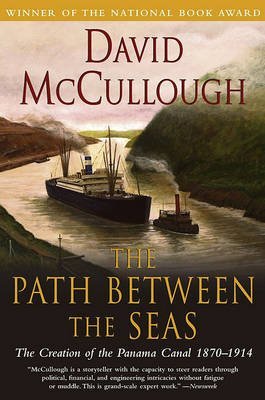
Few infrastructure stories carry as much sheer human cost as the building of the Panama Canal, and McCullough has spent his career finding drama in exactly this kind of grinding, decades-long undertaking. This audiobook adaptation of The Path Between the Seas asks a listener to commit real hours to a story most people only know in rough outline, and it rewards that commitment more thoroughly than the outline suggests.
Nine Hours Suggests an Abridged McCullough
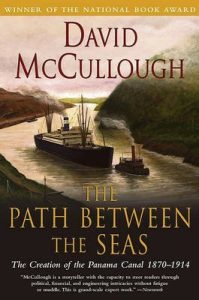
David McCullough's The Path Between the Seas is his account of the construction of the Panama Canal, one of the most ambitious infrastructure projects in human history, and this audiobook narrated by Nelson Runger is the natural format for a McCullough work of this scope and depth. I should note that the synopsis attached to this edition appears to be a bookseller's physical description of a print copy rather than the actual book summary, a mismatch that occasional errors like this produce in audiobook listings. The book itself, however, needs no synopsis to recommend: McCullough's reputation as a narrative historian and the Canal's place in American and global engineering history are sufficient context. This is the audiobook version of a work that won the National Book Award and has been considered essential reading on the Canal for decades.
Nelson Runger's narration is well-suited to the material. McCullough's prose has a particular quality that demands a narrator who can sustain attention across dense reporting without letting the informational content collapse into recitation. Runger manages that balance. At approximately nine hours and seventeen minutes, this is a condensed version of a book that in full runs considerably longer, which suggests listeners may be working with an abridged edition. For a text of this historical depth, that is worth confirming before purchase.
Institutional Obtuseness Meets Genuine Heroism Throughout
McCullough's genius as a historian is his understanding that engineering and political history are inseparable. The construction of the Panama Canal is not simply a story about digging a very large ditch. It is a story about French incompetence and American ambition, about yellow fever and malaria killing workers at rates that would be considered catastrophic in any modern context, about engineering solutions that required not just technical knowledge but political will on an almost incomprehensible scale. Reviewer BT's summary of an early anecdote captures the book's spirit well: when a doctor in Panama wrote to the US State Department about the toll that disease was taking, the State Department's response focused on the expense of his cables. That kind of institutional obtuseness coexisting with genuine heroism is exactly McCullough's territory.
Reviewer Fr. John A. Doyle describes the book as presenting 'a time when men were willing to lay it all on the line,' and that assessment, while rooted in the specific machismo of the Canal era, points at something real: the project required a kind of commitment from individuals at every level that is difficult to fully comprehend from a modern vantage point. McCullough makes those individuals human without mythologizing them, which is the characteristic achievement of his best work. The French effort, which preceded the American project and ended in failure, receives the same careful attention as the American success, and that balance prevents the book from becoming simply a story of American triumph.
The audio format is particularly well-suited to McCullough's narrative rhythm. His sentences are designed for reading aloud, with a cadence that builds toward revelations and pauses at the right moments. Runger understands this and reads accordingly. For listeners who have encountered McCullough only in print, the audio experience reveals something that the page does not always make explicit: that his prose is fundamentally oral in its construction, shaped by the rhythms of speech as much as by the demands of the page.
Verify Whether This Edition Is Abridged
The runtime of nine hours and seventeen minutes is worth flagging for listeners familiar with the full print edition of this book, which is a considerably longer work. Listeners should verify before purchasing whether this is the complete unabridged audiobook or an abridged version, as the difference matters significantly for a work of this historical density. An abridged McCullough is still valuable, but it is a different listening experience from the full text, and the distinction should be transparent in the listing.
The book covers a period extending from the late nineteenth century through the early twentieth, dealing with both the French failure and the American success. Some sections are necessarily dense with engineering and political detail that listeners without prior background in the Canal's history may find slower going. McCullough does not assume expert knowledge, but he also does not dilute the complexity of what he is documenting. The reward for sustained attention is significant, and reviewer Stanley Trammell's compressed response, 'details of full history real,' while spare, captures the sense of completeness the book provides.
The 4.8 rating across 47 listeners is strong and consistent with McCullough's general reception as an audiobook narrator of American history. Listeners who have found his work rewarding in other contexts will not be disappointed here.
Engineering History Rewards Nine Committed Hours
This audiobook is for listeners interested in American history, engineering history, public health history, or the specific drama of one of the largest infrastructure projects ever completed. McCullough's narrative approach makes the material accessible to non-specialists, but the depth rewards listeners who already have some context for the late nineteenth and early twentieth century political landscape. Listeners who want a shorter introduction to the Panama Canal's history might find documentary resources more efficient. Those willing to commit to nine-plus hours of McCullough's careful, deeply reported narrative will find it a genuinely enriching audiobook experience. Before purchasing, verify whether the edition is abridged or complete, since the original print work is substantially longer than this runtime reflects.
Key Details
- Narration: Nelson Runger suits McCullough's oral prose well; steady and clear across nine-plus hours of dense historical narrative.
- Themes: Panama Canal construction, American imperialism and engineering ambition, disease and institutional failure
- Mood: Authoritative and absorbing, in the tradition of McCullough's best narrative history
- Verdict: A McCullough classic in audio form; verify whether the runtime reflects an abridged edition before purchasing, as the full work is considerably longer.
A Few Questions About The Path Between the Seas
Is this audiobook the complete unabridged version of The Path Between the Seas?
The runtime of approximately nine hours seventeen minutes is notably shorter than the unabridged audiobook of the full text, which runs significantly longer. Listeners should verify before purchasing whether this is the complete edition or an abridgement.
Do I need prior knowledge of Panama Canal history to follow this audiobook?
No specific background is required. McCullough builds context as the narrative develops, covering both the French failure and the American project from the beginning. Listeners with some familiarity with American political history of the era will find it somewhat richer.
How does Nelson Runger perform as narrator of this audiobook?
Runger is a reliable match for McCullough's style. He reads with appropriate gravity and paces the denser historical and engineering passages without losing momentum. His performance suits the long-form narrative history genre well.
Is The Path Between the Seas a good audiobook for listeners who are not typically drawn to American history?
Potentially yes, if the listener is drawn to infrastructure, public health crises, political maneuvering, or engineering problem-solving as story elements. McCullough frames the Canal's construction as a human drama rather than a technical document, and that approach extends its audience beyond conventional history readers.