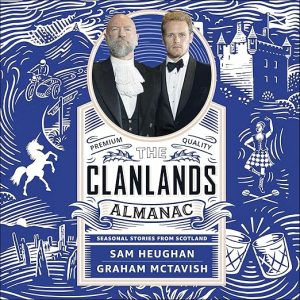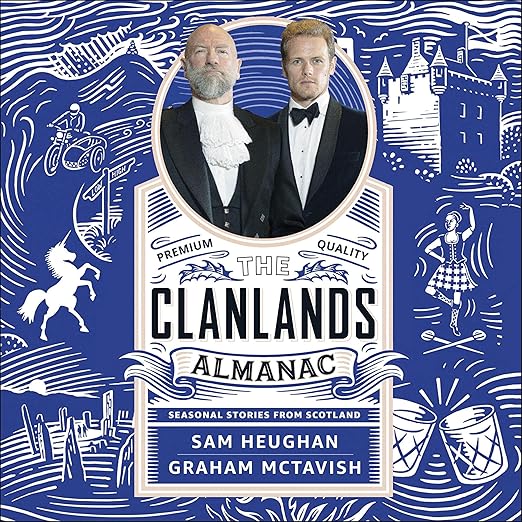
Which book is actually on sale here? The title field says Clanlands. The description underneath it sells The Clanlands Almanac and, in its very first sentence, calls that Almanac the follow-up to Clanlands. So the record is named after one book and advertised as its sequel, and a buyer clicking through cannot tell which of the two will land in the library. Ten hours and twenty-seven minutes of audiobook is the only figure that fits either of them.
The credits deepen the confusion rather than resolving it. The author field carries Sam Heughan alone, while the description stages the book as a two-hander from first line to last, promising that Sam and Graham turn tour guides once again and calling the result an education told through the eyes of two passionate Scotsmen. Graham reaches the copy in every paragraph and the byline in none of them. The narrator field, meanwhile, reads Diana Gabaldon, a name the description never mentions once. On a book whose entire appeal is two friends interrupting each other in a camper van, a reader slot naming a third party is not a clerical detail. Sample before buying, and sample a stretch of banter rather than an opening chapter, because the voices you hear will settle this faster than the page ever will.
The rating badge has a problem of its own. It reads 4.8 out of five over a counter that has logged exactly one rating. A single voter picks from five whole values, and 4.8 is not among them, so either the counter has mislaid most of its population or the average belongs to a different record entirely. Beneath it sit five signed written responses of real length, which is already five more people than the counter admits exist. The topical tag, meanwhile, reads Art, on a book about whisky lore, clan feuds and driving a camper van through Scottish weather. No two of these fields are describing the same object.
A Calendar Structure From First Footing to Samhain
Whatever it is called, the book underneath is a specific and likable thing. It runs by the calendar, twelve months from First Footing through to Samhain, with Fringe Festival follies and whisky lore filling the space between. Battles, mountains, clans, feuds, flora and fauna get folded into the months where they belong, and the copy promises embarrassing personal reminiscences scattered through all of it. As a structure it is smarter than it looks, because a year is the one shape that lets a travel book move between history, practical advice and anecdote without needing an argument to hold the parts together.
A December 2021 entry, five stars, describes what the double act actually does. Month by month, it says, the pair deliver historical truths about the clans, their personalities and the skirmishes and wars that came out of them, set against the scenery and the ancient architecture. The same response identifies the appeal precisely: real friendship, thorough knowledge of each other's flaws, and open delight in exposing those flaws to the world. That is a working description of the register, and it doubles as the test. If the pairing does not amuse you in the first ten minutes, no quantity of Scottish history will rescue the remaining ten hours.
Recipes in Metric Are the Giveaway
Reception settles the identity question, and settles it against the title. A January 2022 entry opens by saying the reader is thoroughly enjoying the Clanlands Almanac, having already seen the series and read the first Clanlands book, and describes this one as going into more detail than that first volume did. That is a reader distinguishing between the two explicitly and telling you which one is in hand. Responses attached to a record titled Clanlands keep describing its sequel, and the ones detailed enough to be told apart name the Almanac by its calendar structure and its recipes, which means the enthusiasm and the grades belong to a book the title field never mentions.
A February 2022 entry, also five stars, adds two more problems in one breath. This buyer received the British edition rather than the US one, and reports that the recipes are consequently all in metric. Recipes are the giveaway. A book containing recipes is a book with pages you are meant to look at, and neither a conversion table nor an ingredient list survives the trip into audio in any usable form. The same response is warm about the material, crediting the historical writing and noting a twenty-year age gap that powers the banter, so this is not a hostile reader. It is a reader describing a physical object that an audio edition cannot be.
Ten Hours of Well-Informed Nonsense From Two Friends
Anyone who found these two through Outlander is the obvious buyer, and so is anyone planning a trip north who would rather be entertained than instructed. The seasonal frame makes the book genuinely useful as a planning object, since festivals, weather and regional character arrive in the order a visitor would meet them. Listeners who enjoy a comic double act, and who do not need their history rigorous, get ten hours of well-informed nonsense from two people who plainly like each other. It also works as background listening in a way most history writing does not, because losing the thread for five minutes costs you nothing.
Pass on it if you specifically want the original Clanlands, because everything the description promises belongs to the follow-up and nothing on the record confirms which file will arrive. Pass too if you want Scottish history handled seriously, since the copy promises a light-hearted education and delivers most reliably on the light-hearted half. Buyers who need to know who is reading should treat the credit field as unresolved until a sample proves otherwise, and buyers who came for the recipes and the practical almanac apparatus should understand that those parts are the least likely to translate. Scotland itself gets a warm, partial and thoroughly enjoyable portrait here, and the only open question is which book you will be holding when it begins.
The Short Version
- Read by: The reader slot names Diana Gabaldon on a book the copy stages as two Scotsmen talking over each other, so the opening minute of a sample answers what the record will not.
- At its heart: a Scottish year told month by month, clan history and feuds, friendship conducted as competition
- Vibe: Boisterous and affectionate, pitched somewhere between pub anecdote and guidebook
- Short version: Excellent company for ten hours, on a record so confused about its own identity that sampling is not optional.
Which book does this audiobook actually contain?
The record does not resolve it. The title names Clanlands while every line of the description belongs to The Clanlands Almanac, its sequel. Before buying, check the running time against both editions and play the opening of the sample, since the Almanac announces its calendar structure within the first few minutes.
Who reads the audiobook?
The narrator field names Diana Gabaldon, who appears nowhere in the description. The copy instead presents Sam and Graham as the voices guiding listeners through the year. Nothing on the record reconciles the two, so the credit should be treated as unconfirmed until a sample settles it.
Do you need the first book before starting this one?
The copy suggests not. It describes the Almanac as an invitation to anyone who picks it up, and its month-by-month organization means each section stands on its own. Prior familiarity with the pair adds a great deal to the banter, but no plot or argument carries over between volumes.
Can the sections be played out of order?
Easily. The structure runs across twelve months, from First Footing at the start of the year through to Samhain, with festivals, history and personal anecdote grouped by season rather than by argument. Listeners often start at the month they are actually in, which the calendar framing openly invites.