Quick Take
- Narration: Lorraine Crowston delivers a calm, measured performance well-suited to the material, her pacing mirrors the regulated state the content is trying to teach, which is a smart fit for somatic work.
- Themes: Vagus nerve activation, polyvagal theory, nervous system regulation for anxiety and neurodivergence
- Mood: Grounded and reassuring, with a structured clinical backbone
- Verdict: A genuinely useful two-in-one program for anyone dealing with chronic stress, anxiety, or neurodivergent sensory overload who wants a framework that goes beyond breathing exercises.
I came to this one during a particularly frantic stretch of work, the kind where your body is running ten days behind your schedule and hasn’t quite caught up with the fact that the deadline passed. I’d been reading around polyvagal theory for a while, it kept surfacing in conversations about trauma-informed care and neurodivergent support, but I’d never found something that translated it into daily practice without feeling like a graduate seminar. The Nervous System Reset Collection landed at the right moment.
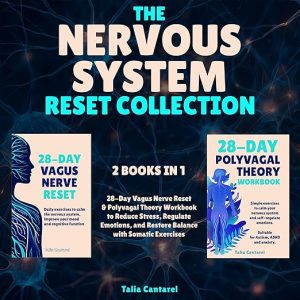
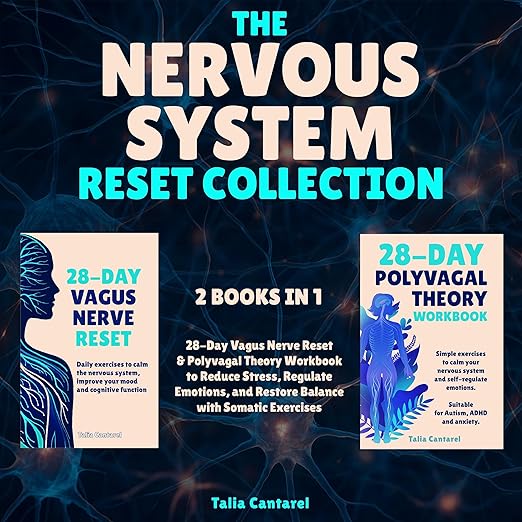
What Talia Cantarel is doing here is essentially packaging two related programs into a single audio experience: a 28-day vagus nerve reset and a polyvagal theory workbook. The combination works better than either would alone. The first program gives you the daily scaffolding; the second gives you the conceptual vocabulary to understand what your body is doing and why the scaffolding helps. If you’ve ever wondered why some days a cold shower feels like a reset and other days it just makes you more agitated, this book starts to answer that.
When the Science Earns Its Keep
Polyvagal theory, developed by Stephen Porges, can easily get lost in academic language or, at the other extreme, get stripped down to vague wellness platitudes. Cantarel does neither. She explains the autonomic nervous system’s three states, the ventral vagal (safe and social), sympathetic (fight or flight), and dorsal vagal (shutdown and freeze), with enough specificity to be genuinely useful, but always connects the theory back to what it feels like in real life. A reviewer noted that the explanations of polyvagal theory feel down-to-earth rather than overly clinical, and that tracks with how the material is structured throughout.
The vagus nerve content is particularly well-handled. Rather than promising miraculous results from a single technique, Cantarel situates vagal toning as a cumulative practice: something that builds capacity over weeks, not a quick fix you deploy when things get bad. The 28-day structure reinforces this by giving you a progression rather than a buffet of disconnected tools. You’re not just learning what to do, you’re building a habit loop that makes the doing more automatic over time.
The Neurodivergent Dimension
What sets this collection apart from the general wellness crowd is its explicit attention to autism, ADHD, and sensory processing differences. The polyvagal workbook section includes prompts specifically designed for people who experience sensory overload, social masking fatigue, and emotional dysregulation that doesn’t respond to standard mindfulness advice. One reviewer who identified as neurodivergent described the somatic exercises as simple but surprisingly powerful, noting the difference from approaches that tell you to simply notice your feelings without acknowledging how overwhelming that instruction can be when your nervous system is already overwhelmed.
This dual audience, people managing general anxiety and those dealing with neurodivergent nervous system patterns, is genuinely served by the material rather than tacked on. The workbook’s framing around understanding your body’s stress signals rather than overriding them is a meaningful distinction from a lot of ADHD and autism content that implicitly asks people to mask better. Here the goal is attunement, not performance.
What the Audio Format Does Well and Less Well
Lorraine Crowston narrates with a steadiness that suits the material. She doesn’t overdo the soothing quality, there’s no performative serenity here, but her pace is measured enough that you’re not racing to keep up. For a book about nervous system regulation, a narrator who sounds like they’re in a regulated state is not a small thing. She makes the somatic exercise instructions feel accessible rather than clinical.
That said, this is a collection that includes a workbook component with prompts and exercises. The audio experience of a workbook is always imperfect. You’ll want to have something nearby to write with, or at minimum pause between prompts rather than listening straight through. The synopsis notes that a companion PDF comes with the Audible purchase, which is worth downloading before you start, the written prompts are easier to return to than audio you’d have to scrub back to find. Think of the audio as the framework and the PDF as the practice surface.
Who Should Listen and Who Should Skip
This collection is well-matched for people who’ve tried meditation apps and found them too passive, who’ve read about polyvagal theory but couldn’t figure out what to do with it, or who are supporting someone with ADHD or autism and want a framework that doesn’t require the person to mask more effectively. It’s also a solid choice for therapists and coaches working in trauma-informed or neurodivergent-affirming contexts who want accessible language for concepts they already know professionally.
Skip it if you’re looking for deep clinical depth, this is not a textbook, and it won’t replace work with a therapist. Also skip it if you need extensive recipe-style instructions for specific conditions; the approach is framework-first, application-second. And if you’re allergic to 28-day program structures, the daily scaffolding will frustrate rather than help. But for the audience it’s designed for, it’s one of the more thoughtful nervous system titles in the wellness audio space.
Frequently Asked Questions
Do you need prior knowledge of polyvagal theory to follow this collection?
No. The collection introduces polyvagal theory from scratch, defining the three nervous system states and explaining why they matter before asking you to apply any of the tools. The explanations are accessible enough for someone with no background in neuroscience.
Is the companion PDF genuinely necessary, or is the audio sufficient on its own?
The audio is self-contained enough to follow, but the workbook component works better in written form. The companion PDF that comes with the Audible purchase is worth downloading before you start so you can engage with the exercises actively rather than passively.
Is this collection specifically designed for neurodivergent listeners, or is it general wellness content?
Both. The vagus nerve reset portion is broadly applicable to anyone dealing with chronic stress or anxiety. The polyvagal theory workbook explicitly addresses autism, ADHD, and sensory processing differences, with prompts designed for people who experience social masking fatigue and sensory overload. The neurodivergent framing is substantive, not cosmetic.
How does the 28-day structure work in audio format, do you listen to a new chapter each day?
The 28-day program is organized so that each day builds on the previous one, with short daily practices rather than long sessions. You can listen at your own pace, but the structure is designed for daily engagement rather than binge-listening. The exercises are meant to be practiced, not just heard.