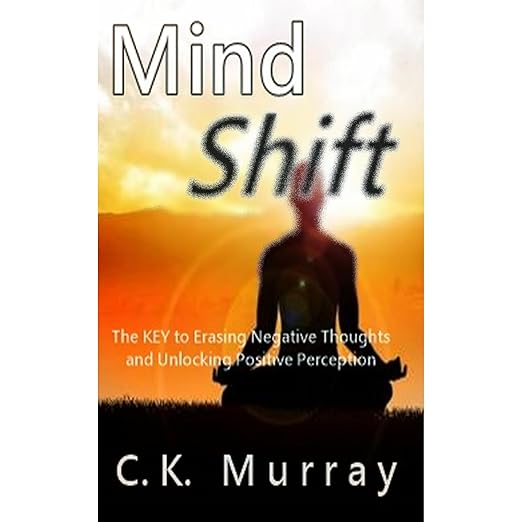
Quick Take
- Narration: Virtual Voice narration is AI-generated and lacks the human warmth that mindset and cognitive reframing content requires to land effectively.
- Themes: Cognitive schemas, negative thought patterns, CBT-adjacent reframing
- Mood: Schematic and motivational, dense with terminology for its length
- Verdict: An accessible primer on cognitive reframing with a significant format limitation: the Virtual Voice delivery drains the connective quality the material needs, and at 79 minutes, the scope is more introductory than transformative.
There is a particular irony in a book about shifting your mental framework toward positivity and connection being narrated by an AI voice. Not every audiobook suffers meaningfully from Virtual Voice narration, but mindset and cognitive work is one of the categories where it matters most. When C.K. Murray is asking you to examine your schemas, to sit with a situational pyramid or try flooding as a technique for confronting avoidance, the voice delivering those instructions needs to carry something that signals genuine conviction. Virtual Voice doesn’t have that, and its absence is felt throughout the seventy-nine minutes this runs.
I want to be fair about what the content itself offers, independent of the narration, because there is real substance here, even if it arrives in a format that doesn’t do it justice. Murray’s approach draws on cognitive behavioral frameworks, specifically the concept of schemas, the deeply held perceptual structures through which we interpret experience, and builds a case for how those schemas can be examined, challenged, and incrementally changed. The terminology is accessible without being dumbed down.
Schemas, Perception, and the Architecture of Negative Thinking
The book’s most useful section is its treatment of schemas, the perceptual frameworks that shape how we interpret events. Murray distinguishes between schemas that serve us and those that warp our thinking, what cognitive therapy calls cognitive distortions, and walks through the most common distortions with enough specificity that a reader encountering this framework for the first time will find it genuinely clarifying. The situational pyramid and cognition log tools, mentioned in passing but not fully developed at this length, give listeners a starting point for translating the framework into practice.
One reviewer described the book as beginning by discussing the importance of mind schemas and how they shape perception, noting that techniques such as flooding and distancing are covered. That’s accurate. Another reviewer found the book redundant in its treatment of negative thought removal, which is a fair observation. At under eighty minutes, the book covers a lot of conceptual ground, and repetition in the service of emphasis can read as redundancy when the runtime is this compressed.
What the Rating Data Suggests
With nineteen ratings at 4.0, the feedback is limited but mixed in a way that’s informative. The positive reviews emphasize the conceptual framework as genuinely clarifying and the analysis as sound. The more skeptical reviews flag the repetition and, implicitly, a sense that the book promises more transformation than a seventy-nine-minute listen can deliver. Both readings are accurate about different dimensions of the same product. This is a conceptual primer, competently written, that would need significantly more development to serve as a working tool for real cognitive change.
Who Might Still Find Value Here
If you’ve never encountered cognitive behavioral frameworks before and want a short, accessible introduction to the concept of schemas and how they shape perception, this delivers that efficiently. It serves as an orientation before engaging with longer, more fully developed works on CBT and cognitive reframing. If you’re already familiar with the CBT literature or have read longer treatments of positive psychology or mindset work, there’s unlikely to be new material here that justifies the listen. The Virtual Voice narration is the most significant barrier to engagement for anyone, regardless of prior familiarity.
Frequently Asked Questions
Is the Virtual Voice narration significantly distracting, or does the content compensate?
For mindset and cognitive reframing content, the Virtual Voice limitation is more pronounced than in informational or reference books. The material asks readers to engage personally with techniques for examining their own thinking, and that kind of content relies on a narrator who sounds genuinely invested. The AI narration consistently falls short of that requirement, and at 79 minutes, there isn’t enough time for the content alone to compensate.
Does the book offer practical exercises, or is it primarily conceptual?
It introduces several tools including cognition logs, situational pyramids, and techniques like flooding and distancing, but the treatment of each is brief given the runtime. These are framed as starting points rather than fully developed protocols. Listeners looking for a structured practice will need to supplement with longer CBT-based resources.
Is the book’s cognitive framework grounded in clinical CBT, or is it more of a popular self-help adaptation?
The framework draws on CBT concepts, particularly schemas and cognitive distortions, and the approach is more disciplined than most popular positive-thinking titles. It’s not a clinical manual, but it’s also not purely motivational. It occupies the middle ground that accessible CBT primers tend to occupy.
At 79 minutes, is this better treated as an introduction before reading longer books on the subject?
Yes, that’s probably the most realistic framing. As a standalone course of cognitive change, the runtime limits what’s possible. As an accessible first encounter with schema theory and CBT-adjacent reframing before moving to a more comprehensive resource, it functions well.