Quick Take
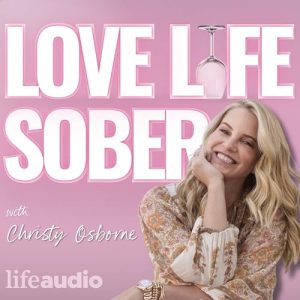
- Narration: Christy Osborne narrates her own work with the warmth and directness of a coaching session, conversational, unhurried, and clearly practiced at holding space for difficult emotions.
- Themes: Faith-based sobriety, neuroscience of habit, shame-free recovery
- Mood: Gentle and encouraging, with an undercurrent of quiet urgency
- Verdict: Women who want their sobriety journey framed in Christian faith rather than clinical language will find a thoughtful companion here, though listeners seeking secular or science-heavy content should look elsewhere.
I came to this one on a Tuesday morning when I had a stack of wellness titles to work through, and something about the description gave me pause. The phrase “you don’t have to hit rock bottom” stopped me cold. I’ve reviewed dozens of addiction and recovery audiobooks over the years, and most of them either lead with crisis or lead with scripture, rarely both at once. Christy Osborne is attempting something more nuanced than either.
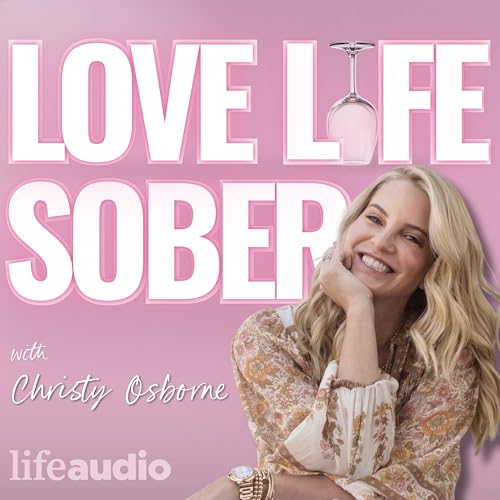
Worth noting upfront: the synopsis describes Love Life Sober as a podcast, which it is. The audiobook carries that DNA throughout. Episodes have the rhythm and pacing of recorded audio intended to be listened to in segments rather than consumed straight through. For some listeners that is a feature. For others it may feel less cohesive than a traditionally written book. It is worth knowing before you start.
The Space Between Faith and Neuroscience
What Osborne does well is hold two frameworks in the same hand without letting them collapse into each other. She draws on neuroscience and nervous system regulation, the kind of language borrowed from somatic therapy and behavioral science, and weaves it with scripture and prayer. The combination is less clinical than Holly Whitaker’s Quit Like a Woman and more spiritually direct than Annie Grace’s This Naked Mind, which positions it clearly for a specific audience: women who already have a faith life and want their recovery to live inside it, not alongside it.
The 40-day structure referenced in the subtitle, drawn from her book of the same name, gives the listening experience a kind of built-in calendar. It is not a passive listen. Osborne regularly addresses the listener directly, poses questions, and invites reflection. Self-narration is the right choice for this kind of material. A professional narrator reading coaching prompts would feel distant in a way that would undermine the entire premise.
The Shame-Free Frame and Its Weight
The phrase “shame-free space” appears often enough that it starts to feel like a mantra, and I mean that as observation rather than criticism. Osborne clearly understands that shame is not a motivator for lasting behavior change, it is, in fact, one of the primary drivers of continued drinking. Her approach is to name the shame mechanism and then step around it, offering compassion as a substitute. For the listener who has spent years cycling through guilt-and-relapse patterns, this reframing can carry real weight.
The weaker moments arrive when the content becomes more formulaic, the reassurance that you are not alone, the reminder that God has more for you, the gentle challenge to notice your evening habits. These are not wrong, but they blend into a recognizable wellness-podcast cadence that can feel less specific than the material deserves. Osborne is at her most compelling when she gets particular: describing the exact physiological mechanisms behind the 5 p.m. craving, or recounting a moment of her own story with enough detail that you believe she has actually been there.
Who This Is Actually For
The audience for Love Life Sober is defined tightly enough that the honest answer is: you already know whether you are it. Osborne is speaking to Christian women, specifically those who love Jesus and also love wine, and who feel a mounting dissonance between the two. She is not writing for secular listeners or for those whose faith is exploratory. She is not writing for men, and she is not writing for people in acute crisis who need clinical intervention.
For that specific listener, the five-and-a-half hours go quickly. The self-narration makes it feel like a phone call with a coach who has been through it. The episodic structure means you can pause between chapters and sit with the questions she raises. The integration of neuroscience gives the faith-based framing a grounding in mechanism rather than just belief, which for some listeners will be the difference between a book that changes behavior and one that merely inspires it.
Who Should Listen / Who Should Skip
Listen if: You identify as a Christian woman questioning your relationship with alcohol, you find shame-based approaches counterproductive, and you want a guide that takes both your faith and your biology seriously at the same time. Skip if: You are looking for a secular recovery framework, a clinical treatment guide, or a traditionally structured audiobook rather than a podcast-style listening experience.
Frequently Asked Questions
Is Love Life Sober a podcast or an audiobook?
It is technically both. The audiobook is drawn from Osborne’s Christian podcast of the same name and retains an episodic, conversational structure throughout. Listeners expecting a traditionally written and structured book may notice the difference in pacing and format.
Does the book require a strong Christian faith to be useful?
Yes, meaningfully so. The framework is explicitly Christ-centered, with scripture, prayer, and references to God woven throughout. Listeners who are not Christian or who want a secular recovery approach will find the framing a barrier rather than a bridge.
Is the 40-day structure something you follow actively during listening, or can you listen straight through?
The 40-day alcohol fast referenced in the subtitle is tied to Osborne’s companion book. In the audiobook format, the content works as a guide you can engage with over time or listen to in larger stretches. Osborne regularly pauses for reflection prompts, so engaging actively rather than just listening passively will yield more benefit.
How does Christy Osborne’s self-narration hold up over the full runtime?
Well. Osborne has clearly recorded extensively for her podcast and brings a practiced warmth to the narration. The coaching-session quality, direct, personal, occasionally urgent, suits the material far better than a professional narrator would. The pacing is unhurried without being slow.