The Short Version
- Narration: Jeremy Davidson delivers a clear, authoritative performance that suits the documentary weight of the subject matter
- Themes: Art as civilization, wartime theft and restitution, moral courage under institutional pressure
- Mood: Urgent and documentary, with the mounting tension of a race against both the Nazi retreat and Allied bombing
- Verdict: One of the most important untold stories of World War II, compellingly reconstructed from personal letters and diaries, the rare history book that reads with the momentum of a thriller.
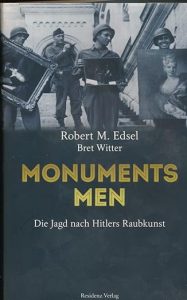
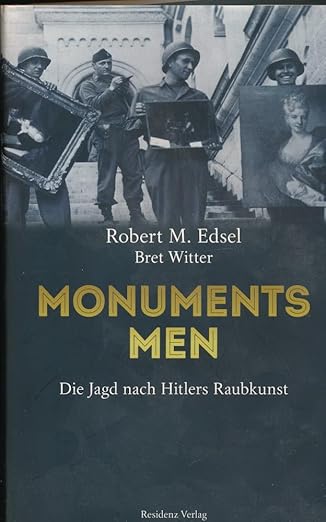
I should note upfront that this listing appears to be for the German-language edition of Robert M. Edsel's book, published by Residenz Verlag with an ISBN in the 978-3701733040 range. Several Amazon reviewers flagged this confusion, expecting the English edition and receiving the German one. If you are looking for the English-language audiobook narrated by Jeremy Davidson, verify the edition carefully before purchasing. The review below addresses the book itself, which exists in both languages and is widely available in English audio.
I first heard about the Monuments Men years ago through the 2014 film, which simplified the story considerably and, in doing so, somewhat diluted what makes it genuinely extraordinary. The film turns it into a heist narrative with a countdown timer. Edsel's book, which I went back and read after seeing the film precisely because I suspected the reality was more complex, is something different: a detailed, painstakingly sourced account of what happens when a civilization decides some things are worth protecting even in the middle of a war that is killing people by the hundreds of thousands every week.
What We Made of It
The Monuments, Fine Arts, and Archives program was a unit of approximately 350 men and women, curators, architects, museum directors, art historians, attached to the Allied forces with the specific mission of protecting cultural heritage from destruction and locating stolen art. Edsel reconstructs their work through personal letters and diaries, which gives the book an intimacy that purely official histories cannot achieve. These were not soldiers in any conventional sense; they were specialists in fragile things operating in an environment specifically designed to destroy fragile things, and the gap between those two realities produces some of the book's most indelible passages.
The Nazi theft operation is the book's dark counterpoint. The systematic looting of more than five million art objects from occupied territories, paintings by Vermeer, Rembrandt, and Leonardo, sculptures by Michelangelo, objects of cultural and religious significance from virtually every country Germany occupied, was not incidental to the Nazi project but integral to it. Hitler's planned Führermuseum in Linz was intended to be the greatest art collection in the world, assembled through conquest. Understanding the scale of that project makes the Monuments Men's mission feel less like a cultural footnote and more like what it actually was: a counter-operation to one of the most ambitious acts of organized theft in human history.
What Makes The Monuments Men Worth Hearing
Jeremy Davidson's narration is well-suited to the material. This is history that requires a narrator who can handle both the documentary precision of archival detail and the human texture of letters written in wartime, the fatigue, the moral weight, the occasional dark humor of people doing an impossible job. Davidson manages both registers without flattening either. The pacing across 14-plus hours is controlled; Edsel builds toward the climactic sequence in the salt mines of Altaussee, where the Nazis had hidden masterpieces and where a decision to destroy everything rather than let it fall to the Allies was very nearly carried out, and Davidson sustains the tension of that approach.
The book is structured around specific Monuments Men and their individual journeys through liberated Europe, which allows Edsel to give the reader multiple perspectives on the same deteriorating situation. This is both the book's structural strength, it prevents the account from feeling like a dry institutional history, and its occasional challenge for listeners who prefer a single narrative thread. Following multiple characters across different parts of the European theater requires some attentiveness.
What Might Not Land
The salt mines sequence at Altaussee is the book's climax and its most extraordinary passage. The concentration of stolen masterpieces in those tunnels, and the near-catastrophe of a decision that would have destroyed them forever, is the kind of historical moment that sounds invented when described in isolation. Edsel's reconstruction of it from participant accounts is meticulous, and by the time the reader arrives there, the investment in specific paintings and sculptures, in particular objects with particular histories, is real enough that the stakes feel personal.
Watch also for the quieter passages: a Monuments Man arriving at a bombed church to assess damage, or negotiating with a local official over the custody of something irreplaceable, or simply writing home about what the destruction of European cultural sites looks like from the ground. These smaller moments are where Edsel's sourcing in personal letters pays its most significant dividends.
The Right Listener for The Monuments Men
Strong recommendation for anyone interested in World War II history who wants an account of the war that covers territory the standard military histories omit entirely. The book fills a genuine gap: the story of what happened to civilization's artifacts during the war is rarely told at this length or with this level of sourcing, and Edsel's account is definitive.
Also rewarding for readers interested in art history, cultural preservation, or the ethics of wartime conduct toward non-military targets. The book raises questions about what we owe to objects that survived centuries of human events, and why protecting them under fire is a morally serious undertaking rather than an eccentric priority. Important note: confirm you are ordering the English-language edition, the listing this review is based on appears to be the German Residenz Verlag edition, which has caused confusion for multiple English-speaking buyers.
Common Questions
Is this listing for the English or German edition of The Monuments Men audiobook?
This appears to be the German-language edition published by Residenz Verlag (ISBN 978-3701733040). Multiple Amazon reviewers have noted they ordered expecting English and received German. If you want the English-language audiobook narrated by Jeremy Davidson, search specifically for the English edition and verify the publisher and language before purchasing.
Does Edsel cover the Nazi looting operation in detail, or does the book focus primarily on the Allied recovery effort?
Both are covered, though the Nazi operation is reconstructed primarily through its effects, the scale of what the Monuments Men discovered, rather than through inside accounts of how the theft was organized. The extent of the looting, including the planned Führermuseum in Linz, is made very clear, and Edsel contextualizes the recovery mission against the full scope of what was taken. The Altaussee salt mines sequence specifically deals with the endpoint of that theft operation.
Is the salt mines climax as dramatic in the book as it sounds?
Yes, and it is made more so by the fact that Edsel earns it through the preceding 400-plus pages. By the time readers arrive at Altaussee, they have invested in specific artworks and specific people, and the near-destruction of masterpieces that had survived centuries of prior human upheaval carries genuine weight. Edsel reconstructs it from participant accounts with enough granular detail that the tension holds even for readers who know the historical outcome.