In Brief
- Narrator: Suzanne Toren reads a memoir whose author the description itself calls legendary, so a buyer's real question is whether the reading resists doing an impression.
- Subjects: the studio system from the inside, ambition and its price, marriage and motherhood on 1962 terms, a career fought for contract by contract
- Tone: Combative, grand, self-aware
- Bottom line: A genuinely well-written memoir that argues its own case hard, best for listeners who already know the films it defends.
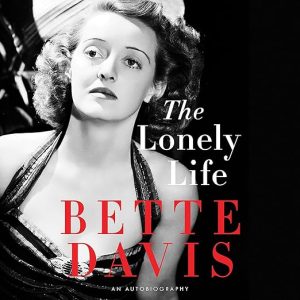
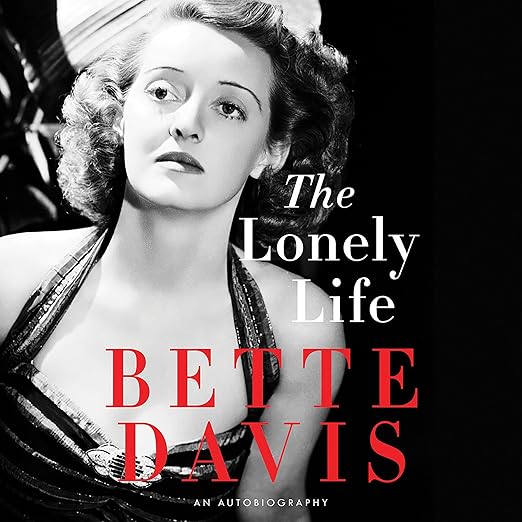
Bette Davis wrote her memoir in 1962 with a sword in her hand, and the audiobook opens on that image. She had always been driven, she says, by some distant music, a battle hymn most likely, because she had been at war from the beginning; she rode into the field with her sword gleaming and her standard flying, intending to conquer the world. Those are the opening lines of the book, quoted in the description, and they set the terms for the thirteen hours and seven minutes that follow. Suzanne Toren speaks all of them, taking a life told by the woman who lived it from a Yankee childhood to the top of Hollywood.
You Could Hear Davis Speaking as You Read
What arrives as one book is really three layers of one. The original text covers roughly the first fifty years, written at an age when Davis still had decades of work ahead of her. New material was added in the 1980s to carry the story forward, and an afterword written shortly before her death closes it. That accretion explains the memoir's strange center of gravity: the early struggle is told at length and in the present tense of a woman still fighting, while the later decades arrive compressed and retrospective. The seams are visible, and they are more interesting than a smoothly ghostwritten life would have been.
Voice is why the book survived. A January 2021 five-star describes it as power, empathy, love and determination roaring through every word, regrets that the book had to end at all, and adds that you could hear Davis speaking as you read. That last observation gets at something real. Davis wrote the way she delivered a line, with the emphasis landing where you do not expect it, and the prose has the same refusal to be pleasant that made her career possible in the first place.
Analytical About Contracts, Not Complaining
Prose quality is the surprise here. A January 2018 five-star makes the case precisely, praising the intelligence of the observations, the descriptive flair, and a vocabulary that recalls a period when books were not written down to their readers, then arguing that what Davis says about the industry remains relevant to how Hollywood works now. That is not fan indulgence. She is analytical about studio contracts, about what was demanded of actresses, and about the arithmetic of a career, and she names the mechanisms rather than complaining about them.
The Temptation for Toren to Perform Davis
Suzanne Toren's assignment carries a trap the material sets. Davis is remembered as much for how she said things as for what she said, and any listener arriving here has some version of that delivery already loaded, which means the reading has to carry sentences written in a famous cadence without sliding into an impression of it. Not one of the five written responses mentions the recording, so a sample is the only evidence available. Play a stretch of the combative professional material rather than the childhood chapters, because that is where the temptation to perform Davis rather than read her is strongest.
Period context is the other thing no modern retrospective can supply. Davis is writing about the studio system while its consequences were still her daily problem, and about marriage and motherhood in terms her own era had given her, without the softening a later biographer would apply. Some of that has dated badly and some of it is startlingly clear-eyed. Both are useful, and neither is available in the tidied-up accounts of the same career published since.
These Responses Are Grading Paper
The reception box did not come from this recording. A 4.4 average sits above a rating count of one, with five signed responses beneath it filed over half a decade, and the simplest account of that mismatch is not miscounting but inheritance: the page was assembled on top of an existing edition and carried that edition's reception across with the badge still attached. The rest of the record supports the reading, since nothing in the column responds to anything that could only exist in audio. A buyer should treat the number as a verdict on a book, transferred, rather than as a verdict on thirteen hours of listening.
One clause in the description gives the game away. It announces the memoir as available in ebook for the first time, which is a sentence written for a different product entirely and never updated for this one, and it advertises an afterword as the selling point. A January 2023 three-star completes the picture from the other side, admiring the candor and the determination while wanting more on the marriages and on a difficult relationship with a daughter, and closing on the complaint that the edition carries no photographs at all. On an audio edition that objection cannot apply, which is exactly the point: these responses are grading paper.
A Straight Shooter, Tough and Talented
Anyone who grew up on the films will find the most here, and an August 2017 four-star says so directly, calling Davis a straight shooter, tough and talented, an inspiration who could only have lived that way because of a particular character of determination and confidence, and recommending the book specifically to movie fans. That is a sensible boundary. The book assumes you care which parts she fought for and which she was assigned, and a listener without that investment will find the professional chapters long.
Students of the studio era as labor history will find plenty here, as will anyone curious how an ambitious woman described her own ambition in 1962, and people who like memoirs written before the genre acquired a therapeutic vocabulary. Thirteen hours is a real commitment, and the book earns it in stretches rather than continuously.
Late-career detail is the wrong thing to want from this book, since the original text stops long before it and the additions do not fill the gap. An account of the private life is equally unavailable, because Davis defends her privacy exactly where a modern reader most wants her to give it up. Anyone hoping for a settled, verified version of this career should reach for a biography instead, because this is a memoir arguing its own case, and it never pretends otherwise.
Before You Listen
Does this audiobook use Bette Davis's own voice?
No. Suzanne Toren is the credited reader, and Davis died long before this recording was made. The confusion is understandable, because a March 2023 five-star praises the book for sounding like her, meaning the writing rather than any performance. The cadence a listener recognizes is on the page, not in the studio.
How much of the audiobook covers her later years?
Less than you would expect. The original memoir stops after roughly the first fifty years, and the later decades arrive through material added in the 1980s and an afterword written near the end of her life. Those additions summarize where the early chapters dramatize, so the balance tips heavily toward the rise.
Is the 1962 text or the updated version being read?
The expanded one. The description is explicit that the story was carried forward with fresh material during the 1980s, and that the afterword came shortly before her death. What you hear is therefore a memoir revisited twice, with the original account intact underneath the additions.
Does the memoir work for someone who has not seen the films?
Partly. The account of ambition, contracts and industry power stands on its own and is the strongest thing here. The chapters that turn on which roles she fought for assume you know what those pictures were, and without that knowledge a long stretch of the middle becomes a list of titles.