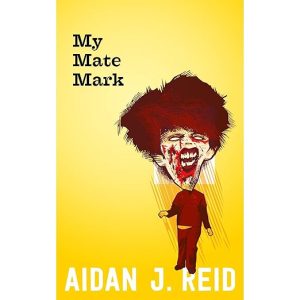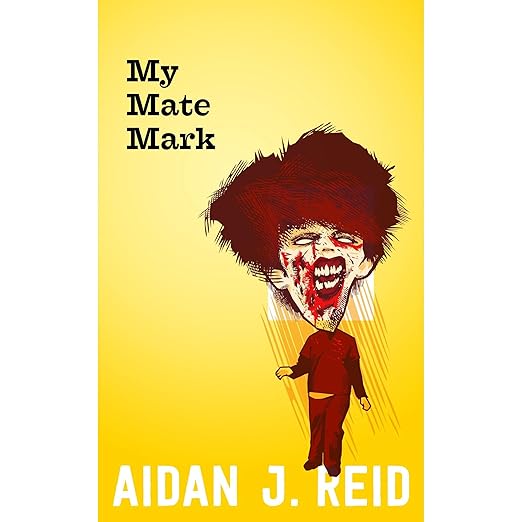
Short story collections rarely find their best form in audio, and My Mate Mark by Aidan J. Reid is an honest test case for why. At one hour and thirty-five minutes across five stories, this collection is genuinely brief, closer to a long podcast than a conventional audiobook, and it is narrated by Virtual Voice, an AI-generated audio system rather than a human performer. The combination of short-form fiction and synthetic narration creates specific listening conditions that are worth understanding before you start.
A Maniacal Doll and a Willing Accomplice
Reid's collection opens with the title story, My Mate Mark, which features a maniacal doll and a willing accomplice. The premise belongs to a tradition of creepy-toy horror that runs from Roald Dahl through to contemporary genre fiction, and Reid's version has a darkly comedic edge that the synopsis signals with the phrase 'warped mind of yours truly.' The four shorter pieces that follow range considerably in tone: Heaven's Lottery is a suburban community piece with dark undertones, PMA offers a counter to the collection's bleaker impulses, and Silver and Streak, drawn from Reid's own embarrassing personal experiences with pick-up artistry, shifts into observational comedy. The variety is a feature, but it also means the collection never settles into a consistent mood, which is a reasonable creative choice and a listening experience that some will find pleasingly unpredictable and others will find structurally loose.
Reid is a writer who values the short story as a form on its own terms, not as a sketch toward something longer. The brevity of each piece is intentional, and the collection's total runtime of ninety-five minutes reflects that commitment. At a single sitting, this is genuinely completable, which is either a virtue or a limitation depending on what you want from an audio purchase of this length.
Personality on the Page, Lost in the Audiobook
The narration is Virtual Voice, which means this audiobook uses AI-generated audio rather than a human performance. This is worth naming directly because it affects the listening experience in specific ways. Virtual Voice delivers text intelligibly and at reasonable pace, but it cannot interpret fiction. The comedic timing in Silver and Streak, the building dread in My Mate Mark, the tonal shift that PMA requires: all of these depend on a narrator who understands what they are reading and can perform accordingly. Virtual Voice provides intelligible audio without interpretive intelligence, and for fiction that depends on tone and timing, that is a meaningful limitation.
The collection's single rating of 2.0 reflects genuine listener dissatisfaction, and it is worth being transparent about what that rating likely reflects. Short story collections are difficult sells in any format, and an AI-narrated short collection at a premium price point will attract listeners who expected more than the format can deliver. The rating does not necessarily indict the writing itself, which has an energetic, unpretentious quality that reads as genuinely self-possessed rather than derivative. Reid's voice on the page has personality. The audio format, particularly with synthetic narration, does not showcase it well.
No Adjustment Between Horror and Comedy
The collection's tonal range is both its creative strength and a practical challenge for audio. Moving between creepy-doll horror, suburban dark comedy, faith-adjacent affirmation, and pick-up artist satire within ninety-five minutes requires a flexible reader and a listener willing to reset expectations between stories. Virtual Voice makes no such adjustment between modes. Each story is narrated at the same register, and the absence of tonal modulation means the comedy lands less sharply and the horror builds less effectively than the stories likely intend.
Better to Seek This Out in Print
The collection's runtime and price point are worth evaluating against alternatives. At ninety-five minutes, this is a brief audiobook commitment; but it is also a commitment to synthetic narration for fiction that would benefit from human performance. Listeners who encounter Reid's writing here and enjoy his sensibility would do well to seek out his work in print form, where the tonal intelligence is between the reader and the page rather than mediated by an AI system that cannot recognise it.
The saving grace of the format is that the stories themselves are built around strong premises rather than subtle atmospherics. My Mate Mark's horror hook is strong enough to register even without a narrator who builds dread. Silver and Streak's self-deprecating comedy translates reasonably well because the humour comes from the situation and the narration's obliviousness rather than from tonal contrast. So the content survives Virtual Voice better than some fiction would, though it would be a significantly better listening experience with human narration.
The collection also raises a broader question about how short fiction functions in audio format generally. The short story is a form built for reading; it rewards re-reading, marginal annotation, and the physical experience of reaching the end of a page and pausing before the next paragraph. Audio strips those affordances away and replaces them with forward momentum, which works well for novels but can work against the kind of compression and density that good short fiction depends on. Reid's stories are not undermined by audio in the way that more formally experimental short fiction would be, but they are served less well by it than by print.
A Quick Sampler for the AI-Curious
Listeners already familiar with Aidan J. Reid's work who want audio access to this collection will find it delivers the content accessibly enough. Listeners curious about dark comedy short fiction who are comfortable with AI narration can approach it as a quick audio sampler of a writer with a specific and distinctive sensibility. Anyone who needs human interpretive performance to engage with comedic or horror fiction should choose a differently narrated audiobook. At ninety-five minutes and a single sitting, the commitment is low, and the expectation calibration matters more than the length.
A Few Questions About My Mate Mark
Is My Mate Mark audiobook narrated by a human or an AI voice?
The narrator credit is Virtual Voice, which is an AI-generated audio system. It delivers the text intelligibly but without the interpretive performance that fiction, especially dark comedy and horror, benefits from.
What genre does this audiobook belong to, and who is it most suitable for?
The collection spans dark comedy, horror, suburban satire, and personal comedy. It is most suitable for listeners who enjoy short-form dark fiction with a self-deprecating Irish sensibility and who are comfortable with AI narration. It is not well suited to listeners who need human performance to engage with tone-dependent fiction.