- Voice: Rebecca Keegan hosts with the credibility of a senior film journalist, and the exclusive cast interviews with Pacino, Duvall, De Niro, and Shire carry genuine archival weight.
- Big ideas: Cultural mythology, family and power, gender dynamics in classic cinema
- Atmosphere: Analytical and richly assembled, closer to award-winning audio journalism than to a narrated film book
- Worth it?: An Audible Original built around exclusive cast interviews and cultural analysis, best for listeners who want to understand why The Godfather still matters rather than how it was made.
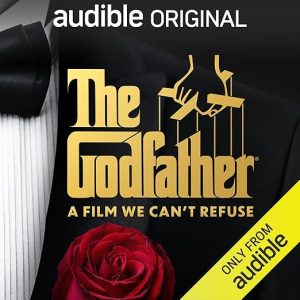
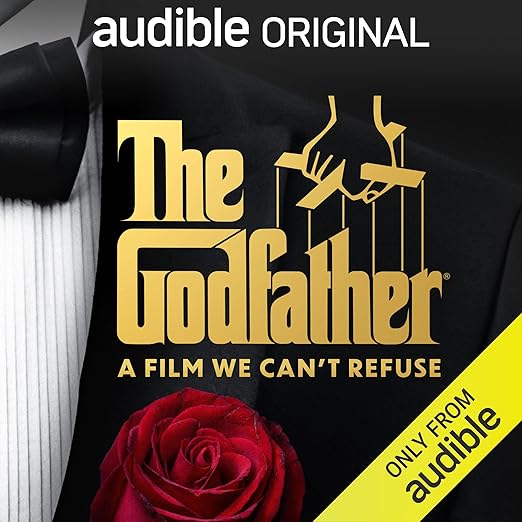
Al Pacino calling Paramount to describe what The Godfather meant to him is not the same kind of archival material you find in a film retrospective book, and Rebecca Keegan's Audible Original The Godfather: A Film We Can't Refuse understands that difference and builds around it. Keegan, a senior film editor at The Hollywood Reporter, guides listeners through an audio production built from exclusive interviews with the film's surviving cast, including Pacino, Robert Duvall, Robert De Niro, and Talia Shire, alongside commentary from a broad range of film scholars, critics, and what the synopsis calls 'ardent aficionados.' The result is something closer to a podcast season than a conventional audiobook, and the distinction matters.
This production won Double Webby Awards for Best Podcast in Television and Film and the Documentary categories, and a Gracie Award for Audio Podcast Host in Entertainment Special. Those are awards given to audio-first content rather than to print-adapted works, and they reflect something genuine about what Keegan has made here. The Godfather: A Film We Can't Refuse is designed specifically for listening, not adapted from text. That means the pacing, the structure, and the use of interview material are calibrated for ears rather than for a reader working through chapters, and the difference in listening experience is substantial compared to a standard narrated film history book.
A Feminist Critic and a Chef, Both Weighing In
Keegan organizes the eight-plus hours around a central question: why, more than half a century after its release, does The Godfather continue to hold such an indelible place in audiences' lives? The answers she assembles are varied and sometimes contradictory, which is part of the point. The film's relationship to family, loyalty, and power is read differently depending on whether you are approaching it as a film scholar, a Sicilian-American viewer who grew up with it, a feminist critic examining its gender dynamics, or a chef tracing the culinary references that have entered mainstream culture. Keegan holds all of these readings in productive tension without forcing a single interpretive conclusion.
Reviewer Me_Mo describes the listening experience as 'a well-produced and engaging listen' worth 3.5 stars, arriving at it after finishing a more conventional book about the making of the film. That context is useful: this is not a production history in the manner of Mark Seal's Leave the Gun, Take the Cannoli. It is an exploration of cultural meaning, of the ways the Corleone family's story has embedded itself in how we think about power, loyalty, family, and American identity. The production values support that ambition.
Perspectives the Existing Literature Doesn't Have
The exclusive cast interviews are the most significant reason to choose this audiobook over print alternatives. Hearing Pacino's voice discussing the film carries a different weight than reading a quotation attributed to him. Duvall and De Niro, both notoriously selective about press appearances, add perspectives that are not widely available in the existing literature. Talia Shire, whose Connie Corleone has received less critical attention than the male leads despite her centrality to the family story, apparently contributes to the gender dynamics section, which the synopsis flags as one of the key analytical threads.
Keegan as a host is a strong argument for the audio format specifically. Her work at The Hollywood Reporter has given her access and credibility with film subjects that a purely academic host would not have, and her presence in the production keeps it from feeling like an academic lecture series with famous interviewees dropped in. The Webby and Gracie awards confirm that this reads, to industry evaluators, as accomplished audio journalism rather than promotional content dressed up as criticism.
A Single Review and an Unusually Long Runtime
The three-star rating in the data is based on a single review, so it is not statistically meaningful as a quality signal. Me_Mo's specific review is worth reading carefully: the listener found it engaging and well-produced but arrived at it immediately after a deeper production history book and was calibrating expectations accordingly. Someone who approaches this on its own terms, as audio journalism about cultural meaning rather than production history, is likely to find the value proposition clearer.
At eight hours and twenty-seven minutes, the production runs long for a podcast-format work. Listeners who engage best with shorter, more episodic listening may find the runtime asks for a different mode of attention than they typically bring to podcast content. The Audible Original designation means it was commissioned specifically for audio distribution rather than adapted from existing content, so the pacing is built around sustained listening rather than episodic drops.
The Cannoli Scene as Serious Cultural Artifact
The culinary thread in the production, referenced briefly in the synopsis as part of the film's broader cultural reach, is more developed than that mention suggests. Food, the cannoli scene, the cooking sequences, the Corleone table as a site of family ritual and family violence, has generated an entire subgenre of Godfather-adjacent content. Keegan's treatment of it as a cultural artifact rather than a recipe footnote is one of the more original angles in the production and connects the film's domestic scenes to the larger argument about why the Corleone family continues to function as a mirror for American audiences' complicated feelings about loyalty, violence, and belonging.
Connie Corleone Finally Gets Analytical Attention
The production's handling of the film's gender dynamics is the area where it most clearly goes beyond what existing Godfather criticism has offered. Talia Shire's Connie is central to the film in ways that analytical attention has historically underweighted relative to Michael and Don Vito, and the decision to give that thread serious attention in an audio production featuring Shire's own voice is one of the more distinctive editorial choices Keegan made. Listeners who have followed the critical literature on The Godfather will find this section adds something new.
Essential Listening for Serious Godfather Enthusiasts
Listeners who have seen The Godfather and want to understand why it continues to matter will find this a richly assembled answer to that question. Film students, cultural critics, and anyone drawn to the intersection of cinema and American mythology will find the analytical range satisfying. Listeners who want a production history or a behind-the-scenes account of how the film was made should look elsewhere; that story is told more thoroughly in dedicated books on the subject. The exclusive cast interviews make this essential listening for serious Godfather enthusiasts. Casual viewers curious about the fuss may find the depth of investment assumed by the production somewhat ahead of where they are.
A Few Questions About The Godfather: A Film We Can't Refuse
Does this audiobook work if I have not seen The Godfather recently?
The production assumes familiarity with the film rather than building toward it. Listeners who have seen The Godfather but not recently will benefit from a rewatch before listening. The analysis engages with specific scenes, characters, and choices that require baseline knowledge of the source material.
How does this Audible Original differ from a standard narrated film history audiobook?
The Godfather: A Film We Can't Refuse was designed specifically for audio rather than adapted from print. The pacing, interview integration, and structure are calibrated for listening. Its Double Webby Awards for podcast categories reflect that it competes as audio journalism rather than as a narrated book.
Are the exclusive cast interviews a substantial part of this audiobook's runtime?
Yes. Interviews with Al Pacino, Robert Duvall, Robert De Niro, and Talia Shire are integrated throughout the production alongside critic and scholar commentary. The cast voices are not brief appearances but sustained contributions to the analytical threads Keegan develops.
Is this audiobook a comprehensive production history of The Godfather?
No. It focuses on cultural meaning and legacy rather than production history. Listeners who want the behind-the-scenes story of how the film was made should supplement with dedicated production histories. This is cultural criticism with access, not a making-of account.