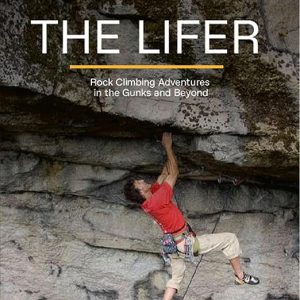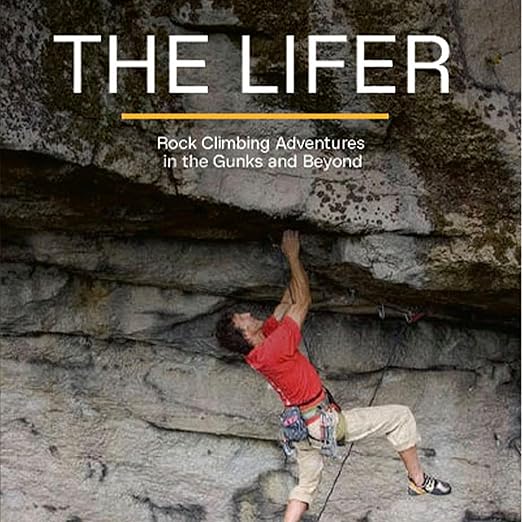
Rock climbing spent most of the twentieth century as what this audiobook's own synopsis calls a dirtbag activity for eccentric people, and only in recent years has it become an Olympic sport with medals and sponsorships attached. Russ Clune lived through that entire arc, and The Lifer is his account of it, built from decades spent on his home cliffs in the Gunks of New York State and on rock faces scattered across the planet. He narrates the audiobook himself, which matters for a story this personal.
Our Take on The Lifer
Clune positions himself less as a champion and more as a witness who happened to also be climbing at a high level the entire time. Reviewer Karen t'Kint captures this duality precisely, describing Russ as simultaneously on the stage and sitting in the front row as the sport incubated and then blossomed into something else entirely, someone who knew the most impactful figures in the community while also being one of them. Alan Watts, who says he shared the same era of climbing with Clune, learning the craft in the 1970s and coming of age through the 1980s, adds a specific detail that captures the scope of the story: no climber traveled more than Russ Clune during those decades of change, and Clune had a knack for showing up at climbing areas, including the Frankenjura in Germany, before they became famous destinations.
That combination, being both insider and observer across the exact decades that turned climbing from a fringe pursuit into a mainstream sport, is what the synopsis promises and what these five reviewers, independently, keep circling back to praising. It also explains why this listing carries two genre tags, sports and outdoors alongside travel and tourism, rather than just one. Karen t'Kint's review gets at the same idea from a craft angle, calling the book an ultimate insider's story that still manages to stay accessible and inspiring rather than closing itself off to readers who never learned the sport's specialized vocabulary.
Why The Lifer Works as an Audiobook
Friendships built across a life spent climbing sit as central to this book as the climbing itself. The synopsis frames the who's-who of past climbers Clune introduces along the way as inseparable from the lifelong bonds those encounters created, and the reviews back that framing up directly. Robin Wurl, who identifies as a longtime Gunks climber, says the antics and adventures Clune recounts span at least five continents, and singles out the first-person accounts of major climbs and pivotal moments in the sport's history as the strongest material in the book. Wurl also credits the way Clune intertwines climbing history, personal memoir, and travel narrative into one account rather than keeping those threads separate, calling the combined result both enthralling and informative for climbers at any experience level. Roland alley's review makes a related point from outside the climbing world, calling the stories and mishaps riotous, hilarious, and enjoyably familiar even to readers who have never climbed anything, credit given to Clune's affable style, which the review says tends to underplay his own accomplishments rather than inflate them.
Barbara S. Ginsberg's review makes the strongest case for listening if you are not a climber at all. She had a hard time putting the book down despite having no personal connection to the sport, and describes Clune's prose voice as utterly engaging and down-to-earth, close enough to sitting around a campfire with a skilled storyteller that the climbing details stopped feeling like a barrier to entry for her.
Weak Spots in The Lifer
Russ Clune narrates his own story, and that detail is worth sitting with for a moment. Barbara S. Ginsberg's campfire comparison describes his prose voice on the page, not the audio performance directly, since her review reads as a reaction to the writing rather than to a recording, but a memoir this personal, delivered by the person who lived it rather than a hired narrator standing in for him, tends to close that particular gap. If you are new to climbing culture, expect terms like the Gunks, the nickname reviewers here use for Clune's home climbing grounds in New York State, to come up without much explanation, since these reviews suggest the book is written from inside that world rather than translating it for outsiders at every turn. None of the five reviews raise any complaint about pacing or length, which is worth noting on a book covering this many decades and this many places. The five reviews on this page are also unusually consistent in tone, circling the same handful of qualities, humility, specificity, and warmth toward the climbing community, from different angles rather than surfacing much disagreement, which is worth knowing if you like weighing a dissenting view before committing seven hours to a book this personal.
The Right Listener for The Lifer
Climbers are the obvious audience, and Alan Watts's review in particular reads like it was written by someone who lived through the same history Clune is narrating, which is about as strong an endorsement as a memoir like this can get from inside its own community. But roland alley and Barbara S. Ginsberg both make a clear case that no climbing background is required, since both reviews come from readers outside the sport who still found themselves pulled through the whole book quickly. Skip it only if decades of niche sports history, however well told, genuinely do not interest you, since that is the spine the entire seven hours and eleven minutes is built around, from the Gunks to the Frankenjura and back. Readers who gravitate toward travel writing for the sense of place rather than the sport itself have a real entry point too, given how much of Clune's story unfolds on cliffs scattered across continents rather than confined to one home crag.
Quick Take
- Read by: Russ Clune narrates his own memoir, and reviewers who praise his down-to-earth, conversational prose voice on the page suggest that quality should carry directly into the audio.
- At its heart: climbing's evolution from fringe pursuit to Olympic sport, decades of travel, friendships forged on rock faces
- Vibe: warm and adventurous, closer to hearing a well-traveled friend's stories than a formal sports history
- Short version: a strong listen for climbers and curious non-climbers alike, built on five enthusiastic, detail-rich reviews.
Common Questions
Does Russ Clune narrate this audiobook himself?
Yes, Clune narrates his own memoir. Reviewers describe his prose voice as down-to-earth and conversational, close to sitting around a campfire with a skilled storyteller, and while those comments were written about the text itself, a memoir this personal read by the person who lived it tends to carry that same quality into the audio version.
Do you need to be a climber to enjoy this audiobook?
No. Two reviewers, roland alley and Barbara S. Ginsberg, specifically describe having no strong connection to climbing and still finishing the book quickly, crediting Clune's affable style and the human stories, friendship, mishaps, and travel, that sit alongside the climbing itself. Climbers will still get the most specific payoff, but outsiders are not shut out.
How much of climbing history does this audiobook actually cover?
A wide stretch. Alan Watts's review describes sharing Clune's era, learning to climb in the 1970s and coming of age through the 1980s, decades the synopsis frames as the sport's shift from a fringe, dirtbag pursuit toward its current Olympic status. Reviewers describe Clune as present for nearly all of it, both as participant and witness.
How long is this audiobook, and is it built around one climb or many?
It runs seven hours and eleven minutes and covers many climbs across multiple continents rather than building around a single expedition. Robin Wurl's review specifically mentions adventures spanning at least five continents, and the synopsis frames the book as a career-spanning account rather than a narrow one built around a single peak or trip.