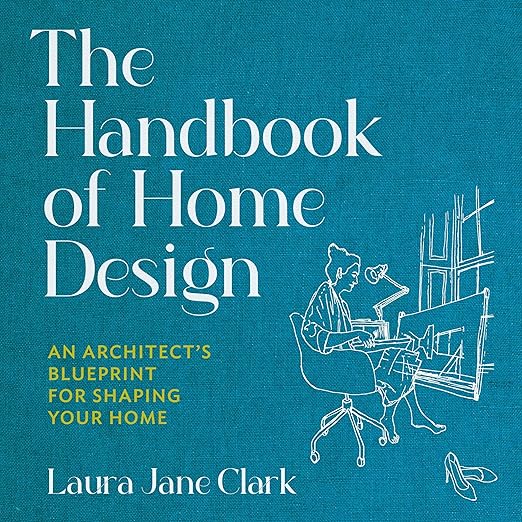
Laura Jane Clark's The Handbook of Home Design audiobook arrives with an unusual credential: Clark is an architect whose public profile comes primarily from television, through the BBC and Netflix series Your Home Made Perfect, where she is known for showing ordinary homeowners what architectural intervention can actually do for their spaces. That context matters here because the audiobook is doing something similar, taking professional knowledge that is usually gatekept by fees and specialist language and putting it directly in the hands of people who are about to make expensive decisions about their homes. Clark self-narrates, and her familiar television register, warm, direct, technically precise without being inaccessible, comes through clearly from the first track.
The companion PDF is worth addressing immediately. The audiobook notes that the PDF accompanies the audio in your library, and for a design book that covers reading floor plans, sketching spatial layouts, and understanding architectural drawing conventions, that PDF is not optional material. Clark's narration of the visual content is handled intelligently, but there are sequences where following along with the PDF diagrams will make the difference between genuinely absorbing the technique and getting only the conceptual framework. Plan to use both.
Three Gaps Clark Closes for Nervous Homeowners
What Clark is attempting, the democratization of residential architectural design as she frames it, is not a modest ambition. Most homeowners make decisions about renovations or redesigns in a state of relative ignorance about the professional concepts that architects bring to the same problems. They describe what they want in vague terms, struggle to evaluate contractor proposals, and have no framework for translating a vision into a buildable brief. Clark addresses all three gaps systematically. The book moves from foundational spatial understanding through plan reading, brief writing, and design sketching to the practical business of working with professionals on site.
Reviewer Cassy King notes that the book explains the fundamentals of home spaces from drawing to reality in an accessible way. KJG specifically credits it with providing not just inspiration but practical tools for reimagining a poorly designed home. That pragmatic outcome is what separates Clark's guide from the many design books that deliver aesthetic inspiration without the technical vocabulary to act on it. At four hours and forty-seven minutes, the audiobook is compact enough to finish in a weekend, which gives the material a useful density. You are not getting twelve hours of anecdote; you are getting Clark's distilled framework from fifteen-plus years of practice.
She Knows Which Terms Confuse People First
Clark's self-narration is the audiobook's primary asset beyond the content itself. She has spent over fifteen years in practice and several years on television explaining architectural concepts to non-specialists, and that accumulated experience with the communication challenge shows in how she structures explanations. She knows which terms confuse people and addresses them before confusion sets in, and she knows how to connect technical concepts to the physical experience of being in a space. Amazon Shopper describes the presentation as straightforward without being too basic, which is exactly the register Clark is aiming for and achieving.
The audiobook is genuinely useful at multiple project scales. Clark frames the content for everyone from long-term homeowners planning major renovations to first-time buyers trying to visualize what they might change, to people with no current project but a persistent interest in how spaces work. The framework she builds, around understanding your home, developing a brief, reading plans, and designing with confidence, applies across all of those situations with appropriate adaptation. Clark's explicit goal of giving listeners the language to confidently communicate their vision to professionals is one of the more useful outcomes a design guide can deliver.
The PDF Is Included, and It Is Essential
The PDF companion is essential, not supplementary. Listeners who engage with the audio alone will absorb Clark's spatial vocabulary and design philosophy effectively, but the sequences covering floor plan reading and sketch technique require visual reference to be fully actionable. The good news is that the PDF is included in the audiobook purchase. Using the two together is how Clark designed the experience, and listeners who approach it that way will get considerably more practical value from the four hours and forty-seven minutes.
The audiobook is most valuable before a project begins rather than midway through one. Clark's framework is preparatory: it gives you the language and conceptual tools to engage with architects, designers, and contractors as an informed client. Listeners who are already deep in a renovation will find some of the foundational material already resolved by circumstance, though the brief-writing and communication sections remain relevant at any stage of a project.
Elementary Only if You're Already a Professional
Anyone approaching a home renovation, redesign, or significant purchase decision who wants to understand what an architect actually brings to those problems will get immediate practical value from this audiobook. Clark is particularly useful for listeners who feel intimidated by design professionals or uncertain about how to communicate their vision clearly. Her explicit goal of giving listeners the language and ability to confidently communicate their vision is achieved within the running time.
Listeners who are professional designers or architects will find the material elementary, as it is designed for homeowners and first-time buyers. For everyone else, and particularly for listeners who are about to have expensive conversations with contractors or designers, this four-hour-and-forty-seven-minute audiobook is a practical investment that will likely pay for itself in the first meeting it improves. The 4.6 rating across 145 reviews from readers at various stages of home projects is consistent testimony to its practical usefulness.
In Brief
- Narrator: Laura Jane Clark self-narrates, and her BBC television presence translates well to audio, giving the design advice a conversational authority that a professional narrator might have made generic.
- Subjects: Architectural empowerment, budget-conscious design, the language of space
- Tone: Practical and encouraging, like a skilled professional talking you through something rather than lecturing
- Bottom line: A genuinely useful design companion audiobook for anyone approaching renovation or redesign, with the essential caveat that the companion PDF should be downloaded and kept open alongside the audio.
Before You Listen
Is the companion PDF essential for getting full value from this audiobook, or can I follow along with just the audio?
Essential for the visual content. Clark narrates the spatial and plan-reading material intelligently, but sequences covering floor plan reading and sketch technique require visual reference to be fully actionable. The PDF is included in your library alongside the audio and is how Clark designed the experience to be used.
Does Laura Jane Clark's self-narration in this audiobook match the accessible style of her television work on Your Home Made Perfect?
Very closely. Clark's television presence is built around making architectural expertise accessible to non-specialists, and that same register comes through in the audiobook. Reviewers consistently note the content is straightforward without being oversimplified, which is a fair description of what her narration achieves.
At under five hours, does this audiobook have enough depth to be genuinely useful, or is it more of an overview?
More substantive than the length suggests, because Clark stays focused and avoids padding. The compact running time reflects deliberate distillation of fifteen years of practice rather than incompleteness. Reviewers consistently describe getting actionable tools rather than just inspiration, which indicates the depth is appropriate for the material Clark is covering.