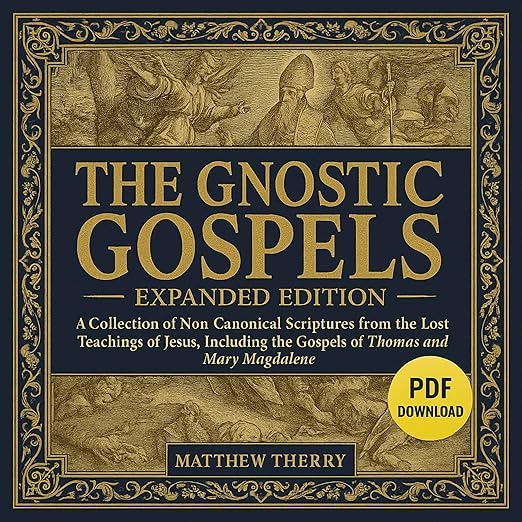
Quick Take
- Narration: KC Wayman delivers a composed, measured read suited to the meditative tone of the material, though the content itself is more commentary than scripture.
- Themes: Early Christian heterodoxy, inner knowledge and self-realization, Nag Hammadi tradition
- Mood: Contemplative and searching, with an undercurrent of spiritual curiosity
- Verdict: A useful introductory survey of five non-canonical texts for curious listeners, but be clear that you are getting analysis and introductory notes rather than the actual scriptures read aloud.
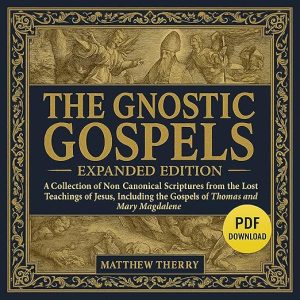
I came to this one on a rainy Tuesday evening, the kind of night that invites big questions. I had been reading around the edges of early Christian scholarship for a while, picking up references to the Nag Hammadi discovery in other books, and I wanted something that would bring those texts closer. The Gnostic Gospels, as a concept, carries genuine intellectual weight: these documents were sealed away for nearly two thousand years, and their rediscovery reshapes our understanding of how diverse early Christianity really was.
What I found here, though, requires an honest upfront clarification that the product description does not fully provide. The one listener review on record says it plainly: this audiobook does not read the actual texts of the Gospel of Thomas, the Gospel of Mary Magdalene, the Gospel of Philip, or the others listed in the synopsis. It offers commentary and introductory notes about them. That is a meaningful distinction, and it is the first thing any prospective listener needs to know.
Our Take on The Gnostic Gospels (Expanded Edition)
Working from what the synopsis describes as "expanded edition" content structured around five texts, narrator KC Wayman brings a calm authority to the material. The production is clean, and the pacing suits a listener who wants to absorb unfamiliar ideas rather than race through them. The decision to frame each gospel with introductory notes before engaging the content is pedagogically sensible for newcomers. Matthew Therry positions this as accessible to "seekers, scholars, and anyone drawn to the forgotten paths of early Christianity," which is a wide and somewhat optimistic net.
Why Listen to The Gnostic Gospels (Expanded Edition)
If you know nothing about the Nag Hammadi library, this could serve as a gateway. The Gospel of Thomas, with its 114 sayings attributed to a living Jesus, is genuinely challenging material. The Gospel of Mary Magdalene, which presents Mary as an apostle with her own spiritual insights, touches on something that mainstream Christian tradition suppressed for reasons worth understanding. The Gospel of Philip, with its mystical language about union and sacred mystery, opens entirely different theological territory. An introductory guide that contextualizes these five texts has legitimate value for someone stepping into this world for the first time.
What to Watch For in The Gnostic Gospels (Expanded Edition)
The single verified listener review gives this a one-star rating specifically because the actual scriptures are not included, only commentary about them. This is a significant caveat. Listeners expecting to hear the logia of Thomas read aloud, or the voice of Mary Magdalene speaking directly, will be disappointed. The word "expanded edition" in the title, combined with the detailed synopsis listing each gospel, creates a reasonable expectation that the texts themselves are performed, and that expectation is not met. The publisher is Independently Published, and the rating count of only four listeners at time of writing means there is limited community verification of the content. With a runtime of just over ten hours, the book has room for substance, but the actual scope remains unclear from available data.
Who Should Listen to The Gnostic Gospels (Expanded Edition)
This audiobook may work for you if you want a structured, low-jargon introduction to Gnostic Christian thought and are comfortable receiving analytical commentary rather than primary-source readings. It is less suited to anyone who has already read Elaine Pagels or Bart Ehrman, who will find the introductory framing thin by comparison, or to anyone who specifically wants to hear the Gospel of Thomas or the Gospel of Philip performed as standalone texts. Approach with calibrated expectations, and consider pairing it with a more academically rigorous source if you want to go deeper.
For those curious about the textual tradition behind these documents, a more substantial companion would be Elaine Pagels's The Gnostic Gospels, which remains the standard scholarly introduction and is available in multiple audio editions. The broader Nag Hammadi library is also available in full translation for those who want primary source access rather than commentary. Use this audiobook as a doorway rather than a destination.
Frequently Asked Questions
Does this audiobook actually read the Gnostic Gospels aloud?
Based on the available listener review, no. The one verified review explicitly states that the audiobook writes about the gospels rather than reading the scriptures themselves. Prospective listeners should factor this in.
Which five texts does this expanded edition cover?
According to the synopsis, the edition covers the Gospel of Thomas, the Gospel of Mary Magdalene, the Gospel of Truth, the Second Treatise of the Great Seth, and the Gospel of Philip.
Is this appropriate for listeners with no background in early Christianity?
The author positions it as accessible to first-time listeners and promises explanations without academic jargon, so it is aimed at newcomers rather than scholars already familiar with the Nag Hammadi corpus.
Is a PDF companion included?
Yes, the synopsis states that a PDF download is included with purchase, available in your Audible Library for cross-device reading or study alongside the audio.