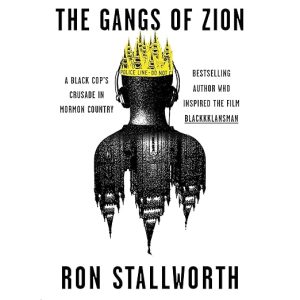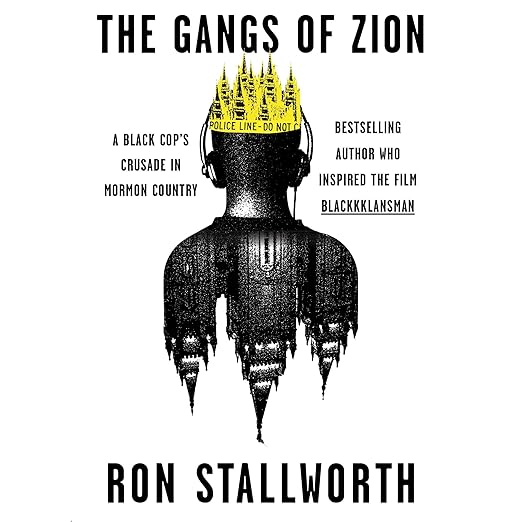
The premise is better than the book, and the two-star review on this page explains why with more precision than any summary could manage. Ron Stallworth, whose Black Klansman made him a bestselling author, lands in Salt Lake City in the 1990s and finds Bloods and Crips organizing in a state whose police force does not believe gangs exist there. Six hours and forty-nine minutes, released in 2024, and a 3.7 average across fifteen ratings that is easily the most honest number on the listing. This audiobook is worth your time as a document. As a narrative it is contested, and the people contesting it are specific about their reasons.
An Epic Promised, Disjointed Anecdotes Delivered
Few premises in recent nonfiction are this odd. A Black officer on a mostly white force, in a state dominated by a church he openly does not belong to, working undercover narcotics in the last place anyone expected to need it. The detail the description leads with is the one that sticks: kids bombing houses while carrying pocket editions of the Book of Mormon. The trigger, per the description, was a single early drug bust that opened onto something much larger than a narcotics case. Around that sit skinheads in a downtown bar, a legislator the copy calls racist, and a community activist accused of inflating a fatal incident into paranoia about a race war that was never happening. Stallworth spends more of the account fighting his colleagues' denial than fighting anybody's gang.
The music thread grows out of that denial rather than sitting beside it. The description says Stallworth came to believe gangsta rap held the key to the g-code, and that he became obsessed with, and then defensive of, a genre he had previously loathed. Whatever you make of the conclusion, the sequence is unusual: a narcotics officer reading lyrics as intelligence, then finding himself testifying about them. The final claim is the sharpest thing in the copy, and it is about Utah rather than about gangs, since it says twenty-three years of police work left him unprepared for how far local gatekeepers would go to silence him.
Weigh the two-star response first, because it is the most useful thing anyone has written here and it is not hostile. It says the description promises an epic about discovering and solving an unexpected problem in an unexpected place, while the book delivers a series of disjointed anecdotes from across a career, interesting enough but not unique, with the author sometimes more invested in demonstrating that he was right and everyone else was wrong decades ago. That is a structural complaint rather than a factual one and should be weighed as such. A one-star response goes further and attacks the author personally rather than the work, which tells you about the temperature around this subject rather than about the book.
Phil Morris Speaks the Asterisked Title Aloud
Two of the five written responses come from people who lived through it. One describes recognizing the neighborhoods, having served on a neighborhood watch and having noticed that teenagers arriving in Ogden behaved differently from local kids, and says the book connected things previously half-understood from television coverage. Another, teaching in Utah at the time, describes realizing gangs were present while parents and neighbors kept doubting it because no agency was acting. Local corroboration of that kind is exactly the evidence a contested memoir needs, and this listing carries two independent instances of it, filed by people with no reason to defend the author.
Speaking the lyrics aloud is the production question this page never addresses, and it is the second thing worth weighing before you buy. The description prints one song title with an asterisk in the middle of it, and a recording has no asterisks available. Whatever choice Phil Morris and the producers made, they had to make it deliberately, because the typographic hedge that print relies on simply does not exist in audio. The same applies to courtroom testimony quoted at length and to the language the author reports hearing on the job. It is a small decision with a large effect, since a memoir that flinches at its own material reads very differently from one that does not.
Fifteen Ratings Reveal Polarization Over Quality
Genre placement is misleading and worth naming plainly. This listing sits under arts and entertainment with a music tag, which describes perhaps a quarter of the book and almost none of its first half. What you are buying is a police memoir with a culture-war chapter attached, and a listener arriving from the music shelf expecting a history of gangsta rap will spend hours in narcotics work and departmental politics first. The rating spread deserves the same treatment. Fifteen ratings is a very small pool, the five written accounts run three fives, a two and a one, and the two-star is the most specific piece of criticism on the page. A 3.7 built from a base that small is a signal about polarization rather than about quality, and it should not be read as a verdict from a crowd.
Black Klansman Readers Are the Core Audience
Listeners who came from Black Klansman are the core audience, and one of them says exactly that: having read both of Stallworth's books, and having had no idea gangs existed in Utah at all. If you want more firsthand policing from the same author, this delivers it, and the outsider position that made the first book work is intact here in a different form.
It also suits anyone interested in how a subculture travels. The real subject underneath the anecdotes is denial: a police force that will not see what is in front of it, a legislature with its own agenda, an activist with another. Readers of local history, particularly of Utah in the 1990s, will find material almost nobody else has bothered to write down, and the two responses from residents suggest the record here is worth having even where the storytelling wanders. Firsthand accounts of a place insisting nothing was happening are hard to come by after the fact.
The tight single-arc investigation the description advertises never quite materializes, and the most careful reader on the page says so plainly, so anyone who needs that shape should look elsewhere. An author defending his own record is also part of the package, and that objection turns up in two of the five responses. Adjust for the music framing before you start: the shelf this sits on promises a rather different book from the one you will hear.
Do you need to have read Black Klansman before this audiobook?
No. This is a separate account from a different city and a later decade, and the description introduces the author's situation from scratch. Reading both does add something, as one five-star response makes clear, but nothing in the Utah material depends on knowing the earlier story.
How much of the audiobook is actually about music?
Less than the category suggests. The hip-hop material arrives as a strand rather than as the spine: uncensored lyrics read into the congressional record and testimony in a 1993 murder trial. The bulk of the recording is narcotics work, departmental politics and the refusal of local institutions to admit what was happening.