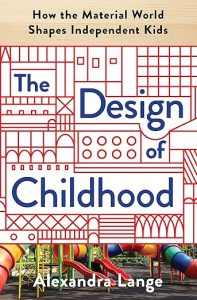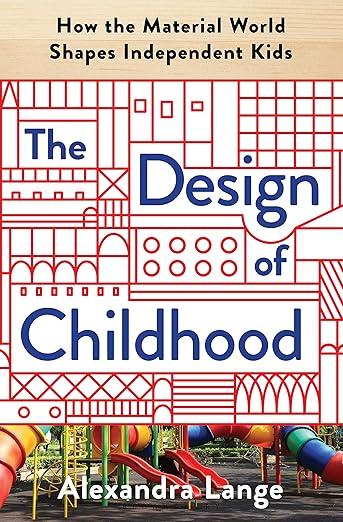
Sandboxes, seesaws, classrooms and city blocks are the architecture Alexandra Lange takes seriously here, and the listing sets a problem before a single minute plays. One line says 416 pages. Another says five hours and twenty-five minutes of running time. No audiobook holds both of those figures at once, and working out which one describes the thing you would actually be buying turns out to be the first job on this page rather than an afterthought.
The Slide Nobody Bothers to Debate
Lange's premise is stronger than the shelf it sits on. Parents scrutinize curriculum and playdates and every bruise, while the objects and spaces a child spends the entire day inside go completely unexamined: the toys, the classroom layout, the playground, the street outside. Those things carry decades of accumulated opinion about what children are for, and the opinions stay invisible precisely because they arrived as furniture rather than as arguments. Wooden blocks, or plastic, or increasingly a screen. A seesaw removed on safety grounds and a slide designed around liability. Nobody debates a slide, and Lange's whole method is to make you debate it anyway. Her argument is that all of these were decisions, and that somebody specific made every one of them.
Nostalgia is the trap Lange sidesteps, and the sharpest question in the book shows why: what do children lose when a playground has been engineered to make injury impossible? She never pretends the old equipment was better built or safer than what replaced it, but she is precise about the trade being made and about which party is never consulted. Tom Vanderbilt's blurb on this listing calls it a secret guidebook to a landscape we all live in and routinely fail to see, which is marketing language that happens to describe the reading experience exactly. The pleasure of the book is recognition rather than revelation, and recognition is the more demanding of the two effects to produce. You already know what a sandbox is; the achievement is making you wonder who decided it should be square, filled with sand, and placed where an adult can see it.
Rebecca LaChance's Brisk, Occasionally Too-Fast Pace
Audio solves a problem this very listing documents. The one substantive complaint on the page is that the print runs too small and the physical quality is poor, a common enough grievance on a design book that packs a great deal of apparatus into a trade paperback. The recording removes that failure mode outright. It is a small argument for the format and an unusually literal one, since nobody has ever had to squint at a file. Design books are also among the worst offenders for cramped typography, because the picture budget eats the page budget and the text gets compressed to compensate.
Objects are what Lange writes in rather than abstractions, and that travels unusually well by ear. Building blocks, the sandbox, the school corridor, the neighborhood: each is a thing you can already picture without help, so the history attached to it lands without needing a diagram alongside. Rebecca LaChance reads it, and the decision governing a book like this is pace, because whatever accounts for the gap between the two numbers on this page, what arrives is a fast pass over a great deal of ground. I found that briskness worked in the early material and thinned out later, where the urban chapters could have used room to breathe.
416 Pages and Five Hours Never Reconciled
Those two numbers deserve the attention they are getting. A 416-page work of cultural history normally needs a good deal more time than this recording gets, which leaves three possibilities: the recording is abridged, the page count belongs to a different edition, or the two entries were assembled from separate sources and never reconciled. Nothing on the page says which. An ISBN and a print publisher sit beside the audio credit in the same unresolved way, so a buyer who cares about completeness should check before purchase rather than after. This matters more on criticism than on a novel, because an argument that has been trimmed loses its qualifications first and its examples second.
Two Written Notices, Neither About the Recording
The review pool is no help whatsoever, and it is among the thinnest I have worked from. Two written notices sit beneath thirteen ratings. One is a three-star from India objecting to the print size and the build quality. The other is a five-star from Italy, written in Italian, reporting that delivery arrived within the promised window and everything was perfect. Neither says a word about the recording, the reader or the content, which means the 4.6 on this page is being carried by eleven silent votes and two logistics reports.
That leaves you buying on the premise and the blurb alone, which is not nothing but is considerably less than usual. A design critic writing seriously about the built environment of childhood is a genuinely good idea for a book, and the copy is specific enough about scope to be trusted on that much at least. I would still rather have had one reader tell me how the middle chapters move. What nobody on this page is able to tell you is whether the audio edition delivers the whole of it, or how much of the apparatus survived the move.
Settle the Page-Count Question Before You Buy
Parents who think about design at all are the natural audience, along with anyone working in education, urban planning or product development aimed at children. The book's real usefulness is that it changes what you notice on the walk to school, which is a modest claim and a durable one. Modest claims tend to outlast grand ones in this genre, and I would rather have a book that alters my attention than one that promises to alter my parenting. Architecture readers will find the case studies familiar in outline and unfamiliar in application, because almost nobody writes about playground equipment as though it were architecture. Anybody who has argued with a school board about a building will recognize the stakes immediately, and will probably wish this had existed sooner.
Parenting advice is the wrong thing to want from this, since Lange is writing criticism rather than guidance and hands you no instructions about which toys to buy. Anyone who needs images will be frustrated too, because a book about how things look and how small bodies move through them arrives here without a single picture. Settle the page-count question before committing, rather than working out the answer partway through, if textual completeness matters to you at all.
Quick Take
- Narration: Rebecca LaChance carries a work of design criticism solo, with no images and no captions to lean on, so every object has to be built in the ear.
- Themes: Playground and toy design, the architecture of schools, risk and safety, children in cities
- Mood: Curious, unsentimental, quietly provoking
- Verdict: A genuinely fresh subject, but confirm what the runtime actually covers before buying.
Why does the audiobook run five hours when the book is 416 pages?
No explanation appears anywhere on the page. An abridgement, a page count carried over from another printing, or two data sources that were never reconciled would each produce this. Cultural history running to that many pages usually needs far more time than this file allows, so verify the scope first if completeness matters.
Does The Design of Childhood audiobook work without illustrations?
Partly. Lange writes in objects everyone can already picture, blocks and sandboxes and school corridors, so the arguments survive intact. What you lose is any ability to check a claim about how something looks against the thing itself, which on a design book is a genuine and recurring cost.
Is this audiobook a parenting guide?
No. Lange is a design critic writing criticism, and the book examines how toys, playgrounds, classrooms and streets came to be shaped the way they are. You finish it noticing more on the walk to school rather than holding a list of recommended purchases.