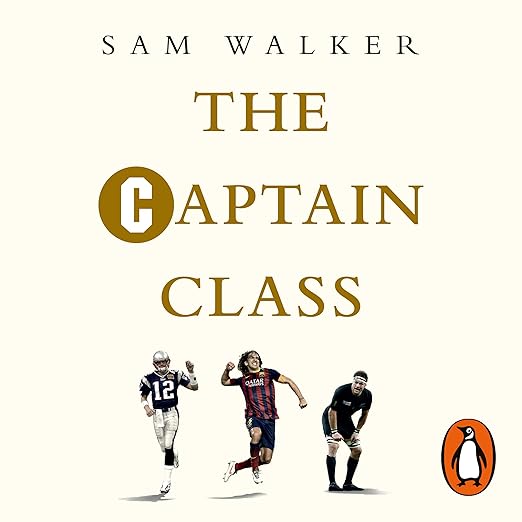
Sam Walker's thesis in The Captain Class is stated early and without equivocation: the common factor behind the sixteen most dominant sports teams in recorded history is not the best player, the best coach, or the most advanced training system. It is a specific kind of captain, and that captain almost always looks wrong for the job. This audiobook, narrated by Keith Szarabajka and running 9 hours and 24 minutes, presents the result of Walker's decade-long attempt to answer what he calls one of the most hotly debated questions in sport: what actually produces a dynasty? His answer is uncomfortable for anyone who has spent time thinking about conventional leadership.
What We Made of It
Walker's methodology is the book's foundation and its most important differentiator from conventional sports leadership writing. He devised a formula and applied it across thousands of teams worldwide, from the English Premier League to the NFL, and then asked a second, harder question about the sixteen that survived his initial ranking. The pattern he found was not what his research design expected. The captains of Barcelona, Brazil, the New Zealand All Blacks, the New York Yankees, Soviet ice hockey, and French handball, among others on his list, share a cluster of characteristics that reads like a leadership liability checklist: awkward, disagreeable, marginally skilled, poor verbal communicators, occasionally aggressive, and deliberately hidden from public attention. Reviewer P. Wung's observation is accurate: the book operates simultaneously as sports analysis, leadership theory, and a case study in how conventional assumptions about charisma and visibility produce the wrong kind of captain for the teams most likely to become dynasties.
Szarabajka's narration is a strong match for Walker's argumentative style. The book is thesis-driven rather than story-driven, and Szarabajka reads it with the measured authority of someone presenting evidence rather than spinning a narrative. His voice carries the biographical sketches of individual captains without letting them become hagiography, and he handles the statistical framework in the opening chapters at a pace that keeps the methodology comprehensible without turning it into a lecture. Reviewer David Fox notes the book's consistent balance between stories and statistics, and that balance is audible in the narration: neither register dominates or undermines the other.
The audiobook rewards listeners from both sports and organizational leadership contexts, which is an unusual combination for a sports book to manage. Walker draws on original interviews with athletes from two dozen countries, plus coaches, managers, and team builders across multiple sports, and those interview excerpts give the audio version a texture that the text-based arguments alone would not carry. Hearing former players from the All Blacks or the Soviet ice hockey dynasties describe their captains' specific behaviors, the discomfort those captains caused, the unconventional ways they communicated expectations, adds credibility to Walker's counterintuitive portrait.
The seven key qualities Walker identifies across his sixteen dynasty teams are developed across multiple case studies rather than presented as a checklist to accept or reject upfront. This means the listener absorbs the framework gradually as the evidence accumulates, which is why reviewer Natalia Camargo felt the book exceeded expectations: Walker earns his conclusions. The lesser-known dynasties, Soviet ice hockey and French handball in particular, carry some of the book's most compelling material precisely because the reader arrives without the prior assumptions that crowd out fresh analysis when looking at more familiar teams. The breadth of the case study range is the argument's strongest structural asset.
What to Watch For in The Captain Class
Walker's formula for identifying the sixteen greatest teams is outlined but not exhaustively explained in the audiobook. Listeners who want to interrogate the methodology in detail will find it described sufficiently to understand the argument, but not at a level that satisfies academic scrutiny. This is popular nonfiction designed to be persuasive rather than peer-reviewed, and Walker is transparent about that context. Listeners who approach it as a rigorous academic study will find it falls short of that bar; listeners who approach it as a serious journalist's careful argument will find it stands up well.
Some of the sixteen teams will be unfamiliar to listeners without international sports backgrounds. Walker provides sufficient context for each case study to function, but the full effect of the French handball and Soviet ice hockey material depends on the listener accepting those teams as genuine dynasties worthy of comparison to Barcelona or the All Blacks, which requires trusting Walker's methodology without having independent knowledge to verify it. That trust is ultimately warranted by the quality of his other case studies, but listeners should be aware that the unfamiliar examples require more active engagement than the familiar ones. For listeners who approach the book primarily from a business or organizational leadership context rather than a sports context, the less familiar teams are actually the most useful material; the absence of prior assumptions allows Walker's captain analysis to operate without the interference of existing narratives about those franchises and their histories.
Best Suited For
Sports fans who read analytically, coaches at any level, and anyone in a leadership role who finds most leadership writing too abstract will find Walker's evidence-first approach genuinely useful. The audiobook is not for listeners who want pure sports storytelling without analytical overlay. Walker's central claim, that the best captains are the last people you would pick, is both counterintuitive and defensible. Nine hours of evidence supports it more thoroughly than you might expect at the outset. Listeners who are already familiar with the research on leadership selection and team dynamics will find Walker's sports-specific case studies add texture and specificity to principles that can feel abstract in organizational psychology contexts. The crossover between elite sports performance and organizational leadership is often claimed but rarely examined with this level of evidence, and that examination is what justifies the full runtime.
The Short Version
- Read by: Keith Szarabajka reads Sam Walker's argument-driven sports analysis with sober, purposeful delivery that keeps the statistical and biographical sections equally clear.
- At its heart: The counterintuitive nature of elite leadership, dynasty patterns across global sports, why charisma is the wrong selection criterion for captains
- Vibe: Rigorous and debate-sparking
- Short version: Walker's ten-year research project into the sixteen most dominant sports teams ever produces a leadership argument that is genuinely surprising and evidence-dense rather than inspirational.