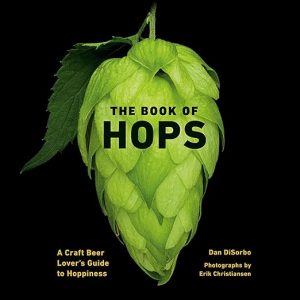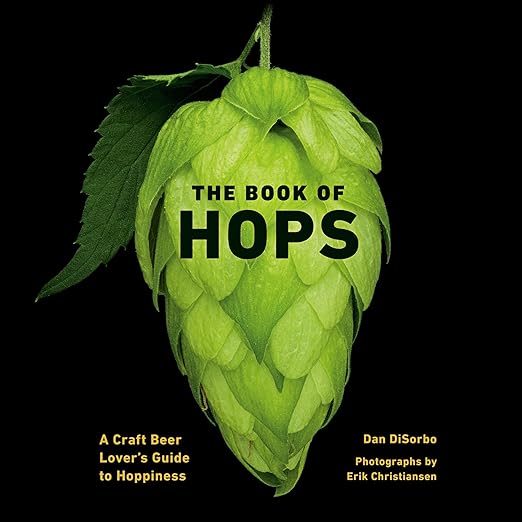
Craft beer knowledge has a vocabulary problem. You can taste the difference between a Citra-forward IPA and one built around Mosaic, but unless someone has given you the language for citrus oils, tropical esters, and alpha acid percentages, the difference remains intuitive rather than articulable. The Book of Hops, the audiobook adaptation of Dan DiSorbo and Erik Christiansen's illustrated guidebook, sets out to solve that problem in audio, which is both an appropriate format for this material and one with genuine limitations worth understanding before you purchase.
The book profiles fifty of the most important and sought-after hop varieties in current craft beer production, from the floral Cascade that defined early American craft brewing to the tropical Galaxy, the juicy Citra, and the bitter Galena. Each profile covers taste, composition, use, origin, history, and associated beer styles, which is a more thorough treatment than most beer guides provide for individual ingredients. Reviewer Y Chen called it "a beautiful book with lots of up-to-date information about craft beer, especially the different characteristics of hops that we often heard recently but couldn't find elsewhere." That specificity is the audiobook's primary value.
Christiansen's Photography Never Makes the Jump to Audio
The primer section that opens the book, covering the science and production of beer including a breakdown of key ingredients, the brewing process, and beer glassware, is an effective foundation for listeners who are curious about craft beer but have not had formal exposure to brewing science. DiSorbo writes for enthusiasts rather than brewers, which keeps the technical content accessible without dumbing down the chemistry. The twenty key beer style descriptions, each with a brief history and taste profile, are organized clearly enough that the audio format handles them without difficulty.
Reviewer Christophe Horton used the book for research and found it "awesome and detailed and also easy to read," while reviewer Yikes noted "cool photos and interesting interviews with some famous brewers." The brewer interviews translate well to audio; the photos do not. The original print edition was a collaboration between DiSorbo and macrophotographer Erik Christiansen, and the hyper-detailed close-up photography of hop cones, pellets, and plant structures is part of how the print edition communicates the visual difference between varieties. That dimension is entirely absent in audio. The downloadable PDF companion that the book references for charts, hop profiles, and key visual summaries becomes an important supplement rather than an optional extra, and listeners who want to get the most from this audiobook should plan to download and reference it alongside the recording.
Carpenter's Enthusiasm Survives Fifty Hop Profiles
Joanna Carpenter's narration is well-suited to the material. The hop variety profiles have a structured format, name, origin, flavor notes, recommended styles, that could become tedious over fifty profiles if the narrator does not maintain genuine engagement, and Carpenter does. Her delivery carries the enthusiasm of someone who actually finds this material interesting, which is the right quality for a book premised on the idea that understanding your ingredients makes the drinking better.
At five hours and thirty-one minutes, the runtime is efficient for the material covered. The primer and beer style sections take up the first portion, and the fifty hop profiles proceed in a digestible rhythm that builds familiarity over time. Reviewer Chen noted the book contains information on hop characteristics "we often heard recently but couldn't find elsewhere," which speaks to how rapidly hop variety development has accelerated in craft beer; DiSorbo's coverage of newer varieties like Mosaic and Sabro gives the book a currency that older beer guides lack. For craft beer enthusiasts who follow the industry, the profiles of newer breeding program varieties are the sections that add the most incremental knowledge over what a general beer guide provides.
Hundreds of Beer Pairings Live Only in the PDF
The PDF companion matters more for this audiobook than for most illustrated books in audio format. The original print book's value proposition was explicitly dual: detailed text profiles paired with Christiansen's macrophotography. In audio, you retain the text but lose the visual vocabulary that helps distinguish varieties by appearance. Downloading and keeping the companion PDF open while listening, or consulting it afterward, significantly improves the learning outcome for listeners who want to retain the profiles rather than simply enjoy the narration as background content.
The craft beer recommendations throughout, described as hundreds of hand-picked examples, translate reasonably well to audio but are best experienced alongside the PDF, where the pairing charts and style summaries are visually organized. Listeners planning to use this as a practical reference when selecting beers at a bottle shop or taproom will find the audio-only format less immediately useful than the print edition for that specific purpose.
Homebrewers Get More From This Than Casual Drinkers
This audiobook works for craft beer drinkers who want to develop a more specific vocabulary for what they are tasting, for homebrewers who want a structured introduction to hop variety selection and flavor science, and for listeners who pair their listening with activities where print is inconvenient. Reviewer Horton's use of the book for research suggests it serves as a legitimate reference as well as an enthusiast guide, and the brewer interview sections add a practitioner dimension that purely descriptive guides lack.
Skip the audio-only format if the visual component of the original illustrated book was your primary draw, or if you intend to use this as a real-time reference tool rather than an educational listen. The print edition's photography is genuinely informative rather than decorative, and listeners who need that visual dimension will find the audio version incomplete without the companion PDF. That said, for listeners willing to supplement with the PDF, the five-and-a-half-hour runtime delivers a thorough craft beer education in hop science that holds up alongside more general beer guides in the genre.
- Performance: Joanna Carpenter navigates the technical hop variety profiles with clarity and a genuine warmth for the subject; her delivery suits the enthusiast-guide register well.
- What it covers: Craft beer ingredient science, sensory vocabulary for beer, hop variety origins and applications
- Feel: Enthusiastic and educational, the kind of listen that makes you want to open a beer immediately
- Our call: An unusually thorough hop-by-hop audiobook guide to craft beer ingredients, though the illustrated companion PDF carries content that audio alone cannot fully deliver.
Frequently Asked Questions
Does The Book of Hops audiobook include the macrophotography from the original illustrated print edition?
No. The hyper-detailed hop photography by Erik Christiansen is a print-only feature. The audiobook includes a downloadable PDF companion covering charts, hop profiles, and key visual summaries, which partially compensates, but the photography itself is absent. Listeners who want the visual dimension should consider the print edition.
Is this audiobook appropriate for beginners to craft beer, or does it assume existing knowledge?
The primer section at the beginning covers the science, history, and production of beer from scratch, including key ingredients, the brewing process, and glassware. DiSorbo wrote for enthusiasts rather than brewers, so the technical content is accessible without prior brewing knowledge.