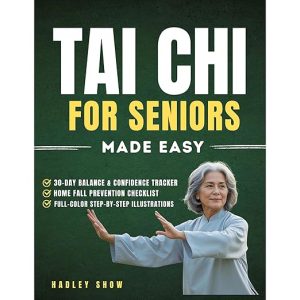
Tai Chi for Seniors Made Easy faces a real craft problem: teaching a physical, visual practice through pure audio, with no video demonstration to show what correct form actually looks like. This audiobook leans entirely on voice-only cueing to solve it, promising a thirty-day path to better balance and mobility across a compact two hours and fifty-two minutes.
The narration comes from Virtual Voice, an AI-generated reading rather than a human performer, which is worth stating plainly upfront since it directly affects how well this audiobook can convey the encouragement and pacing cues that physical instruction typically depends on.
Is Tai Chi For Seniors Made Easy Worth Your Time?
The synopsis is structured almost entirely as direct-response marketing copy: a string of rhetorical questions about pain and overwhelm, promises of transformation in just thirty days, and a closing push not to let another month go by. That framing does not necessarily mean the underlying content is weak, but it does mean listeners should evaluate the actual instructional substance separately from the sales language wrapped around it.
Buried inside that marketing copy are genuinely specific content promises: gentle foundations, basic principles of balance and flow, seated and standing routine options for different mobility levels, and stress-relief benefits alongside the physical goals. That level of structural detail suggests real instructional content sits underneath the sales pitch, even without independent reviews yet to confirm it.
Tai chi's core claims here, better balance, reduced fall risk, gentler joint stress than higher-impact exercise, align with a genuinely broad body of general health guidance on the practice, which lends the book's promises real credibility even without independent listener reviews yet attached to confirm the specific execution.
The thirty-day framing here follows a familiar and generally reasonable convention in short-form wellness content: breaking a new habit into a defined, achievable window rather than presenting it as an open-ended lifestyle overhaul, which tends to be more approachable for genuine beginners than a program with no clear endpoint.
For listeners specifically anxious about starting any new physical practice, hearing calm, structured verbal guidance at a low two-hour, fifty-two-minute commitment removes a real barrier to entry that a longer, more intimidating fitness audiobook would not.
The synopsis promises both seated and standing versions of each routine, which is a genuinely useful accessibility feature for listeners with real mobility limitations who cannot safely attempt standing balance work yet.
As short-format wellness audio goes, the price of entry here is low, both in runtime and presumably in cost, making it a reasonable way to sample whether tai chi appeals before committing to a longer program or in-person classes.
Self-published wellness guides in this exact format, short, structured, bonus-resource-heavy, have become a genuine category of their own, typically prioritizing accessibility and low commitment over comprehensive depth. Judged against that specific category rather than against a full-length, traditionally published fitness book, this audiobook's scope and ambition look reasonable rather than thin.
For listeners specifically new to any form of structured movement practice, not just tai chi, the low time commitment here, under three hours total, removes the intimidation factor that a full-length fitness audiobook can carry, making this a reasonable first step before committing to something longer or more expensive.
A runtime under three hours also fits naturally into a short daily routine rather than requiring a dedicated block of free time, which matters specifically for a habit-building goal like a thirty-day practice; listeners can realistically revisit sections multiple times across the month rather than treating this as a single one-and-done listen.
Before You Commit to Tai Chi For Seniors Made Easy
The AI narration is a genuine limitation for this specific content, more than it would be for straightforward nonfiction: physical instruction depends heavily on tone, pacing, and encouragement that a synthetic voice cannot fully replicate, and the synopsis's own promise of a program crafted for real people, with encouragement at every stage, is a harder promise for Virtual Voice to keep than a human narrator could.
This listing also promises bonus resources, a thirty-day balance tracker and a home fall-prevention guide, described as included with purchase; these almost certainly arrive as separate print or digital materials rather than audio content, so confirm exactly what format those extras take before assuming they are part of the listening experience itself.
AI narration has become increasingly common in exactly this corner of the self-published wellness market, where production budgets are tight and turnaround matters more than a name-brand narrator; listeners who have grown comfortable with synthetic voices in other short-format nonfiction will likely find less friction here than listeners encountering Virtual Voice narration for the first time.
The full color edition mentioned in the synopsis clearly describes a print or ebook companion, since color has no audio equivalent; audiobook listeners should understand that any visual reference material tied to that description exists in a separate edition rather than as part of this specific listening experience.
The synopsis offers no biographical detail establishing Hadley Shaw's specific credentials in tai chi instruction or physical therapy, which is worth knowing for listeners who specifically weigh an author's demonstrated background before trusting exercise guidance, especially compared to guides authored by named clinicians or specialists.
Should You Listen to Tai Chi For Seniors Made Easy?
Worth trying for seniors or beginners who want a low-commitment, low-cost introduction to tai chi's basic principles before deciding whether to invest in a fuller program, and for anyone comfortable with AI narration in exchange for a lower price point.
Skip it if precise physical form matters to you, or if synthetic narration is a dealbreaker; a video-based tai chi course will teach the actual movements far more reliably than any audio-only format can.
It is also a reasonable low-stakes way to test whether audio-only wellness instruction works for your own learning style before investing in a longer, pricier program in the same format.
It is a reasonable starting point specifically for listeners who have avoided exercise content altogether out of intimidation or past injury, given how consistently gentle and low-pressure the framing stays throughout the synopsis.