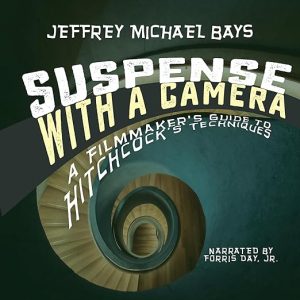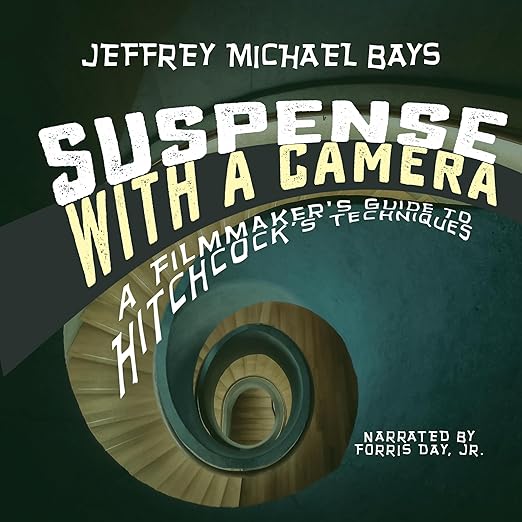
Craft guides for screenwriters and directors live and die on whether their advice actually survives contact with a real production, and Jeffrey Michael Bays builds his case around interviews with people who have made that advice work at a high level. Billed as the work of the self-described 'Hitchcock Whisperer', this audiobook sets out to translate Alfred Hitchcock's suspense technique into usable guidance for modern filmmakers, backed by bonus conversations with Bourne director Paul Greengrass, Bourne Identity editor Saar Klein, and 10 Cloverfield Lane director Dan Trachtenberg. At six hours and forty-five minutes, narrated by Forris Day Jr., it positions itself less as film history and more as an active toolkit.
A Veteran of Seventy Screenplays Still Learned More
Bays' central argument, that suspense is a learnable, repeatable craft rather than an intuitive gift only a handful of directors ever access, gives the book real structural discipline. One reviewer, a young filmmaker, said he 'cannot stress enough how important this book is to new or young filmmakers'. He credited it with unlocking specific tips and ideas by learning directly from, in his own description, 'the greatest filmmaker of all time Alfred Hitchcock'.
That enthusiasm was not limited to newcomers. A screenwriter who has authored more than seventy screenplays, most of them thrillers, said flatly that he had 'learned more than I know from this book', which is a meaningful endorsement given how much existing craft literature already targets suspense and thriller writing specifically. Coming from someone with that volume of professional output, the claim carries real weight.
The 'Hitchcock Whisperer' Framing Is a Deliberate Choice
The 'Hitchcock Whisperer' framing is a deliberate positioning choice worth noting on its own. Rather than presenting himself as a film scholar analyzing Hitchcock from the outside, Bays sets himself up as a translator, someone whose job is converting Hitchcock's intuitive mastery into language a working screenwriter or director can actually apply on their own set. That translator's stance shapes the whole book's register, closer to a mentor relaying hard-won technique than a professor delivering a lecture on film history, and it is a register Forris Day Jr. sustains consistently across the runtime.
One Reviewer Credits It With His Best Short Film
The bonus material is doing real work here, not just padding out the runtime. Interviews with people who have actually built suspense at the scale of the Bourne franchise or a contained thriller like 10 Cloverfield Lane give the technique-focused chapters a concrete, working-filmmaker anchor rather than leaving Hitchcock's methods purely theoretical. One reviewer specifically paired this book with a companion YouTube series, calling the combination 'a masterclass in creating Hitchcockian suspense'. That same reviewer credited it directly with helping him write, direct, and edit what he considers his best short film to date.
For listeners who make things rather than just study them, that practical, apply-it-immediately quality is the book's real draw. This is not a survey of Hitchcock's filmography for film history buffs; it is aimed at people actively building suspense into their own scripts and productions, with the historical analysis functioning as a means to that end rather than the destination itself.
The foreword from Film Riot's Ryan Connolly is also worth noting as a signal of the book's intended audience. Film Riot built its reputation on practical, hands-on filmmaking education aimed at working and aspiring filmmakers rather than academic film criticism, and a foreword from that specific corner of the filmmaking education world confirms where Bays expects this book to actually land: in the hands of people making short films and features on real budgets and real schedules, not in a university syllabus.
A Photography Tag Points to the Wrong Shelf
A Photography tag sits on this listing, and it points listeners toward the wrong shelf entirely. The content is squarely about screenwriting and directing suspense for film, not still photography or camera technique in the photographic sense, so listeners browsing by that tag specifically may be misled about the subject matter before they even start. A companion PDF comes with the purchase too, and given how reference-heavy craft guides like this tend to get, it is worth grabbing before starting the audio rather than after.
Listeners with no interest in filmmaking or screenwriting as a practice will find much of the technique-level detail beside the point; this is written for practitioners first, film scholars and casual movie fans second. The heavy reliance on Hitchcock as the central case study also means listeners hoping for a broader survey of suspense technique across many different directors' approaches should adjust expectations accordingly.
Listeners without a visual reference for the specific Hitchcock sequences or the bonus interview subjects' films being discussed may also want to have those titles available to watch or rewatch alongside the audiobook. Technique discussion about camera placement, edit timing, or shot composition inevitably benefits from being able to picture, or rewatch, the actual sequence under discussion rather than relying on description alone. Pausing to rewatch a referenced scene between chapters is a reasonable way to get the most out of the six hours and forty-five minutes rather than treating it as passive commute listening straight through, even if that means the full book takes considerably longer than its runtime to properly absorb.
Editors and Sound Designers Get Six Hours
Screenwriters and directors actively working on thriller or suspense material stand to gain the most, especially anyone earlier in their career looking for a structured framework rather than scattered advice pulled from interviews and film school lectures. Writers with a substantial existing body of work in the genre, based on at least one professional screenwriter's enthusiastic response, still found real new value here, which suggests the material holds up beyond just beginners.
Film history enthusiasts looking for biography or critical analysis of Hitchcock's career should look elsewhere; this treats his work as a technical toolkit to be mined and applied, not a subject for retrospective appreciation. Photography hobbyists who found this through its listed tag should also know upfront that the content has nothing to do with still photography despite that categorization.
Film students specifically preparing for production courses or thesis film projects may find the combination of technique breakdown and working-director interviews especially useful as preparation material, giving them both a vocabulary for discussing suspense construction and real-world examples of directors applying it under professional constraints. Editors and sound designers, not just writers and directors, are also a reasonable audience given the involvement of an actual film editor among the bonus interview subjects, since suspense construction depends heavily on choices made in the edit and in the sound mix as much as choices made on set during principal photography.
- Narrator: Forris Day Jr. delivers the technique-focused material with clarity, keeping the practical, apply-it-now tone intact across interviews and instruction alike.
- Subjects: Suspense craft, Hitchcock technique, practical filmmaking guidance
- Tone: Energetic and instructional, built for working practitioners
- Bottom line: A genuinely practical toolkit for suspense filmmakers, mistagged for photography and not aimed at casual film fans.
Does this audiobook include interviews with real filmmakers?
Yes. Bonus material features conversations with Bourne director Paul Greengrass, Bourne Identity editor Saar Klein, and 10 Cloverfield Lane director Dan Trachtenberg, plus a foreword from Film Riot's Ryan Connolly.
Is this audiobook useful for someone who already has screenwriting experience?
Based on listener accounts, yes. A screenwriter with more than seventy authored scripts said he still learned more than expected, suggesting the material holds value beyond total beginners.