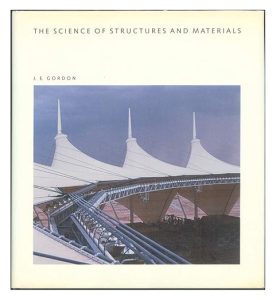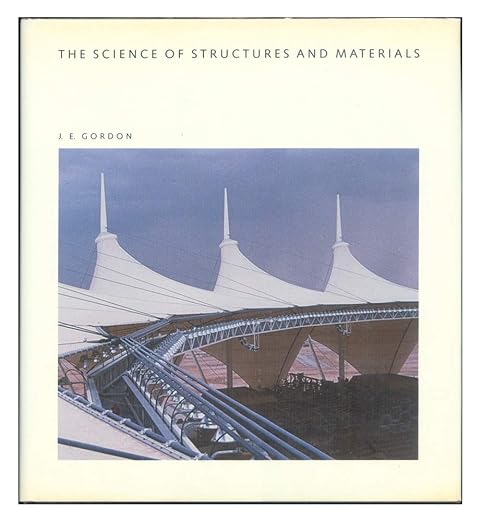
How does a book about tensile failure end up tagged as architecture? That is one of several puzzles this audiobook listing presents before you reach the first chapter. The page carries a narrator, Bethan Dixon Bate, and a runtime of twelve hours and fifty-five minutes, and almost everything else on it belongs to a printed edition: a 1988 date, a print publisher, a page count of 217, a cover price and an ISBN. The description is a single sentence listing topics. J. E. Gordon's book is a genuine classic of scientific explanation, and a buyer deserves better guidance than this page provides.
A 1988 Print Date on a New Recording
Content first, since the description barely attempts it. The one line offered covers form, tensile strength, tensile failure, metals, animal soft tissues, stiff biological materials and new artificial materials, which is an accurate table of contents and a hopeless piece of copywriting. What that list actually describes is a book about why things hold together and why they stop, treating a steel beam, a tendon and a piece of wood as instances of the same set of problems. The move from engineering into biology is the part that makes Gordon's reputation, because the same questions about stress and failure turn out to apply to bone and skin.
Dating this edition is impossible from the page, and that matters more than it sounds. The release date shown belongs to a printed book from 1988, while a credited narrator and a runtime of nearly thirteen hours describe something recorded a great deal later. Nothing on the listing says when the recording was made, whether anything was cut, or which printing it follows. A buyer comparing this against another edition therefore has no way to tell whether the two contain the same material, which is an odd position to be in when the subject is precision.
Reader testimony fills the gap the copy leaves. A five-star notice from 1998 poses the question the book answers best, why glass is fragile when steel is not, and reports having assumed such questions were unanswerable without mathematics and advanced physics before finding that Gordon manages it. Another describes going in with "no particular interest in structures" and coming out with one, which is the highest compliment an explainer can receive. Neither of those responses depends on technical background, and both suggest the material survives translation to a general audience intact.
Rigor Without Equations Wins the Reviewers Over
Teaching quality is the standing argument for this book, and the pool's longest notice makes it directly, calling it essential background reading for teachers of science and engineering and crediting the author with "a real gift of making quite difficult subjects interesting" alongside relevant asides. The same reviewer singles out the section on how accidents happen and notes that readers with no mathematical knowledge can still work through it profitably. That combination, rigor without equations, is rare enough that people were still writing recommendations decades after publication.
The Diagrams This Audiobook Cannot Include
Every written comment on this page comes from somebody holding a printed copy. The five reviews run from 1998 to 2016, and their concerns are physical throughout: one is purely about delivery, arriving as described by the seller and ahead of schedule. Read the whole pool as evidence about the text rather than about the recording, because that is what it is. It also means the specific questions a listener would want answered, how the technical passages are paced and whether the reading handles the diagrams' absence, have not been addressed by anyone here.
That absence is the crux. A book explaining why beams bend and joints fail is doing geometry, and geometry needs pictures, which is exactly what one reviewer confirms when complaining that this volume repeats an earlier Gordon title, The New Science of Strong Materials, "with more pictures and some new annecdotes". Whatever those pictures contribute is not in the audio. A spoken structural argument of this length will carry the reasoning and the wit, and it will not carry a diagram of a crack propagating through a plate.
A 4.9 Average From Just Thirteen Votes
Thirteen ratings produce that 4.9 average, and the figure deserves a closer look than it usually gets. The reviewer quoted above about the pictures is also the source of the oddest data point here, awarding five stars under the headline "Disapointing" while calling the book a re-hash of the author's earlier work and a disappointment to somebody who already owned it. A top score attached to a negative verdict inflates the average by a full grade on its own at that sample size, and with thirteen votes the figure carries almost no statistical weight to begin with. Treat it as a signal that people who like this book like it a great deal, and nothing more.
Nobody has commented here in almost a decade. The most recent written notice dates from 2016 and the oldest from 1998, so the visible conversation about this book belongs entirely to a period when the audio option was not what people were buying. That is worth registering before you weigh the enthusiasm on display, because warm reviews of a text tell you the text is good and tell you nothing about whether a particular recording of it is worth your evening.
Filed as Architecture, Missing Its Own Subtitle
The listing is also missing its subtitle, which is why the title alone tells you nothing, and it files an engineering classic under an architecture tag. None of this affects the quality of the writing, and all of it affects your ability to find and evaluate the product. Somebody browsing an architecture shelf for design history will not want this, and the materials scientist who does want it is looking somewhere else entirely.
Built for Curious Non-Specialists, Not Engineers
Curious non-specialists are the ideal audience, and two of the five notices describe exactly that arrival, no background and no particular interest, followed by real engagement. Teachers of science and engineering are the second group, since one reviewer recommends it as background reading for exactly that role. Anyone who liked long-form explanation about how ordinary objects work will recognize the register immediately, and the biological chapters give the book a reach that a straight engineering primer would not have.
Listeners who need the diagrams should buy the print edition, or both. That includes most people using this for study rather than pleasure, because the geometry is genuinely load-bearing and a spoken description of a stress distribution is a poor substitute. Anyone who already owns Gordon's earlier book on strong materials should weigh how much new ground this one covers before paying twice. For everyone else, an afternoon and an evening with a writer who can explain a fracture without an equation is an excellent trade.
Quick Take
- Performance: Bethan Dixon Bate is credited, and every written comment on the page comes from someone holding a printed copy instead.
- What it covers: Materials science, tensile failure, biological structures, engineering explained without mathematics.
- Feel: Curious, dry-witted, quietly authoritative.
- Our call: A classic explainer whose diagrams and photographs do not survive the move to audio, so buy accordingly.