
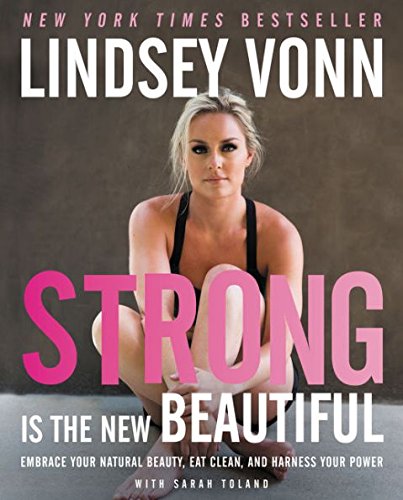
Dozens of workout photographs sit inside Lindsey Vonn's fitness book, and none of them survive the trip into audiobook form, which is where an honest assessment of this listing has to begin. Strong Is the New Beautiful lays out the training routines that carried a small-town Minnesota skier to Olympic gold, tailored, in the copy's own words, for women of all shapes and sizes. The recording runs four hours and five minutes. The printed edition runs 256 pages, and that page count is sitting on this record too.
First, the Big Picture
Every identifying field here describes a printed object. An ISBN occupies the ISBN slot, a page count sits beside it, the publisher reads HarperCollins, the identifier that would normally carry an audio product code carries a ten-digit book number instead, and the only date anywhere is October 4, 2016. In practice that means a buyer looking for audio facts, which studio produced the recording, when it was released, who commissioned it, will come away with none of them. The recording exists. The record is about the print edition.
Audio changes what a fitness book can do, and this is one of the clearer cases. Vonn's program is demonstrated in photographs from her own collection, which is how exercise instruction normally works on paper: you see the position, then you hold it. A listener receives the description of the position and nothing more. For the philosophy, the eating guidance and the life story, the transfer is clean. For the routines themselves, the recording works as a companion to the book rather than as a replacement for it.
Vonn's actual argument is more interesting than this shelf usually allows. She asks women to stop thinking about losing weight fast and to start instead from what their bodies already do, then builds the program outward from that premise rather than from a target number on a scale. Coming from someone whose entire career depended on measurable physical performance, that reframing carries real weight, and it happens to be the part of the book least dependent on seeing a photograph.
What Makes Strong is the New Beautiful Worth Hearing
Body image is the through-line, and it arrives without the usual softening. The copy is explicit that the goal is loving your bodies for what they are and what they can do, that the routines suit women of all shapes and sizes, and that they can be mastered by anyone still on the bunny hill of working out. That last phrase belongs to the marketing rather than to Vonn, but it signals the register accurately: an elite competitor deliberately writing downward, toward beginners, instead of across to peers.
Injury, illness and depression are all named in the description, and they are what lift this above a program. Vonn recovered not by following a trainer's instructions to the letter but by working out which plan would actually function for her body, and the same logic governs the food chapters. Woven through it are the heartland childhood, the skiing, and the setbacks that nearly ended things, and four hours is enough room for those to land without the book turning into a memoir.
Teri Schnaubelt reads it, which puts a professional voice inside a first-person account of one specific body. That arrangement is common and it carries a particular cost here: every sentence about my knee, my confidence, my worst season belongs to somebody who is not the one speaking. A reading has to hold the line between delivering testimony and performing it, and at four hours the free sample covers enough of the register for a buyer to judge where this reading sits.
A Few Reservations
Photographs are the missing half of this purchase, and the description says so without meaning to: illustrated with dozens of workout shots and photos from Lindsey's own collection. Anyone intending to run the program will need those images, which means the print edition or a patient reconstruction from spoken description. No accompanying file is mentioned anywhere on the record, and no substitute is offered. Treat the recording as the reasoning and the argument, with the exercise library sold separately.
One vote produces the 5.0 on this page, and nobody has written a word beneath it. A single rating can only ever be a whole number of stars, so the badge is arithmetically honest and informationally empty: it establishes that one person, at some point, clicked five. Given that every other field on the record describes a printed book, nothing here establishes whether that vote came from a listener at all, which makes the average the least useful thing on the page.
Ten years have passed since the date on this record, and the copy sells the program as supported by cutting-edge science and the latest studies on health and exercise. That claim was made in 2016. Exercise science has not been overturned in the meantime, but a book whose pitch includes its own currency deserves to be judged against a calendar, and anyone expecting the newest research on recovery or nutrition should know which decade the sourcing belongs to.
Who Should Listen to Strong is the New Beautiful
Anyone building a routine from nothing, particularly someone intimidated by gyms, is the reader Vonn is writing toward, and four hours makes that case portable. The mindset material, the food guidance and the injury story all work at listening speed, and the candor about depression puts a floor under the encouragement. Skiing fans get a biography running underneath the instruction, even though the racing is never the book's main business.
It is the wrong buy for anyone who wants a workout program they can actually follow, because the demonstrations exist as photographs and the recording cannot hand them over. Nor does it serve a listener after Vonn's competitive career told properly, since the racing appears as context for the training rather than as the subject. Buy the recording for the thinking and the print edition for the routines, and do not lean on a five-star average built from one anonymous click.







