
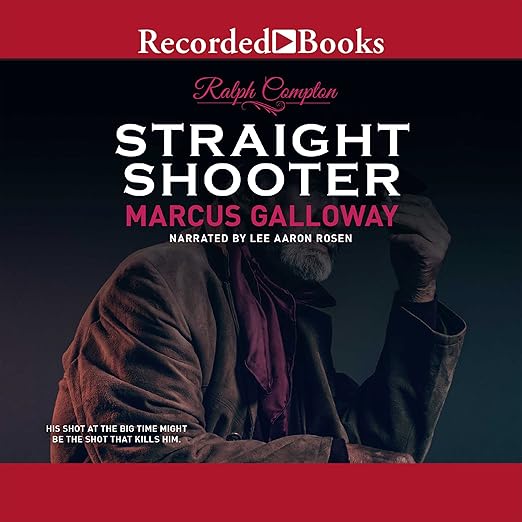
I listened to Straight Shooter on an overcast afternoon when I was in the mood for something uncomplicated, the kind of western fiction that delivers a clear moral landscape and the specific pleasures of the frontier setting without asking for too much. The Ralph Compton series has produced that reliably across many entries. Straight Shooter offers the promise of something slightly more interesting than average: an outlaw tale built around the idea that trust itself is a commodity in a world where everyone is selling information to everyone else. The execution does not quite honor the premise.
The setup is promising. Outlaw Wes Cavanaugh and his partner Mose need a shooter for a payroll train job out of Omaha, and not just any shooter, but someone with the particular skill of hitting targets at long range. They go to Jimmy Stock, who has built a career selling tips to outlaws. Jimmy can point them toward their straight shooter. But in the outlaw business, a straight shooter is exactly the kind of man you cannot fully trust, because anyone that good at what they do has options you cannot control.
Is Straight Shooter Worth Your Time?
The premise gestures toward something genuinely interesting about frontier economics: the way information and expertise circulate in illegal markets, the trust problems that make criminal enterprise fundamentally unstable. But the novel does not develop that idea with much consistency. Reviewers have noted that the narrative jumps between Wes and Mose's storyline and a separate thread following two gun merchants in a way that fragments rather than complicates the narrative. One reader described it as "not sticking to the story," making it "hard to follow." That is a fair assessment. The structural wandering undercuts the central tension, which depends on sustained focus to work.
The Best Parts of Straight Shooter
Lee Aaron Rosen's narration gives the audiobook a period-appropriate texture. He is not a showy performer, but he handles western dialogue without obvious anachronism, and his pacing in the action sequences is clean. The audiobook format actually helps somewhat with the narrative jumping, having the story read to you makes the transitions less jarring than encountering them on the page, because Rosen's consistent voice provides continuity even when the narrative doesn't. The Compton series has a dedicated readership for good reasons, and those readers will find enough familiar pleasures here to justify the runtime. At under eight hours, the commitment is modest.
Before You Commit to Straight Shooter
The reviews are unusually divided for a series entry. Long-time Compton readers describe this as a weaker installment, one reviewer put it bluntly as among the worst Compton novels they had encountered, while others gave it four or five stars without reservation. The gap suggests that tolerance for the book's structural issues correlates strongly with how deeply invested you are in the brand. The shifting narrative focus between outlaws and gun merchants is the primary structural issue, and it is not resolved gracefully. The novel also ends before fully paying off the moral logic of its premise about trust and betrayal.
Should You Listen to Straight Shooter?
This is the right listen for committed Ralph Compton Western readers who want to work through the series comprehensively and are willing to accept an uneven entry. The frontier setting, the period dialogue, and Rosen's narration deliver enough of the genre's characteristic pleasures to satisfy dedicated fans. Skip it if you are new to western fiction and looking for a strong entry point, there are better Ralph Compton titles to begin with, or if structural narrative coherence is important to your listening experience. Readers who loved the cleaner, more focused entries in the series will likely find this one frustrating.
The Ralph Compton name functions as a brand as much as an authorship credit, the series is written by multiple authors working within the Compton Western framework, which accounts for some of the quality variation readers notice across entries. Straight Shooter is credited to a specific author writing under the Compton imprint, and the structural issues reviewers identify likely reflect the challenges of working within that kind of licensed framework rather than any fundamental failure of craft.
At a Glance
- Voice: Lee Aaron Rosen delivers a workmanlike western performance that suits the period setting, though the fragmented narrative gives him an uneven vehicle to work with.
- Big ideas: Loyalty and betrayal among outlaws, the economics of frontier crime, trust as currency in a lawless world
- Atmosphere: Dusty and episodic, with pacing that tests patience
- Worth it?: A Ralph Compton Western with an interesting central premise that loses its way in structural wandering, for committed genre fans only.







