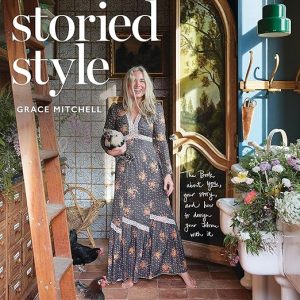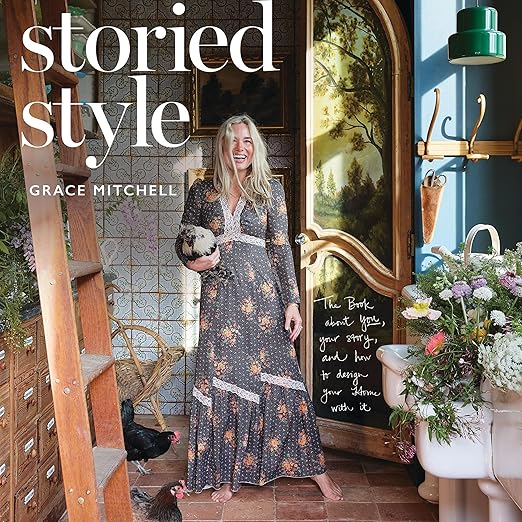
Twenty thoughtfully photographed design projects sit at the center of Storied Style, and not one of them is visible in the audiobook edition, which is the first thing worth knowing before you queue this up. Grace Mitchell narrates her own seven-question framework for designing a home around your own story rather than the latest trend cycle, and the questions themselves translate to audio just fine. What doesn't translate is the coffee-table half of the book: the reveals of her own home and garden, the twenty projects, the reflective moments a reader is meant to sit with visually. AudiobookDaily readers who already own the print or ebook edition and just want Mitchell's voice guiding them through the seven questions again will get real value here. Listeners hoping this audiobook stands in for the book entirely should adjust expectations first.
Mitchell built her audience on HGTV before she built this book, and that television background shows immediately in how comfortably she narrates her own material. She isn't reading a manuscript so much as talking through a process she has walked hundreds of clients and viewers through already, which gives the seven-question structure a conversational ease a hired narrator would have to work much harder to fake. One reviewer, RJ Shiflet, mentions buying the book after recognizing Mitchell from her run on HGTV and calls her decorating style 'a unique and fun style of decorating,' which is exactly the register that carries over into the narration itself.
As Though She Is Writing for You
The seven questions are the actual product here, and Mitchell walks through them with the patience of someone who has answered follow-up questions from real clients for years rather than someone reciting a framework cold. She isn't selling a look. She's asking a listener to slow down and think about what their space should say about their own life, which is a different, more personal exercise than most design content attempts, audio or otherwise. Reviewer Cristina describes the effect directly, writing that the stories pulled her in 'as though she truly is writing for YOU!' That personal-address quality is a narration strength as much as a writing one; hearing Mitchell's own voice deliver those questions lands differently than reading them cold on a page.
A real case exists for this as a listen precisely because the print edition is so visually dense. Twenty projects, some previously unpublished including Mitchell's own home, is a lot of photography to process, and the audiobook strips all of that away to leave just the reasoning and the storytelling. For a listener who wants the philosophy without necessarily sitting down to study every photo spread, that's a legitimate, lighter way into the same material. One reviewer calls the finished book 'a steal for the price' and notes it 'looks great on a coffee table,' which is a good reminder that this is fundamentally a print-first object that happens to also exist in audio.
A Steal for the Price, Minus the Photos
It's worth noticing that Mitchell built the book around questions rather than rules or steps, a deliberate rhetorical choice that frames design as an ongoing inquiry into who you are instead of a checklist to complete once and move on from. That structural decision is part of why the material holds up in audio even without the visuals: a rulebook needs to be seen and referenced, but a set of reflective questions can genuinely be sat with while driving or doing chores, turned over the same way you'd turn over a good conversation.
The book's promise of 'never-before-seen reveals' from Mitchell's own home and garden, alongside longtime favorites from her television work, is a genuine draw specifically for viewers who already know her from HGTV; hearing her narrate her own previously unshown space in her own voice adds a layer of access her television audience hasn't had before, even if the visual reveal itself still lives in the companion PDF rather than the narration.
Recalibrate for Conversation, Not a Curriculum
At three hours and twenty-four minutes, this audiobook moves quickly, which is both a strength and a limitation depending on what a listener wants from it. Seven questions in roughly three hours leaves relatively little time to dwell on any single one, especially compared to how much visual space the print edition gives each idea across its twenty featured projects. Anyone expecting a slow, chapter-by-chapter design course should recalibrate; this plays more like an extended conversation with Mitchell than a structured curriculum, and listeners looking for exhaustive how-to detail on execution, not just philosophy, will likely want the book in hand alongside it.
Twenty-Nine Minutes per Question, on Average
The companion PDF that comes with the audiobook purchase matters more here than it does for most nonfiction titles, since it's the only way to actually see the photography the narration keeps referencing. Skipping it defeats a real part of the point; the physical quality several reviewers highlight, heavy stock, high-quality printing, glossy full-color photography, is simply not something the audio format can convey on its own.
Doing the simple math is instructive here: dividing the runtime evenly across all seven questions works out to roughly twenty-nine minutes per question on average, which is a brisk but not rushed pace for material meant to prompt real reflection rather than deliver dense instruction. That ratio confirms this plays closer to a guided conversation than a design course, and it's worth setting that expectation before pressing play rather than discovering it partway through.
A Lighter Way to Revisit It, Not Replace It
Storied Style works well for listeners already drawn to Mitchell's design philosophy, whether from her television work or her existing fan base, who want her narrating the seven-question framework directly into a commute or a slower afternoon. It's also a reasonable fit for anyone who owns the visual edition already and wants a lighter way to revisit the reasoning behind it without pulling the book back off the shelf. The self-narration is a genuine asset for a book this personal; Mitchell talking through her own process carries more weight than a hired reader ever could.
PDF Bundling Is the New Coffee-Table Normal
Bundling a PDF alongside a highly visual audiobook has become a fairly standard workaround across the publishing industry for exactly this kind of coffee-table content, and Storied Style follows that established pattern rather than inventing a new one. It's a reasonable compromise, not a full substitute for print, but worth knowing that this book is part of a broader, increasingly normal trend of visual nonfiction finding its way into audio at all, rather than staying print-exclusive the way it might have a decade ago.
Design listeners hunting for technical execution advice, paint formulas, or contractor-level detail should look elsewhere; this audiobook stays in the emotional and philosophical register the seven questions were built for, not a hands-on renovation guide. And anyone who has never seen Mitchell's actual design work should strongly consider pairing the audio with at least the PDF, since a design book that leans this heavily on twenty photographed projects loses real substance without ever seeing a single one of them.