Key Details
- Narration: Jill Kelly narrating her own recovery memoir gives the material an unguarded quality that no hired voice could replicate, the pauses, the weight on certain words, the shift in register when she describes loneliness or artistic reinvention all belong to someone reliving rather than recounting.
- Themes: addiction and recovery, emotional eating, identity reinvention
- Mood: Honest and unglamourized
- Verdict: An uncommonly honest recovery memoir from someone who learned to live with her demons rather than defeat them, narrated with the hard-won directness of two decades' perspective.
Holding Both Peace and Struggle at Once
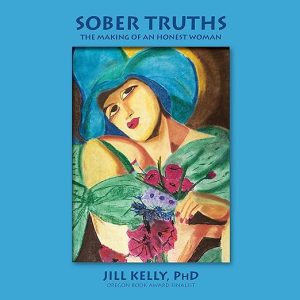
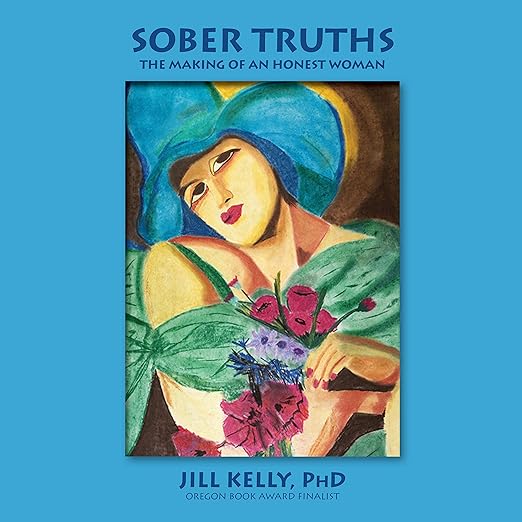
Recovery memoirs can be sorted roughly by their relationship to redemption: those that arrive at peace, those that document ongoing struggle, and those rarest volumes that hold both at once without forcing a resolution. Jill Kelly's Sober Truths: The Making of an Honest Woman belongs to that third category, and the subtitle signals the exact project this audiobook undertakes. This is not about putting down the bottle and ascending to serenity. It is about the slower, stranger work of becoming honest with yourself about what remains after the drinking stops - about the demons that do not leave when the alcohol does, and about the life you have to build deliberately because you cannot rely on your old methods for surviving it. Kelly narrates her own memoir, and that choice is the first honest decision the work makes.
The old-timers' observation that frames the book - that to stay sober you only have to change one thing, your whole life - sets up what Kelly actually documents across eight hours and six minutes. Two decades of drinking and despair gave way not to a clean recovery story but to a renegotiation with loneliness, anxiety, and distrust that she names directly and without the gloss of resolution. She becomes a visual artist. She builds a business. She develops friendships that matter and a spiritual life that sustains her. She also navigates emotional eating and an ambivalence about sexual relationships that she refuses to make tidy for the reader's comfort. Reviewer Christine Keating called it one of the best sober books she had ever read, describing it as underrated in a way that will eventually be recognized - a judgment that reflects how far outside the standard recovery narrative this book sits.
Kelly's Self-Narration Makes the Loneliness Real
Kelly's self-narration is the core asset of this audiobook. In recovery memoir, the gap between the experience and the telling is where the most important work happens, and when the author and narrator are the same person, that gap narrows to something intimate and specific. The loneliness she describes in early sobriety does not land as a narrative beat to be moved past; in her own voice, it has the texture of something she still knows from the inside. The anxiety and distrust she names are not abstracted into lessons; they are rendered as the specific quality of her own remembered experience, recalled with the precision that only first-person distance allows. The performance does not aim for smoothness. That is the point.
Reviewer Tami G noted that the book is particularly useful for people stuck on their fourth step, as well as for those trying to understand why alcoholics act or do what they have done. That dual utility, as a mirror for people in recovery and as a window for people who love someone in active addiction, is one of the things that distinguishes Sober Truths from the standard recovery narrative. Kelly is honest about her jealousies, her emotional eating as a displacement behavior, and her difficulty with intimacy after sobriety in ways that many recovery books soften or skip. Reviewer Rick H. described her as doing a great job telling her story and her struggle with alcoholism, which is understated praise for material that asks considerably more of the listener than most genre entries are willing to.
A Reinvention That Never Turns Prescriptive
The reinvention sections are the most unexpected and among the richest portions of this audiobook. Kelly becoming a visual artist in sobriety is not treated as a tidy narrative payoff; it is explored as a complicated discovery of a self that had been submerged under decades of drinking. The transition from the person she was in active addiction to the person building a business and forming genuine friendships is rendered without the before-and-after simplicity that recovery stories often default to. The after she describes is not uncomplicated. It includes the ongoing management of emotional eating and the ambivalence about sexual relationships that she addresses directly, and this refusal to present sobriety as arrival rather than as continuous navigation is what makes the book feel honest in the way its title promises.
The spiritual dimension of her recovery is present throughout but is not prescriptive. Kelly develops what she describes as a satisfying spiritual life without requiring the listener to follow her exact path or share her exact framework. For listeners who have complicated feelings about the spiritual dimensions of twelve-step programs, this audiobook's treatment of that component is nuanced and personal rather than evangelical. The spiritual content is offered as her experience rather than as the experience available to anyone who follows the same steps.
Bracing Rather Than Inspirational, at Eight Hours
This audiobook is for people in recovery, people who are wondering whether recovery is possible for someone like them, and people who love someone in active addiction or early sobriety. It is not a program guide or a clinical handbook; it is a personal reckoning narrated by someone who has done the work and is willing to account for exactly how imperfect and ongoing that work has been. People who find twelve-step material useful will recognize the framework without feeling lectured to; people outside that tradition will find the specific personal content more accessible than the program mechanics would suggest.
The eight hours and six minutes runtime is appropriate for the depth of material covered. This is not a light listen, and Kelly does not aim to make it one. Listeners who want something bracing and specific rather than inspirational and smooth will find Sober Truths rewards the full investment. For those who have felt that most recovery memoirs either idealize the struggle or rush the resolution, this one holds both the difficulty and the reward in proportions that feel genuinely true.