Quick Take
- Narration: Susan Bennett handles the enormous breadth of clinical content with professional consistency, 111 hours of medical reference demands stamina more than expressiveness.
- Themes: Preventive care, disease management, family medicine from infancy through aging
- Mood: Reference-library dense, best engaged in short targeted sessions rather than sustained listening
- Verdict: As a comprehensive household medical reference this holds genuine value, but the audio format will suit some use cases far better than others, and buyers should be aware of one verified distribution issue in the reviews.
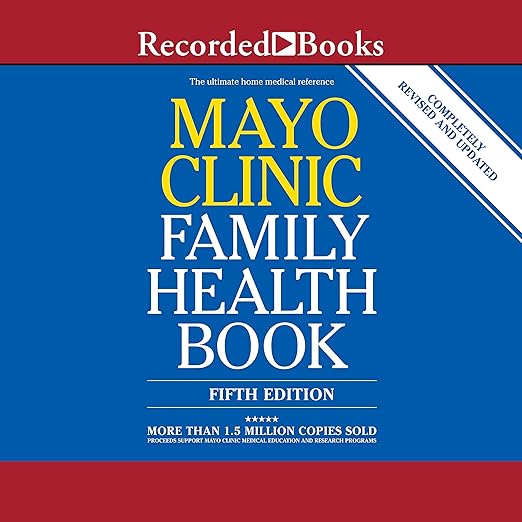
Let me be transparent about what this audiobook is and is not, because the review picture here is genuinely mixed for reasons worth understanding. On one side you have listeners who call it an owner’s manual for the human body, noting that its 4,000-plus pages cover everything from infancy to old age across 38 chapters. On the other side you have at least one buyer who received zero content. Before anything else: if you are considering purchasing this, verify your copy is complete before your return window closes. That one-star review signals a distribution problem that should not be dismissed.
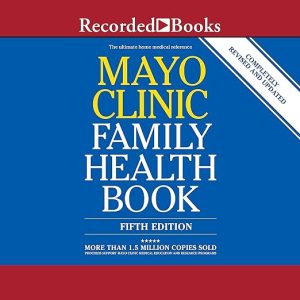
With that caveat stated clearly, the book itself has a strong institutional pedigree. The Mayo Clinic Family Health Book draws on the combined expertise of more than 4,500 Mayo physicians, scientists, and researchers, and previous editions have sold over 1.5 million copies. This fifth edition updates that material with current prevention, screening, and treatment guidance. For a family that wants a single authoritative health reference, something to consult when a symptom appears, when a diagnosis needs context, or when you are trying to understand what a specialist has just told you, the scope here is genuinely impressive.
The Structure and How to Navigate 111 Hours
At 111 hours and 51 minutes, this is not a book you listen to linearly. That runtime is a feature of comprehensiveness, not something to sit through from beginning to end. The five main sections, covering Injuries and Symptoms, Pregnancy and Healthy Children, Healthy Adults, Diseases and Disorders, and Tests and Treatments, function more like an encyclopedia than a narrative. Reviewer Amazon Customer notes that each chapter has its own table of contents, which helps considerably when you know the general area you need. In audio form, that means knowing your chapter and navigating within it, which requires a bit more intentionality than scanning a physical index.
The Pregnancy and Healthy Children section is the most directly relevant to families with young ones, covering developmental milestones, common childhood illnesses, behavioral health basics, and pediatric emergency guidance. For a parent whose previous medical reference was a downloaded PDF from a pediatrician’s office, this section alone represents a significant upgrade in depth.
The Audio Format Question
This is worth thinking through carefully before purchasing. Medical reference content in audio works best when you know what you are looking for and can navigate to it. It works less well for browsing or for dense visual content like charts, diagrams, and symptom checklists, and a reference of this scope inevitably relies on those organizational tools in print. Susan Bennett’s narration is professional and clear throughout, but even the best narrator cannot replicate the speed at which your eye would scan a symptoms table in print.
For listeners who absorb information well through audio and want a comprehensive medical reference they can access while commuting, cooking, or doing other tasks, this format can work. For anyone who prefers to flip directly to relevant sections, the physical book will serve them better. The audio version is genuinely useful as a supplement to the print edition, particularly for long sections of explanatory prose like disease overviews and treatment descriptions.
Susan Bennett and the Demands of Clinical Prose
Susan Bennett is a narrator with considerable experience in nonfiction, and she brings appropriate consistency to an enormous undertaking. Medical prose can be brutally flat: lists of symptoms, diagnostic criteria, medication interactions. Bennett handles it without the monotony that plagues lesser narrations of reference material. She maintains a steady, reassuring register that suits a health resource whose primary emotional register should be informative rather than alarming. At 111 hours, what you want from a narrator is reliability, and that is what you get.
Who Gets the Most from This
Households that rely on a comprehensive medical reference and prefer audio as their primary consumption format will find real value here. Parents of young children who want authoritative guidance on childhood health beyond what online symptom checkers provide will find the Pregnancy and Healthy Children section particularly useful. Older adults managing multiple conditions will benefit from the Diseases and Disorders and Tests and Treatments sections.
Anyone expecting a narrative listen, quick answers to specific questions in the format of a search engine, or the full visual apparatus of the print edition will be better served by other options. But as a household audio encyclopedia of family medicine, endorsed by one of the world’s most trusted medical institutions, this fifth edition earns its place in a digital library, provided your copy actually delivers content.
Frequently Asked Questions
Is the one-star review about empty content a widespread problem, or an isolated incident?
Based on the available reviews, it appears to be an isolated distribution anomaly rather than a systemic product failure. However, with a purchase this significant in terms of runtime and cost, it is worth confirming your copy plays in full before your return window expires. The majority of verified purchasers report complete, functional content.
How does the audio format handle the visual elements like charts, diagrams, and symptom tables that appear in the print edition?
It largely does not. Susan Bennett reads the prose content thoroughly, but charts and visual diagnostic tools that appear in print are either summarized verbally or omitted. For dense symptom comparison tables or anatomical diagrams, the print or digital edition is the more complete reference. The audio works best for the explanatory prose sections.
At 111 hours, how should a listener approach this as a practical reference rather than a sequential listen?
Chapter navigation is the key. Identify the section relevant to your situation using the chapter structure and navigate within that chapter. Listening linearly through 111 hours of medical content is not realistic for most use cases, and the book is not designed for that approach.
How current is the fifth edition’s content, and does it include anything on recent developments in pediatric health guidance?
The fifth edition incorporates updated guidance across all sections compared to earlier editions, including revisions to screening recommendations and treatment protocols. For the most rapidly evolving areas of medicine, cross-referencing with current clinical guidelines is still advisable, as any printed reference will lag behind consensus updates by some degree.